
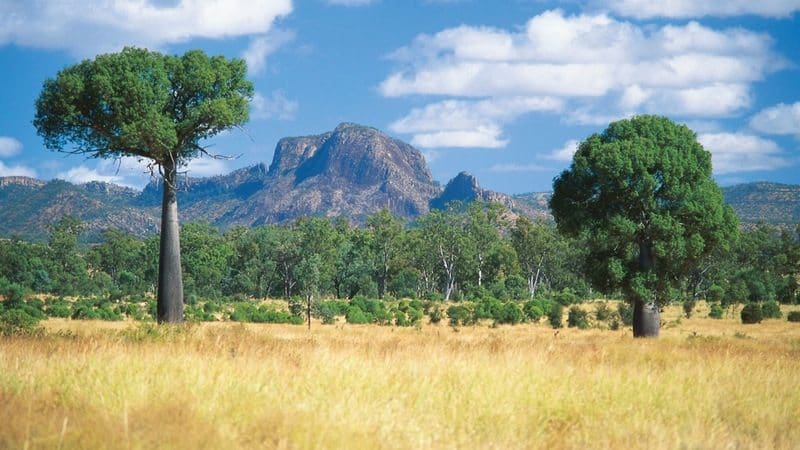
Bottle tree country on Rewan, in the Arcadia Valley
This week’s property review shines a spotlight on some of Australia’s best cattle grazing country – the Arcadia Valley in Queensland’s Central Highlands.
Nestled between the Expedition and Carnarvon Ranges, the Arcadia Valley certainly lives up to the Greek origins of its name, ‘ideal paradise’.
The region’s reputation is underpinned by fertile brigalow and bottle-tree scrub soils, an average annual rainfall of around 825mm and highly productive, improved pastures extensively developed by the Queensland Brigalow Development Scheme in the 1960s and 1970s.
Grant Veivers, Veivers Property
Veivers Property agent Grant Veivers knows the Arcadia Valley first-hand, having spent 21 years on Rewan before his family sold the property to Rural Funds Management in 2016.
He describes the Arcadia Valley as one of Queensland’s standout grazing districts.

Grant Veivers
“It is a strong seam of country stretching north of Roma and south of the Belyando. The big drawcard, and the region’s natural strength, is the Carnarvon Ranges, which provide some of the highest average rainfall in the Central Highlands.”
Mr Veivers said the high weight-gain country features a mix of bonewood, ooline and brigalow scrub, supported by strong soil types with naturally high phosphorus levels.
“Its location also adds to its appeal, with ready access to feedlots and abattoirs.”
Many of the valley’s blocks were balloted in the 1960s, and Mr Veivers noted some of the original families remain on those holdings today.
“It is a generational region. Very few properties have transacted recently, apart from Wyseby and Rewan.”
Mr Veivers singled out Arcadia Station as his pick of the properties in both the valley and the broader Central Highlands.
Earlier this year, Mr Veivers brought the showcase cattle backgrounding and finishing property Rewan to market.
He said Arcadia Valley properties such as Rewan appeal to high-net-worth individuals, leading family pastoral businesses and corporate buyers who recognise the value of scale, productivity and operational reliability.
“Assets of this calibre provide buyers with long-term confidence and attract interest from groups that recognise the strategic significance of a holding of this size and productivity,” Mr Veivers said.
He said holdings with Rewan’s scale, level of development and reliability are rarely offered in the Arcadia Valley.
Will McLay, Valcore Advisory
When it comes to assessing Arcadia Valley property values, Valcore Advisory director Will McLay said there is no simple answer.
He said values vary significantly.

Will McLay
“The highest values on a per hectare basis have historically been achieved by the 2000ha to 5000ha properties, particularly at the southern end of the valley, which are mostly developed scrub and therefore worth significantly more on a per hectare basis relative to larger blocks in the valley with a mix of more variable land types.”
Mr McLay said limited market evidence makes it difficult to put a firm value on the top end of the smaller, premium scrub blocks, with only a handful of off-market neighbour to neighbour transactions available as a guide.
“Those sales have achieved between $8500/ha ($3500/ac) and $10,000/ha ($4000/ac),” he said.
While Wyseby and Rewan have sold, and Christmas Creek and Fairhaven are currently on offer, Mr McLay said some of those properties include mixed land types and not all can be considered direct comparisons with the smaller premium scrub assets.
He said the best of the Arcadia Valley is on par with the Taroom and Wandoan markets, despite those districts benefiting from better access to markets and feedlots.
“The Arcadia Valley, particularly the southern end, is somewhat more isolated, but by virtue of its geography it sits between a system of mountain ranges and as a result typically receives more reliable rainfall.”
“Average rainfall in this part of the Valley can exceed 750mm (30 inches), a year, which is generally more than Taroom,” Mr McLay said.
Mr McLay said the last premium fully developed scrub sale in the Arcadia Valley was Billabalong back in 2019.
“Values now are significantly higher, however in 2019 it made around $5000/ha ($2000/ac), which at the time set a new benchmark. By comparison Iluka near Taroom, made about $4500/ha ($1800/ac) in the same year.”
Mr McLay said Billabalong’s value was underpinned by seasonal security.
“The point of difference is the security of rainfall. The Arcadia Valley rarely misses a season. It is known to receive more reliable rainfall and usually benefits from early season storms.
Recent sales
In July, showcase cattle backgrounding and finishing property, Rewan sold for $106.9m to Will Caldwell and his family, backed by an investment group.
In addition to the 17,479ha vertically integrated beef powerhouse, Mr Caldwell paid $43.2m (including 3500 Santa cattle, including 1450 mature breeders) for the neighbouring Wyseby West which neighbours Christmas Creek.
Currently for sale
In June, the Piggot family listed the 23,750ha Christmas Creek and Fairhaven at the foothills of the Carnarvon Ranges, after 50 years of ownership.
The aggregation comprises the adjoining 20,019ha Christmas Creek and 3731ha Fairhaven, which are conservatively rated to run 4100 Adult Equivalents.
Colliers Agribusiness experts Rawdon Briggs and Nicholas Warmington are currently conducting a second-round bid process, with inspections currently underway.
While Mr Briggs was unable to disclose specifics, he said the depth of the market is good, with the properties to be strongly contested by local family operators.
Mr Briggs said Christmas Creek and Fairhaven work well together, offering exceptional breeding and backgrounding country.
Mr Briggs said the Arcadia Valley is a special part of the world.
“Being positioned on the western side of highway, Fairhaven and the western side of Christmas Creek receive very favourable and reliable rainfall because the escarpment of the Acadia Valley rises and the southeasterly and northeasterly breezes get a natural orographic uplift from every event.”
Mr Warmington said opportunities combining scale, production capability and breeding pedigree are becoming increasingly difficult to secure across Queensland’s premier cattle regions, such as the Arcadia Valley.
“Large-scale breeding and finishing opportunities of this calibre rarely come to market, particularly those with such strong operational foundations and recognised industry credentials.”
Arcadia Valley families
Most of the major grazing operations in CQ’s Arcadia Valley are owned by large-scale cattle producers. Some of them include:
- Pickersgill family (Bunderra Cattle Co) – Aldinga Park (north of Rewan) and the adjoining 13,840ha Mt Inglis41,820ha Deepdale and 9043ha Mt Ogg, as well as Bandana (to the south).
- McLoughlin family – Rainbow Downs (neighbours Christmas Creek)
- Speed family – Dourialla and Tarewinnabar
- Sylvester family – Arcadia Station and Brumby
- Price family – Hillyvale and Oxley
- Peart family – Bundaleer and Sunnyholt
- Bill Taylor – Marjundale
- Crowther family – Leeora Downs, Harrow and Austral Park
- O’Sullivan family – Hilltop Station and Ooline
- Gordon and Sally West (Westmoor Pastoral) – South Bends West and Dundonnell
- Finger family – Billabalong Station
- Doug Logan – Warrinilla and Glen Idol
Darry Langton, Nutrien Harcourts
Nutrien Harcourts agent Darryl Langton said the Arcadia Valley is a tightly held region, with many long-established family operations and properties that rarely come to market.

Darryl Langton
“Many holdings began as ballot blocks, and a number remain in the same family ownership or have changed hands only once or twice over generations.”
Mr Langton described it as exceptional cattle country.
“It is picturesque, features fertile brigalow country and is the first genuinely strong grazing region south of the tick line.”
Mr Langton said the region benefits from reliable rainfall, protected by surrounding ranges.
“The valley often receives more rain than nearby areas, making it suitable for winter cropping, summer cropping, or simply producing excellent grass.”
When a quality property in the Arcadia Valley comes to market, Mr Langton said it becomes a key price indicator for the broader Brigalow Belt.
“Strong sales in the valley often set a benchmark for comparable country across the region. Alongside areas such as Moura, Theodore, Taroom and Wandoan, the Arcadia Valley is one of Queensland’s benchmark districts.”
“Whether sold at auction or by private treaty, properties in these areas help establish market expectations for high-quality brigalow country,” Mr Langton explained.
Mr Langton said buyers are typically large family operations from across the Brigalow Belt and surrounding regions, including areas as far north as Charters Towers and Clermont, west toward Dingo and Rockhampton, through Taroom and Wandoan, and south to Roma.
“They are generally seeking comparable land types, rainfall reliability and grazing productivity. While Rewan was owned by an institutional-style fund, the Arcadia Valley market is largely dominated by local family operators.”
Matt Beard, RBV Rural
RBV Rural agent Matt Beard says the Arcadia Valley offers a strong mix of brigalow scrub country, reliable seasons and above-average rainfall compared with many other parts of Central Queensland.
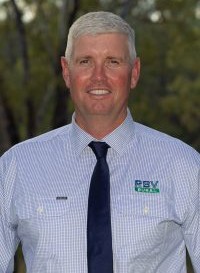
Matt Beard
“While Emerald and much of the Central Highlands typically sit in a 585mm to 610mm rainfall zone, the Arcadia Valley is more likely to receive slightly more, with the added benefit of greater consistency.”
Mr Beard said the Arcadia Valley is tightly held country for good reason.
“For many years, Arcadia Valley and the broader Rolleston district have been highly regarded as idyllic cattle country due to its land quality, reliable seasons and location.”
Mr Beard said the Valley’s appeal comes from that combination of country, climate and location, including its access to meatworks and abattoirs at Biloela and Rockhampton.
“That reputation has helped draw strong interest from larger corporations, superannuation funds and established farming families looking to secure holdings in the region.”
In price terms, Mr Beard said grazing country in Arcadia Valley generally sits slightly above the Central Queensland average, largely due to its rainfall, climate, soils and overall reliability.
HAVE YOUR SAY