
Picture your cattle in the yards, and picture a number floating above each one. Not a weight. A ranking, 1 to 100, showing you exactly where that animal sits against every other animal in the mob for how efficiently it turns feed into product.
Would it change which ones you cull?
Would it change which heifers you keep, which bulls you buy, and which genetics you pass forward?
For most producers the answer is obvious, because that ranking is the thing you have been estimating by eye, by weight gain, and by gut feel for your entire career. C-Lock Inc. can now produce it directly, from your own cattle, on your own country.
How simple the process actually is
The measurement happens at the crush, during a muster you were already doing.
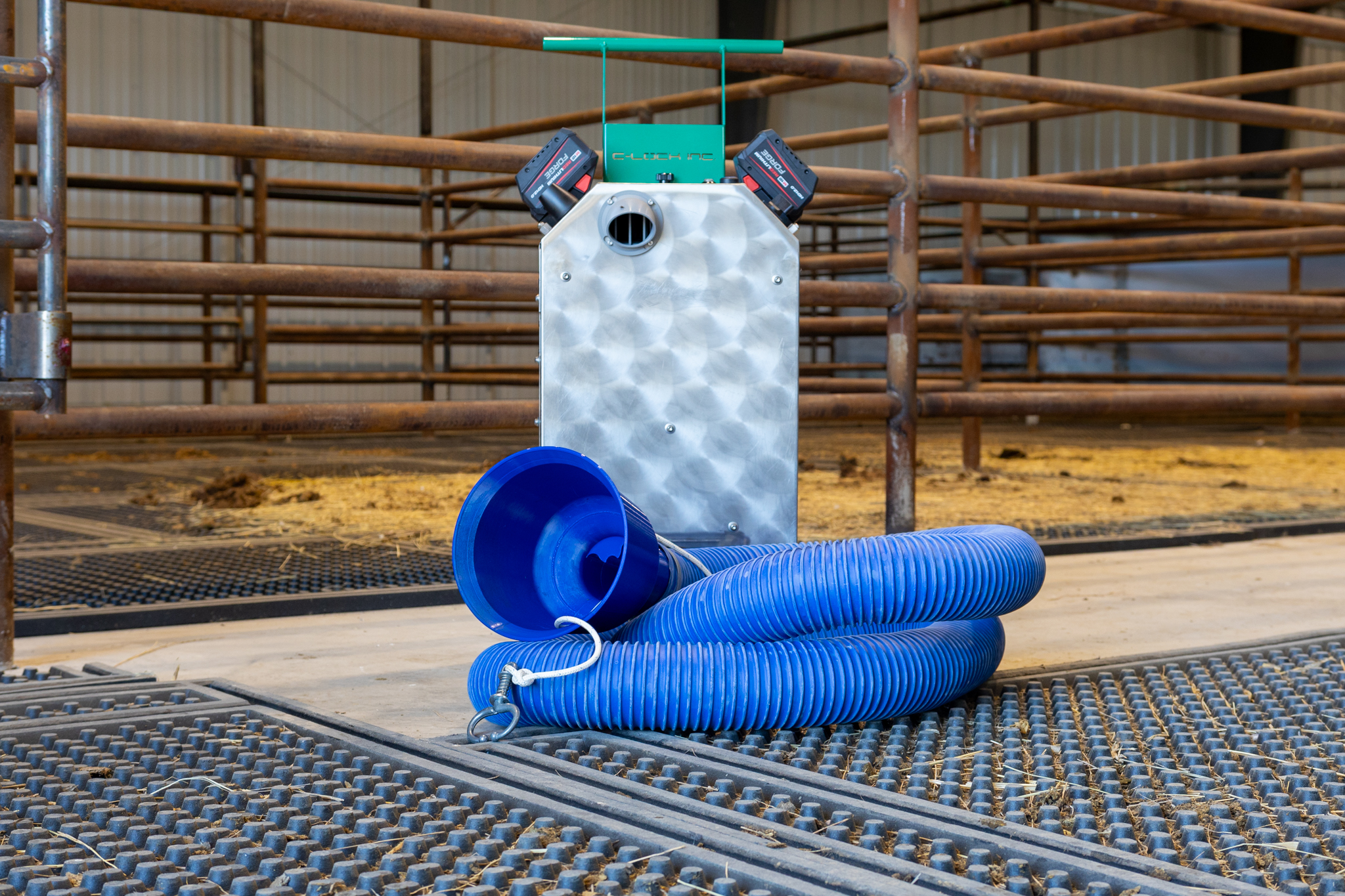
An animal comes up the race. A cone sits over its muzzle and samples its breath alongside the ambient air. An RFID scan identifies the individual. Three to five minutes later an indicator light says it is done and the animal walks out.
That is the whole job. No feed intake testing facility. No individual pens. No weighing rations for 70 days.
The system doing it is QuickFlux, the mobile efficiency measurement unit C-Lock Inc. has been developing and now has ready for commercial use.
For two decades this measurement science has lived almost entirely inside research herds, answering questions for scientists and generating data for journals. QuickFlux points the same technology at a different job. Instead of producing a figure for a paper, it produces a figure you can act on next time the mob is in the yards. Same rigour, aimed squarely at profitability and herd management.
Results are logged automatically, screened for outliers, verified by a C-Lock analyst, and returned ready to use.
Speed is what opens this up. Screening large numbers of cattle has traditionally required significant time and infrastructure, which is why individual efficiency testing has largely remained the domain of stud and research herds. A full draft of young bulls or replacement heifers can now fit inside a normal day in the yards.
What the number is built on
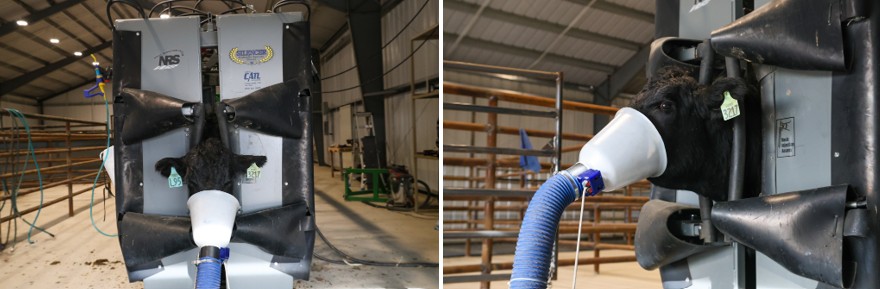
An animal’s breath tells you what its body is doing with what it eats.
Some of the feed an animal takes in becomes weight. Some of it goes into simply keeping the animal running. And some of that energy is lost, never converted into anything you can sell. Breath measurement provides insight into that energy use, which is why it can help rank animals on efficiency without weighing a single ration.
The reason this produces a useful ranking rather than a flat number is that the gap between animals is large. Research on cattle grazing low-quality tropical forage found the share of feed energy lost this way averaged around 8 percent, but ranged from under 5 percent to nearly 14 percent depending on the animal.
That is the spread you are already carrying and cannot see. Two animals in the same paddock, on the same grass, and one can be losing close to three times as much feed energy through methane as the other.
None of this is unproven. C-Lock has been building and validating this measurement technology for more than 20 years, across close to 1,000 units in 48 countries and more than 800 peer-reviewed studies. It has been validated on Australian country too, including work published this year on 453 composite and crossbred cattle across four sites on tropical and subtropical rangelands in the north. What is new is the speed, and the fact that it now comes to your yards.
What producers do with the ranking
While the data is valuable and important, what really matters is the improved decisions cattle producers can now make with it.
Culling. The bottom end of a mob is not just less productive, it is more expensive. Those animals consume feed while returning less production, and you are paying for both ends of that. C-Lock can identify the low performers in your herd so you stop carrying them, and so the genetics you pass forward come from the animals actually earning their keep.
Replacement selection. Which heifers earn a place in the herd, and which cows are costing more grass than their weaner justifies.
Genetics. Bull selection currently relies on efficiency figures generated on someone else’s feed, in someone else’s environment, and the hope that it travels. Measuring your own progeny tells you whether it did.
Professor Ben Hayes, research director of the Zero Net Emissions from Agriculture CRC, has pointed to three levers as the biggest opportunities for northern producers: improving herd fertility, turning cattle off earlier through faster growth, and selecting for moderate mature cow size. He has estimated they can shift emissions intensity by up to around 30 percent.
Note that all three are profitability decisions first. Nobody chases a shorter turnoff for the carbon number. They chase it because it is a shorter turnoff, and individual efficiency data feeds straight into all three.
The carbon dividend, briefly
There is a second benefit worth knowing about, even though it is not the reason to do this.
Meat & Livestock Australia has begun work with the Federal Government on a new ACCU livestock method expected to place greater weight on direct methane abatement, and Scope 3 reporting obligations are tightening through processor supply chains. Producers already holding measured data on their own herd will be ready for whatever those frameworks end up asking for.
But that is the bonus. The reason to put a mob through the crush is the number above each animal, and what you do with it once you can see it.
To find out more, visit c-lockinc.com or to get in touch with our team.
HAVE YOUR SAY