
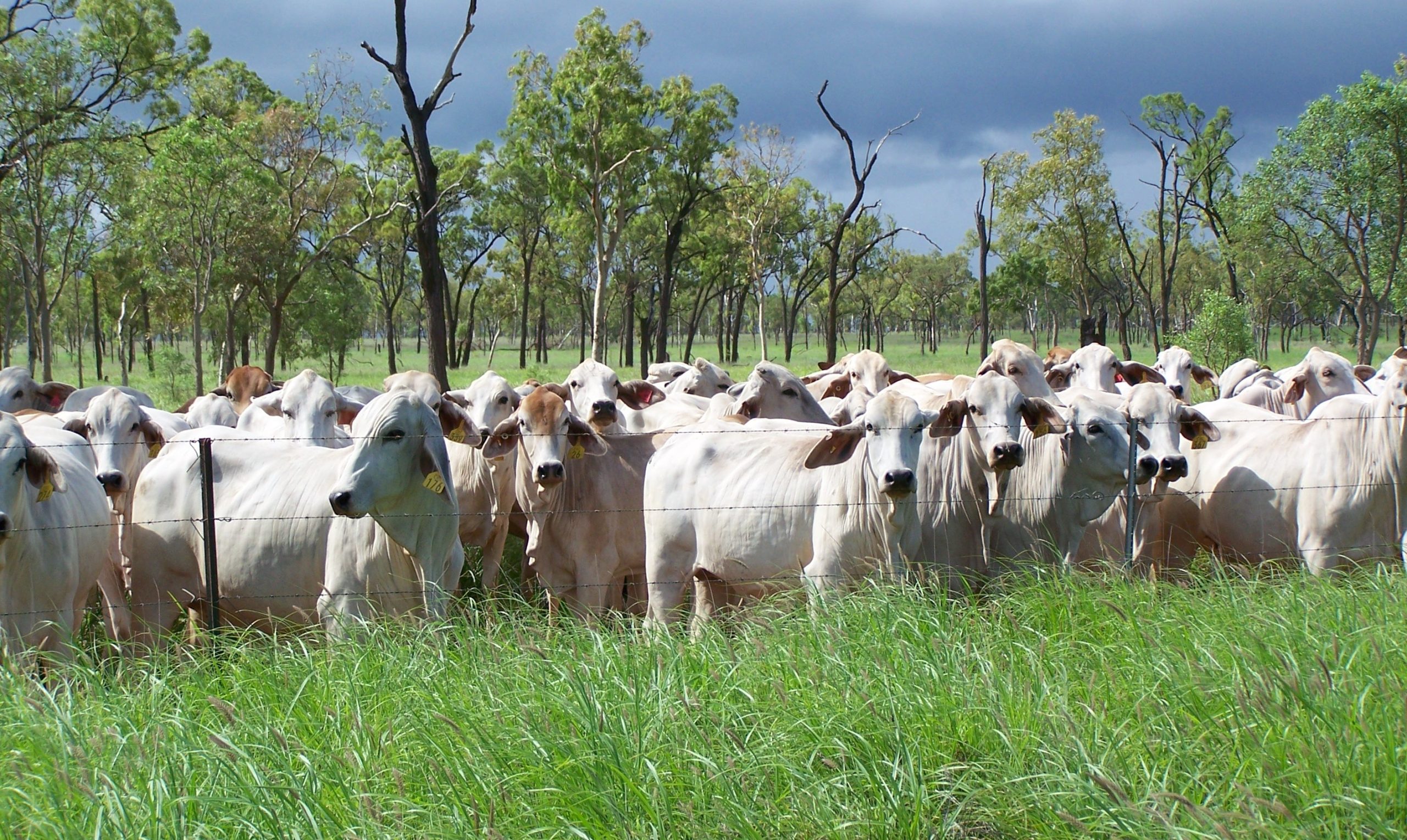
BRAHMAN seedstock producers have been informed that the industry body will suspend publication of all selection indexes later this year, with the breed society to undertake a full review of them.
In a letter to members earlier this week, the Australian Brahman Breeders Association said concerns had been raised by some members that the Live Export Index is no longer relative to the live export industry. (see full email at the bottom of this page).
The live export index is one of two underpinning the Brahman breed, with the Central Production Index to also be suspended on December 1 this year while the association is reviewing it – which will mostly be after this year’s bull sales.
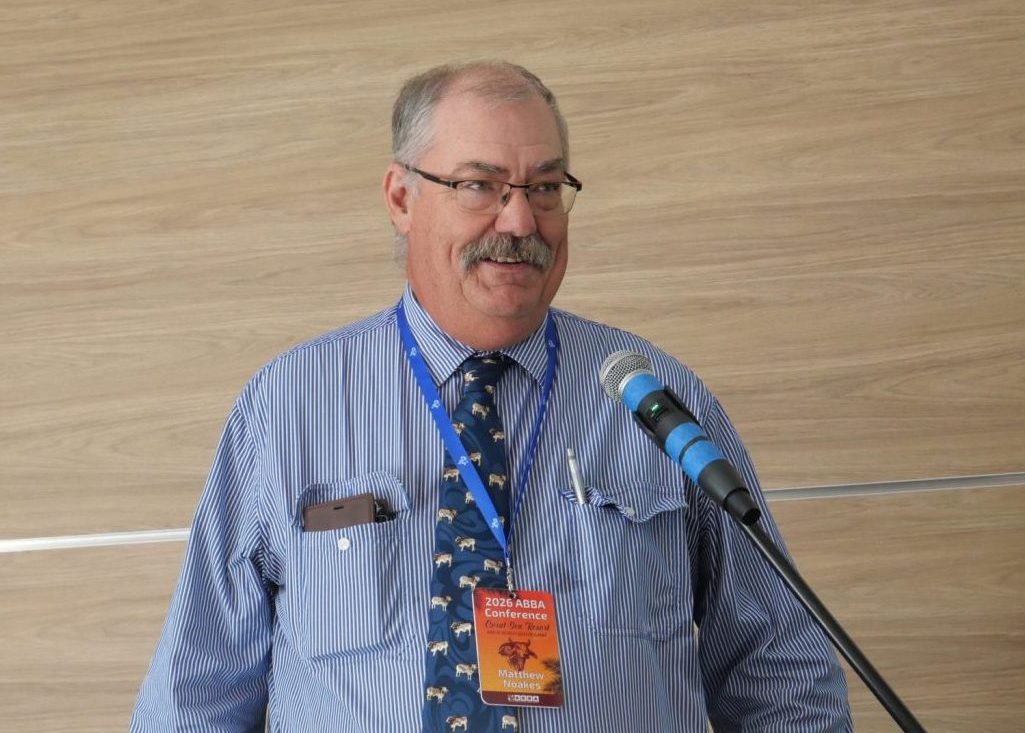
Matthew Noakes, President of the Australian Brahman Breeders Association.
A high weighting on fertility in making up the overall index, and no weighting on the value of the progeny, appears to be the main concerns from members concerned about the current indexes.
ABBA president Matthew Noakes said the indexes were increasingly being used for advertising and it was important to make sure they represented the realities of the marketplace.
“We have had a lot of people communicate to us their concerns and we believe it deserves reviewing either inform people that we can move forward with it or we can fix it,” Mr Noakes said.
“We are not saying they are wrong, we are just saying that enough concerns have been raised that we need to review.”
Why suspend the indexes?
Mr Noakes said the association had decided to put a timeline on the review to make sure the issue progresses.
“I know if we put a timeline on it we have a far better chance of getting an honest reaction and result out of the review than if we just tell people please look into this and two years down the track nothing will have happened,” he said.
“I haven’t seen as big a reaction to an issue coming back to the board from the membership in a long time. But if we get some answers before December, it might not even be suspended.”
Mr Noakes said he understood there are some very different viewpoints on the issue and he was keen to hear them all.
“The best thing and the worst thing about the brahman breed that is we stretch from the Cape York peninsula to northern New South Wales to Western Australia and in there is every different type and production system,” he said.
“The indexes need to reflect the dollar value of what is happening on the ground. If you have cattle that score high in the live export index, they should be returning the buyer more when they enter that market.”
What are the concerns with the indexes?
The main concern with the live export index is that it places a high weighting on fertility traits like ‘days to calving’ and not much on overall growth.
Mr Noakes said the live export market has evolved a lot over the past 15 years as South-East Asian feedlot operations have become more sophisticated and the Indonesian Government had added weight restrictions the cattle.
“We are running a feedlot trial and carcase competition with Austrex in Indonesia at the moment, with the cattle currently on feed. They are prepared to run a trial to try and identify the cattle that are the better performers because they want to know.
“If they can add 150kg rather than 100, surely that animal has to be more favourably accepted.”
Mr Noakes, who is also a cattle buyer for a feedlot, said he would like to see indexes better reflect performance in the market.
“Fertility is a really important profit driver if you are the bloke that owns the cows, if you are the buyer of the steers you don’t care about fertility,” he said.
“There can be a 50pc difference in value between a poor performing animal and a good performer and we believe this isn’t adequately represented in the index.”
Beef Central reached out to a Brahman seedstock group closely aligned with performance recording as a key part of their brand pitch. They said they had not yet discussed the Index suspension internally, and were not yet ready to comment.
Full email
It has been raised as a concern by Members and Industry that The Live Export Index is not currently relative to the Live Export industry.
Especially when the end product is predominantly an animal fed for around 100 days with a target weight of 500-600kg.
The target weight of 300kg with no allowance for future growth, will and does have significant ramifications on the value of these steers entering the market.
The lesser growth of these potentially high indexing cattle and subsequent lesser value in the market leads to the Live Export Index being a poor example of the profit values that it is supposed to reflect.
Some high indexing animals are being shown to be well below breed average or even negative for 400- and 600-day growth.
Due to this fact ABBA have decided to suspend publication of all indexes from Brahman Breedplan effective December 1 st , 2026.
A complete review of indexes will be undertaken, and members will be informed as to their future direction.
Selection indexes assist beef producers to make selection decisions that take into account the relevant growth, carcase, fertility and efficiency attributes of each animal to identify candidates whose progeny will be the most profitable for a particular commercial enterprise.
Selection indexes provide an overall indication of an animal’s genetic value for profit in a specific production system/target market and are calculated based on weightings placed on individual traits that are deemed to be important for that production system.
Live Export Index
- Self-replacing commercial herd targeting the live export markets.
- This selection index is designed for cattle run in extensive northern Australian environments.
- Selected heifers are retained for breeding so maternal traits are important.
- Steers target an export live weight of 300 kg.
Selection indexes are a combination of breeding values and economic values. I would suggest any review looks very, very closely at the construction of the economic values. Melton et. al. (1979) found a number of significant limitations including “the lack of well estimated production functions presents special problems for this type of analysis, most fall short of the complex formulation necessary to fully represent reality”.
Melton BE, Heady EO and Willham RL (1979) Estimation of economic values for selection indices, Animal Production, Volume 28, Issue 03, pp 279 -286
One of the comments we made when looking at selection indexes in 2019 was “Beef producers using the Brahman Jap Ox index to calculate the extra amount they can pay to access top ranking bulls appear likely to reduce property profitability, not improve it”.
Ten years ago, a group of us (doi.org/10.1071/RJ22009) tested variation in EBIT: 37% due to costs; 25% due to value/kg; 16% due to reproduction; 12% due to growth; and 10% due to mortality. The last three combine as kg or tonnes of live weight produced annually.
Recently, Ian McLean and Kieren McCosker did a similar examination (NABRUC 26 p59) of primary income drivers: productivity, ie, kg/feed unit, was the major driver; reproduction was the primary determinant of productivity; and not having to rebuild herds.
Annual live weight production for any animal is its annual growth plus the weight of the calf it weans. Cows are usually the biggest live weight producers in the herd, and they achieve this through reproduction, growth and survival. They have huge impact on male sale volume.
I understand the excellent query, and it’ll be interesting to see the review. I won’t be surprised if the BREEDPLAN indices are doing a good job as they are mainly built on productivity, though admittedly within a cow herd business, not at a feedlot.
Your issues are well noted. Please refer to Falkirk Genetics NZ Ltd website for solution which has been fine-tuned to fit genetic and economic reality. Proofed over a 40 year period to identify optimal genetics that are fit for purpose. I am a sheep and beef farmer and select breeder that has morphed into a Forensic Geneticist. Beed and farmed Brangus in NZ to assist with solution.
cell; 027 4809807
This is a smart decision made by the board. The Index’s, since inception have been falsely described and too heavily biased. Every commercial operator knows that if you don’t have high performing cattle that are quickly and easily turned off, they cost you money. Feedlot buyers and meatworks have specs, and if cattle are too light/bad performance than they are going to be priced accordingly and unwanted by the industry. Fertility figures are easily manipulated and are not a true representation of the animal being described, a -10 DTC isn’t a whole lot of difference to a +10 DTC. A couple of years ago, a 0.0 DTC was representative of 340 days, any cow that over a lifetime has had a 365 day calving interval or less is a quality female, but most of these aren’t allocated these “figures” due to the manipulation within the “science”. The biggest threat to herd fertility across the regions where the majority of Brahman cattle are run isn’t the herd genetics, it is the quality of pasture and the correct supplementation program. The current Index’s are only relevant within their contemporary group and have little to no relationship outside their own herd. Brahmans should be as described, 100 % Bos Indicus, not a crossbred or a composite, 85% is not a Brahman, it is a cross/composite.
It is hard enough getting a calf on the ground in North Australia with out further impeding the process by breeding large animals. Any one with any genetics knowledge understands that 600 day growth is contra indicative to calves on the ground, because the factory simply requires too much fuel to run.
I understand that chasing growth is always at the expense of fertility, especially on poor native grasses in the north.