
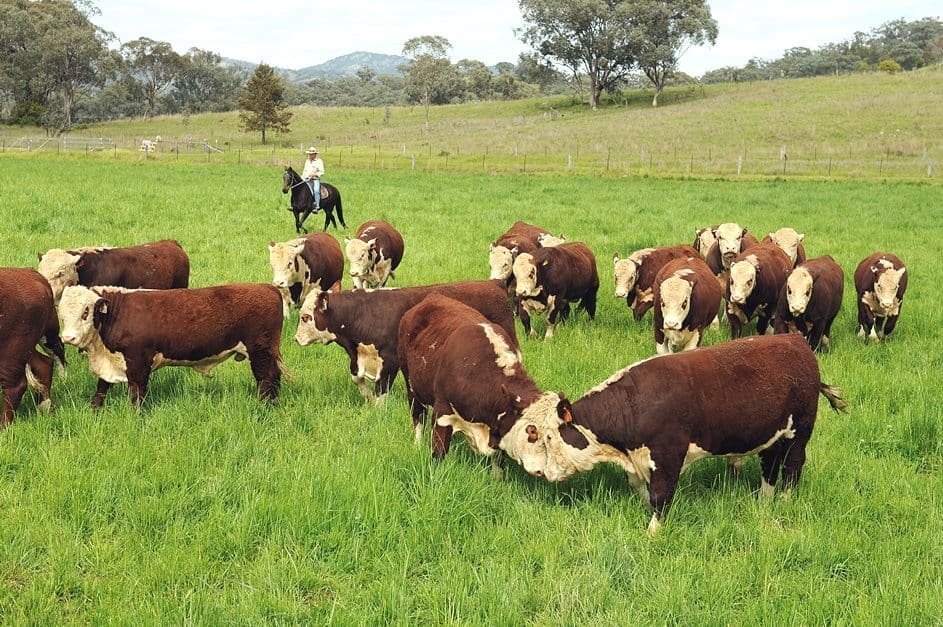
The term “bull team” can mean different things, even within the same herd. It may describe every bull in the enterprise, the draft selected to join particular groups of females or the bulls that ultimately sire the calves.
Collectively, it may include bulls of various ages, genetic backgrounds or breeds, as well as bulls that have been or are about to start working, plus replacements and reserves.
On many enterprises, bulls not working are run as a larger group until preparation for joining starts. This preparation may include drafting bulls for particular mobs and roles, resulting in several working teams being selected from the larger group.
In practical terms, this creates an important distinction when considering genetic merit.
While many producers may consider the genetic value of the total bull team available, it is the composition and genetic average of each working draft that is more relevant to the females it joins.
The combination of bulls selected for each joining group needs to reflect the breeding objectives of the program and the outcome expected from that group.
Genetic suitability is fundamental, but the bulls must also be matched to the physical demands of joining, including the number and type of females, the length of the joining period and the environment in which they are expected to work.
Calculating the number of bulls required from female numbers and an appropriate bull-to-cow ratio is relatively straightforward. However this calculation doesn’t identify which bulls should be drafted together.
Selecting a smaller joining draft may alter relationships established within the larger group. A previously subordinate bull may become dominant, while other bulls may behave differently when separated from particular animals.
Where practical, the bulls selected for a joining group should be run together before joining. Bulls previously run within a larger group may need to establish a new social order once drafted into the smaller team.
Age impact
Research by well-known veterinarian Mike Blockey in the late 1970s demonstrated the potential effect of group composition.
Mixed-age groups of bulls achieved lower pregnancy rates than groups containing bulls of similar age. Dr Blockey’s observations also showed that age and seniority were major influences on social rank, creating the potential for older bulls to restrict access by younger bulls.
Averaging the EBVs or selection index values of the full bull team provides an indication of its overall genetic direction. However, in practice, each mob is exposed only to the bulls in its joining draft. The average of that draft therefore provides a more relevant measure of the genetics intended for the group.
This comparison is valid where bulls are evaluated within the same genetic analysis and using the same index. Selection index values cannot be directly compared across BreedPlan analyses or breeds, or when they come from different indexes. For mixed-breed drafts, genetic suitability needs to be assessed against the intended purpose of the joining rather than expressed as a single raw average.
An additional challenge in using the planned average of a joining draft is that it assumes every bull contributes equally.
Bull Power Project
The Australian Bull Power project used parentage testing on 4251 calves from 235 bulls across 37 multiple-sire groups. Six percent of bulls sired no calves, 58pc sired no more than 10pc of their group’s calves and 14pc sired more than 30pc.
In separate US research led by UC Davis animal geneticist Professor Alison Van Eenennaam assigned paternity to 5052 calves from three northern Californian ranches. Individual output ranged from zero to 64 calves per bull per breeding season.
The realised genetic influence of a draft can therefore differ substantially from its simple average. Where parentage is known, weighting each bull’s EBVs or index by the number of calves he sires provides a more accurate description of the average sire merit represented in the calf crop.
While a BBSE identifies bulls at greater risk of failure, it doesn’t predict calf output within a multiple-sire group. Dominance may affect access to females, but access does not necessarily translate into services, conceptions or calves.
In 2026, University of Calgary researcher Vinicius Camargo and colleagues monitored bulls at WA Ranches in Alberta, Canada, for two weeks before joining. Activity and proximity collars recorded the bulls’ movement and social interactions, while DNA parentage was subsequently used to measure sire output.
More active, socially connected and younger bulls had higher adjusted siring capacity.
However, the study involved only 13 distinct bulls on one ranch, and behaviour and age explained 20–21pc of the variation. It doesn’t establish the ideal team combination or preparation period, but suggests that observing activity and social interaction within pre-breeding groups may add information not captured by individual assessments.
Retaining surplus bulls can provide insurance against injury or breakdown. However, introducing a replacement may disrupt relationships already established within the joining group.
The broader question of changing bulls within a joining group was considered in research led by Victorian dairy veterinarian Dr Andrew Hancock and colleagues from The University of Melbourne and The Vet Group, involving 256 bulls from 32 pasture-based dairy herds in southwest Victoria.
Although the study was not a controlled trial of bull rotation, the authors noted that routine rotation had not been shown to maintain a fertile bull team and cautioned that changes in social hierarchy could increase the risk of injury and lameness.
This does not mean an injured bull or one unable to serve should remain with the mob. An injured dominant bull may still restrict access by other bulls and should not be retained simply to maintain the numerical ratio. However replacing bulls according to a fixed rotation should not automatically be regarded as improving fertility.
A replacement may restore the bull-to-cow ratio while also changing the social and genetic composition of the draft, making reserve-bull selection part of the original joining plan.
The value of the larger bull team lies in the capacity to assemble working drafts suited to each joining. Numbers remain important, but each draft also needs the genetic merit to deliver the intended breeding outcome, the physical capacity to meet the demands of the females and the environment, and an appropriate replacement if one is required.
Pregnancy rates and calving distribution describe the performance of the mob, but not the contribution of individual sires.
Where parentage and sire genetic information are available, they can show whether the working draft delivered its planned genetic direction or whether the outcome was shifted by one particularly prolific bull.
 Alastair Rayner is the Strategic Account Manager for Southern Australia with Vytelle and Principal of RaynerAg. He has over 30 years’ experience advising beef producers and graziers across Australia. Alastair can be contacted here or through his website: www.raynerag.com.au
well researched