
COALITION opposition to the Australia-European Free Trade Agreement has prompted Trade and Tourism Minister Don Farrell to appeal for business support for its ratification by Federal Parliament.
Nationals leader Matt Canavan today said he had suggested “reasonable changes” to the agreement before agreement’s ratification.
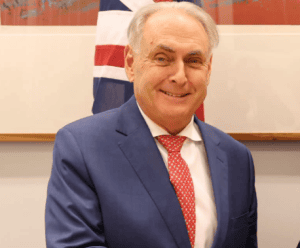
Trade and Tourism Minister Don Farrell.
And he criticised Trade Minister Don Farrell’s call in an Australian Chamber of Commerce and Industry address today for farmers and businesses to support the agreement’s ratification.
Mr Farrell is reportedly concerned that Coalition opposition to the agreement risks its ratification.
In March this year Senator Canavan wrote to Mr Farrell and said the Coalition could not support an agreement “that elevates the Paris Agreement (on climate change) into a binding enforceable obligation through a free trade agreement, or that creates a framework with the EU on measures such as carbon border tariffs or deforestation related trade restrictions.
Senator Canavan then also suggested a delay in releasing the text of the agreement for the government to seek improvements in critical areas of concern, including further work on quotas for beef and sheep meat, and reconsideration of the removal of the dairy import tariff.
Industry backs Coalition stance
The Australian red meat industry has been generally critical of the agreement, with chair of the Australia–EU Red Meat Market Access Taskforce, Andrew McDonald, describing it as the “worst ever free trade agreement for Australian red meat industry to date.”
He said the agreement delivers just 30,600 tonnes carcase weight (cwt) of beef access over the next 10 years, when a minimum of 50,000 tonnes (cwt) was required simply to be in line with what the EU has offered our competitors.
“On sheep meat and goat meat, the result is equally disappointing: 25,000 tonnes (cwt) over seven years, despite Australian industry requesting a minimum of 67,000 tonnes cwt.
“This stands in stark contrast to New Zealand’s access of 163,769 tonnes, which is an outrageous discrepancy,” Mr McDonald said.
Farrell calls for unified approach to free trade
In his ACCI speech today, Mr Farrell said it has become clear that the passage of this Aus/EU FTA through the parliament is not guaranteed.
“In recent weeks, as politics in our country has shifted to entertain and reward populism, some in our parliament have been tempted to signal that they will oppose this agreement – choosing to chase headlines rather than practical outcomes.”
And he said there will be “no second chance with the EU” if Australia walked away from the agreement.
“Now is the time for a unified Australia-first approach to free trade, not for dragging us back decades down the path of protectionism and isolation.”
Farrell’s call insulting to farmers – Canavan
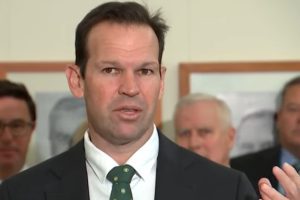
Nationals leader Matt Canavan.
However, Senator Canavan said Mr Farrell’s call was not just insulting to farmers, “but an arrogant doubling down on the worst deal ever.”
Senator Canavan described the so-called ‘free trade’ agreement between Australia and the European Union as a sell-out to Australian farmers and Australian interests.
“Farmers are too busy trying to make ends meet than to do the Minister’s work for him.
“I have written to the Trade Minister asking for some reasonable changes to fix the flaws that the farm sector has identified,” Senator Canavan said.
“One thing farmers should know is, the Liberals and Nationals have your back.
“The fundamental problem is that the deal is not reciprocal,” he said.
“Australia is effectively opening its market to European producers, including removing tariffs on all EU agricultural exports, while key Australian agricultural exports into Europe will remain restricted by quotas, tariffs and massive European farm subsidies.
“That is not genuine free trade.”
Senator Canavan said the Liberal and National Coalition will closely scrutinise the Australia-Europe FTA deal through the normal Parliamentary processes.
“In doing so, we will be guided by the principle that Australian governments – of both sides of politics – have adhered to the principle that a free trade agreement must live up to that name.”
AMIC also critical of EU agreement outcome
Opposition to the free trade agreement has come just after the Australian Meat Industry Council warned that despite Australian agriculture celebrating reaching its $100 billion farmgate production milestone, the viability of the country’s meat processors is being seriously tested.
AMIC said the Australia–EU Free Trade Agreement negotiations had delivered an outcome that fell well short of delivering commercially meaningful red meat access after years of negotiations.
AMIC said frustration is growing among its members particularly around market access, where despite high-level discussions with government, major outcomes in critical markets are not being achieved, resulting in Australia’s meat trade being systemically restricted.
AMIC chief executive officer Tim Ryan said the government has been fast to promote incremental market access improvements and wins.
“But the fact is that our access to key markets is going backwards.
“While we welcome the engagement, engagement has to produce outcomes,” he said.
“When market access disappears, when technical barriers remain unresolved and when new costs keep being added at home, something must give.
“The sheep meat sector is in a genuinely precarious position, with acute livestock shortages and little capacity to absorb another major shock.”
AMIC said beef processor margins have dropped in recent months and market access has deteriorated across several key destinations at the same time as the cost of livestock has remained elevated.
“What processors can earn in global markets and what farmers receive at the farmgate cannot remain disconnected forever,” Mr Ryan said.
“If we continue losing value and market options overseas, eventually that flows back to livestock producers.
“We are sounding the alarm while there is still time to correct course.”
AMIC claims that access to key overseas meat market is “going backwards”, including trade impediments imposed by FTA partners, such as in the case of China’s beef safeguard measures, Indonesia’s restrictive allocation of beef import permits and the current 12.5 percent US tariff applied to imported Australian sheep and goat meat.
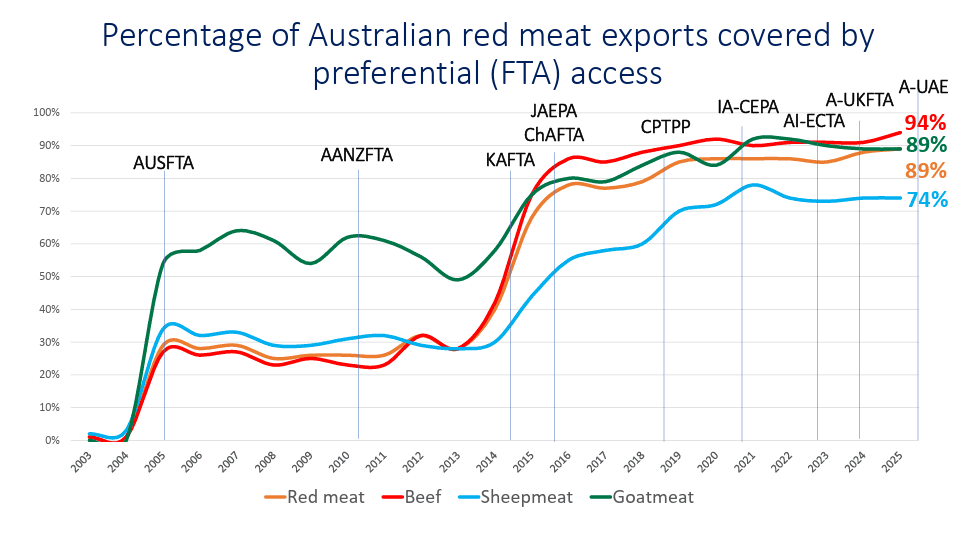
Although Meat & Livestock Australia data has shown come percentage increase in the red meat trade covered by free trade agreements, Mr Ryan said this did not reflect the recent deterioration in market access or future risks to Australia’s red meat trade.
“Importantly, we are seeing trade impediments imposed by FTA partners, such as in the case of China’s beef safeguard measures, Indonesia’s restrictive allocation of beef import permits or the current 12.5pc US tariff applied to imported Australian sheep meat and goat meat.”
Government outlines its record
An Albanese Government spokesperson told Sheep Central it has worked tirelessly with Australia’s farmers and producers to deliver new and improved market access opportunities, with Australia’s agricultural trade the most diversified it has ever been.
“Our government’s work to restore Australia’s most important trading relationships underpinned our agriculture industry exceeding its $100 billion farm gate production value target four years early, including record meat exports in 2025-26.
“The government continues to work with farmers and producers to help manage the disruption from the war in the Middle East, which is impacting globally.”
Sheep Central was told the Albanese Labor Government has recorded 286 market access achievements since coming to government.
Agricultural, fisheries and forestry exports reached a record $86 billion in 2025-26. Aussie beef has had back-to-back record-breaking export years, with 2025-26 exports worth around $21 billion. Supported by reinstated and improved market access, beef exports have increased 110pc since 2021-22, the government said.
The government said Australia welcomed that certain agricultural products would no longer be subject to reciprocal tariffs from the United States, such as beef, oranges and macadamias.
“We will continue to engage with the US to advocate for the removal of all remaining unjustified and unwarranted tariffs on Australian exports to the US, most recently conveyed by the Prime Minister to the US President this week, and by the Trade Minister to the US Trade Representative.
“Additionally, in partnership with 40 peak industry bodies – including 22 in the agribusiness sector – the $55 million Accessing New Markets Initiative is helping Australian agricultural industries diversify export markets, and capture new opportunities,” the government said.
“In recognition of the disruptions associated with the war in the Middle East, the Albanese Government deferred the phased transition to full cost recovery for agricultural export services for 12 months.”
HAVE YOUR SAY