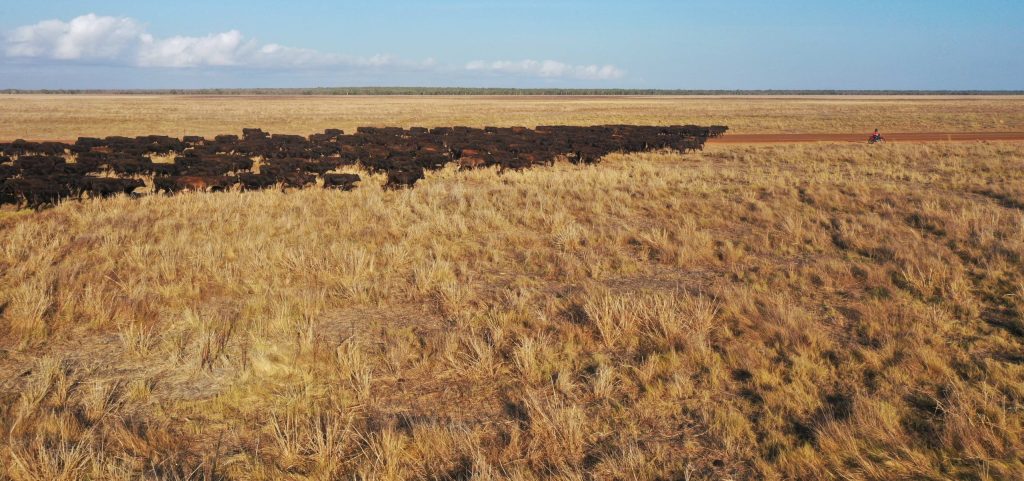
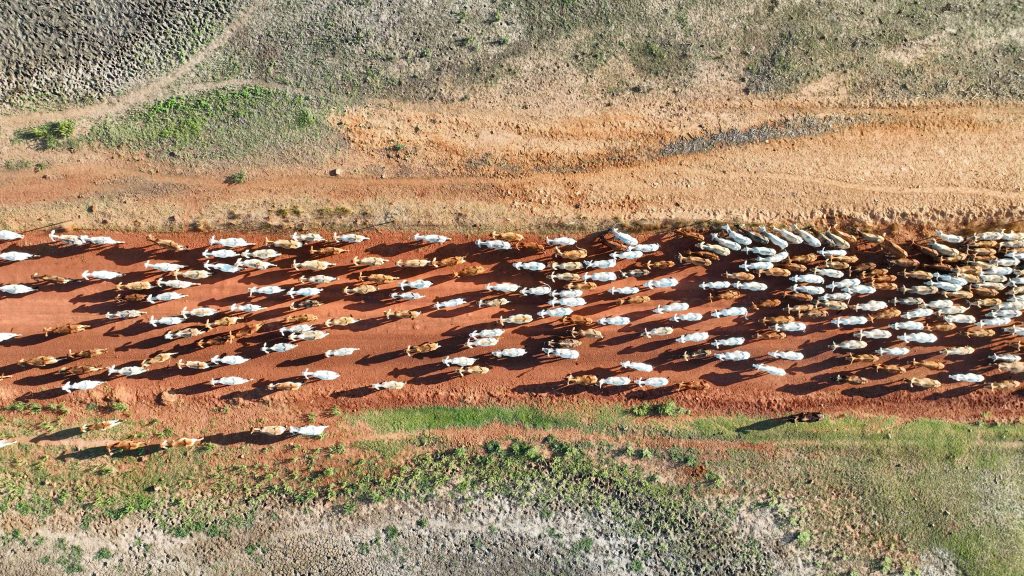
Wagyu cross cattle being moved on AAM’s Legune Station in the western portion of the NT
GROWING investor interest in large-scale Northern pastoral and irrigated cropping assets has prompted AAM to explore options for the future of its Legune Station asset in the Northern Territory.
LAWD and JLL have been appointed to lead a marketing process for the 178,870ha diversified agricultural holding near the Western Australian border.
These options include a sale of the asset to interested parties or recapitalisation of a new investment structure incorporating the asset. A sale price of $100 million or more have been suggested, including a herd of about 30,000 mostly crossbred cattle.
AAM managing director Garry Edwards said the process reflected both increasing demand from potential buyers of the asset and general investor appetite for large scale productive assets in Northern Australian agriculture, looking to take advantage of the significant development undertaken at Legune during AAM’s eight-year stewardship on behalf of its investors.
“In that time, AAM has overseen substantial development, including extensive exclusion fencing of the flood plain and the staged rollout of precision irrigation infrastructure, establishing an avenue to progressively utilise the property’s 50,000-megalitre water licence,” Mr Edwards said.
AAM bought Legune in 2018 from Queensland-based poultry and pork industry heavyweights the Hall, Cameron and McLean families, owners of Sunny Queen Eggs. Reports at the time suggested a price of about $62 million, including 30,000 cattle.
Earlier in its history the property was part of the Hooker Corporation cattle empire that included Victoria River Downs. It was later owned by the Government of Sabah.
At the time of its purchase, Legune added a jewel to AAM’s burgeoning crown of agricultural assets, which included the lease of Manbulloo at Katherine, Terrick Terrick at Blackall and a range of other livestock, cropping and poultry operations across the NT, Qld, NSW and South Australia.
A complex deal later followed involving a massive aquaculture project on a small portion of the land through a third party, that did not eventuate.
Beef Central visited Legune in 2022, compiling this comprehensive report in the propterty’s impressive development.
Over eight years, AAM’s investment transformed Legune into a diversified and integrated mixed-farming enterprise, with a licensed feedyard, export facility and irrigation capacity complementing its high-quality Brahman, Wagyu and composite breeding herd.
Land development interest
AAM’s Garry Edwards said interest in large-scale Northern Australian pastoral properties had strengthened over the past year, by attracting land-development investors but also importantly parties considering outright acquisitions and groups seeking exposure to beef supply chains.
“Given that market backdrop, we believe this is an appropriate time to investigate the depth of demand in the market for an asset of Legune’s quality and long-term development potential,” he said.
LAWD national director Tim McKinnon said the combination of scale, water security and existing infrastructure made Legune a unique and scarce offering.
“Assets of this scale, with an unparalleled water entitlement, established irrigation, feeding capacity and a high-performing cattle enterprise are rarely brought together in a single opportunity,” Mr McKinnon said.
“The infrastructure that has been developed gives an incoming investor the ability to operate at scale from day one while retaining meaningful scope to pursue further development over time.”
JLL Agribusiness senior director Geoff Warriner said Legune was a substantial diversified agricultural asset, with scale and unique characteristics that are difficult to replicate.
“Its position on the fringe of the Ord River agricultural development and at the eastern edge of the Kimberley region is another point of difference, combining proximity to an established production precinct with a landscape characterised by diverse native wildlife and wetland systems.
“With all-weather access and Kununurra 90 minutes away, Legune offers a combination of scale, productive diversity, accessibility and location that is relatively uncommon in the Northern Australian market.”
Mr McKinnon said the structured process was expected to attract domestic and international institutional investors, corporate agricultural groups, established pastoral operators, family offices and strategic investors seeking exposure to Australian agriculture and beef supply chains at scale.
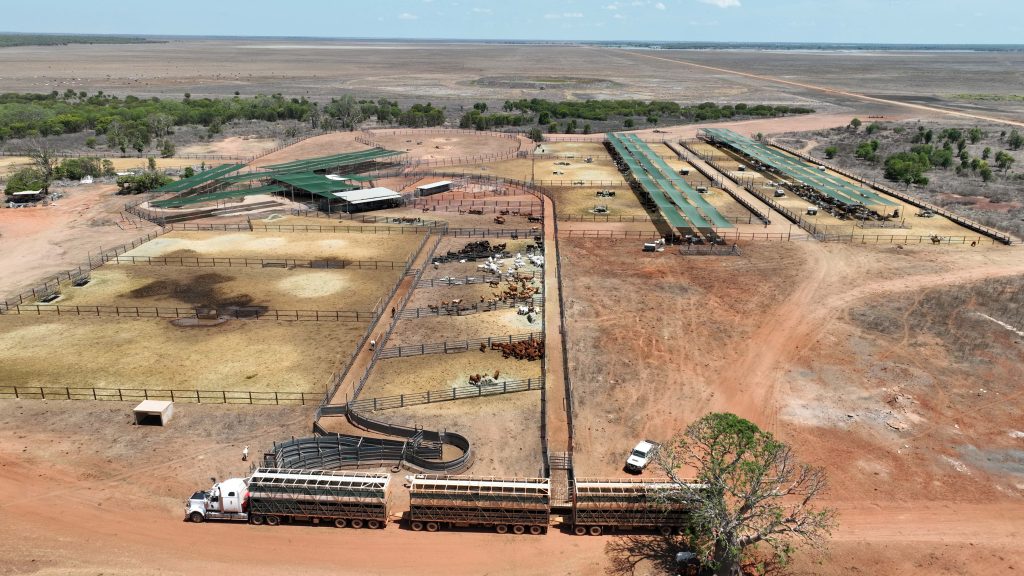
Part of Legune’s feedlot complex
Diversified production at scale with significant water security
Legune has an adopted carrying capacity of about 30,750 Adult Equivalents, supporting a substantial cattle breeding and growing operation.
Additionally, it has access to an adjoining 106,400ha portion of Spirit Hills under an existing grazing licence arrangement, with the potential for the incoming owner to assume, subject to relevant approvals and negotiations. The broader operating footprint has an assessed carrying capacity of about 37,900 AE.
 The asset incorporates a 2000-head feedyard and export quarantine facility comprising six main feed pens, hospital and holding pens, and the main Bundaberg cattle yards, with plans allowing for expansion to capacity of 4000 head.
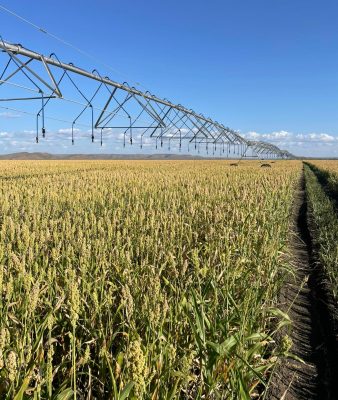
Its established cropping footprint includes 254ha of centre-pivot irrigation, 231ha of flood irrigation and 182ha of dryland cropping, currently producing fodder to supplement the livestock enterprise.
Further development plans under current approvals provide for 210ha of additional centre-pivot irrigation under three new pivots, and 132ha of additional dryland cropping.
AAM has identified and started an application for a further 4500ha farming development approval on black soil plains aimed at increasing the farmed area and productive capacity.
Water security
Water security is a defining feature.
Forsyth Creek Dam has a current storage capacity of 35,100ML and is licensed to increase the capture from the catchment of 50,000ML, while Weaner Dam provides a further 1200ML of storage.
An extensive livestock watering network includes 32 equipped bores reticulating water throughout the property, complemented by storage tanks, turkeys nests, catchment dams and frontage to the Victoria River, Sandy Creek and Forsyth Creek.
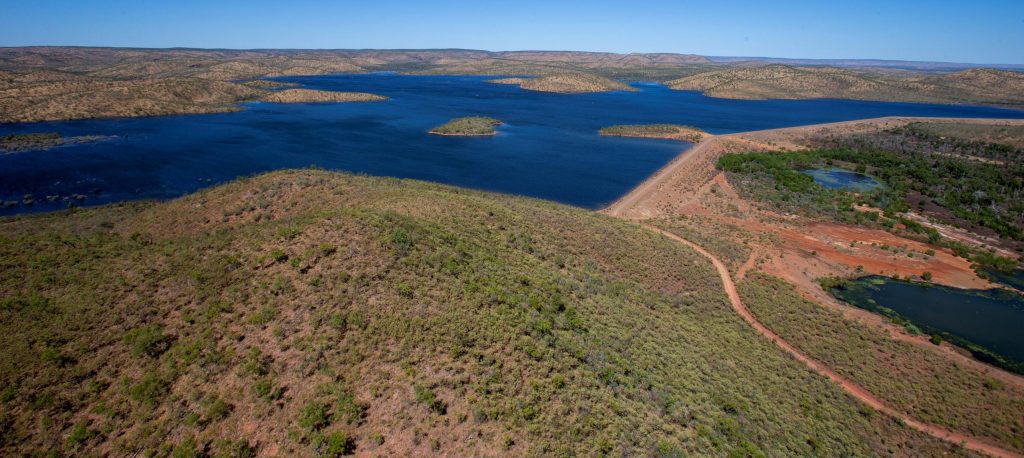
Forsyth Creek Dam has a current storage capacity of 35,100ML
Operational infrastructure across the holding includes multiple cattle yard complexes, workshop, machinery sheds, silos, fuel storage, internal roads, livestock water infrastructure, and residential and staff accommodation.
The station has an integrated solar and battery system which generates the majority of power for the homestead complex with two backup generators. There is extensive staff and contractor accommodation has been developed and refurbished on the property under AAM’s management.
AAM has invested significant capital in exclusion fencing, additional water infrastructure, precision irrigation infrastructure, land development and road construction, enhancing the efficiency and scalability of the enterprise.
HAVE YOUR SAY