
With the Cattle Transaction Levy undergoing its first major review in around 20 years, we thought it was timely to provide some historical context on how the levy was established and how it has evolved. Few are better placed to provide that perspective than David Palmer, who was Executive Director of the Cattle Council of Australia from 1989 to 1995, spanning the levy’s introduction in 1991, and later served as Managing Director of Meat & Livestock Australia and chair of the Livestock Industry Biosecurity Network. Here he looks back at the debates and compromises that created it, and the lessons they hold for reform today.
UNDERTAKING a review of the complex nature of the Cattle Transaction Levy (CTL) is appropriate but risky.
Sometimes it’s best to know the answer before you pop the question – especially when 50,000 diverse businesses are involved; not to mention a fickle political environment, necessary for any legislative changes.
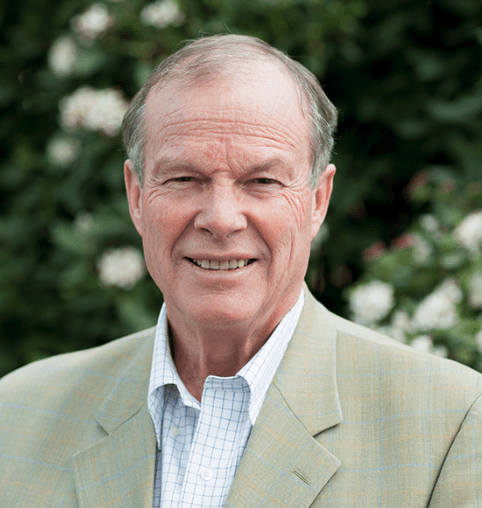
David Palmer
But it’s not the time to shirk an industry responsibility to ensure the best bang for the buck is demonstrated.
The current public debate, largely observed through the pages of Beef Central, has echoes of the initial debate and eventual introduction of the levy back in the late 1980’s through to introduction in 1991.
So, forgive me but sometimes its good to learn from history as to what might be in store post review. Like, what works and what (probably) doesn’t.
Back in the 1980’s on the back of multi million dollar chemical residue cleanup the industry faced a slaughter levy, a BTEC levy and Residue levy that at one stage amounted to $17 per head payable only at slaughter. Meat processors were adamant they were paying it; naturally, producers disagreed. An informal study at the time suggested producers paid the levy 80 percent of the time, influenced by the elastic nature of supply and demand.
So, by the late 1980’s it was resolved by state industry bodies to the Cattle Council of Australia (as it was known then) to undertake a project that might lead to a levy paid on all transactions; not just at slaughter. It was thought that there were about 12 million sales a year including eight million at slaughter – hence spread the base.
During the early days of debate various suggestions were floated:
• The status quo (slaughter levy). Not really an option given the earlier resolve.
• A % of value (like lambs today). This was dismissed because when cattle are cheap you need more money to advertise, not less.
• Flat rate per head levy payable each time the animal transacted.
• The ad valorem or Leckie/NSW Farmers’ option where an accumulating levy was struck on the value of the animal at the time of successive sales redeemed only at slaughter – better known as legislated pass forward (not unlike todays GST).
DAFF at the time advised industry that legislation surrounding a transaction at a future date unknown, or an animal notionally levy deducted, but subsequently dies before slaughter could not be written.
The southern states were reasonably content with the shift to a flat rate transaction levy on all sales.
Conversely, Queensland were divided in their views: Cattlemen’s Union (CU) supported a % levy and United Graziers’ Association (UGA) wanted the status quo. Finally by 1991 it was agreed to implement the reform centred on a flat rate levy payable at each transaction – today known as the CTL; despite some unexpected delays, the CTL was introduced on 1st February 1991 at a rate of $6.35 per head (bobby calves and dairy heifers were treated differently) intended to capture a likely 12 million transactions.
Soon after commencement Minister Crean was under siege to have the levy reduced; but without a referendum at the AMLC AGM this was not possible.
By March 1991 the shock of a visible levy caused all hell to break loose at a meeting in Wodonga with 600 hostile ‘new’ levy payers, attended by current and past CCA Presidents, John Wyld and Edward Wright. The Land reported at the time ‘they were swinging from the rafters’!
The Minister was inundated by Ministerial requests to ditch the levy and return to the old slaughter levy. At this point a compromise was reached whereby the CTL would run for two years followed by a Review to determine its worth. Discussion papers were drawn, debate was held and consensus ruled in favour of levy retention.
Time and practice was the healer.
A sense of equity had prevailed.
The cattle producers of Australia could loudly and proudly claim they were paying for industry programs and related reforms.
Additionally, recognition for equity across the entire production chain, total transparency, simple application and that no one sector along the market chain would suffer an undue impost relative to other sectors.
In time it was subsequently determined that 14 million annual transactions was more accurate allowing the levy to be reduced over time from $6.35 to ultimately $3.50 – reduced by a number of factors including termination of Brucellosis and Tuberculosis Eradication Campaign (BTEC), termination of Residue programs and related initiatives, cattle transactions ahead of budget and reducing industry reserves.
So, we move to 2006 where after some years of discussion it was resolved to increase the levy from $3.50 a head to $5.00 following a case for additional marketing. The best part of half a million dollars in industry consultation later and a successful vote in favour at the MLA AGM in 2006 allowed Minister McGauran to increase the rate to $5 a head at all sales.
Additionally what has also been observed over the 20 years I was involved was the strictures surrounding levy quantum or component pieces of the $5. For example NRS and AHA, relatively minor recipients of the levy, endure some complexity in altering their levy stream. Similarly the R&D/Marketing split within MLA is very rigid; whilst some adjustments can be justified there is no dynamic method of transferring generic levy streams between cost centres – other than a MLA AGM. Which on the one hand is incredibly democratic, but equally cumbersome.
Maximising the Government/industry partnership to 0.5% GVP is extremely important and sends a good message to the Government, research institutions and aspiring graduates. Finally one last observation is ‘what has changed since 1991?’ Short answer: just about everything!
But one matter can’t be ignored. In the 1980-1990 decades CCA never once agonized about money (resources) – we had solvent State Farm organisation who in large part recognised the value of having Federal advocacy based in Canberra, headed by NFF with specialist bodies like CCA, SCA etc. This now appears to be not the case.
I would offer a note of caution in attempting to establish a legislated stream of finance for industry advocacy sourced from the mandatory CTL. The struggle for industry in what appears to be an ever increasing partisan Parliament will be an unnecessary, and possibly fatal, distraction.
Frankly, the cattle levy has served the industry well for over 30 years; review is timely but tinker with care.
David Palmer, 18th August, 2026.
The issue missing from David Palmer’s levy account is that the grassfed cattle producer is the person or entity compelled to pay the levy but does not have a direct representative organisation controlling or directing the expenditure of that money. Only after answering that representation issue should the industry discuss the appropriate level and allocation of the levy. (Bear in mind that MLA membership is made up of competing interests – processors, and a mixed bag of livestock producers.)
Lets leave aside the levy amount for now; and go to how that representation could be achieved:
The CCA that David mentions has been replaced by CA – Cattle Australia. It is proposed that say 50 cents of the current $5 grass-fed cattle marketing levy be allocated to Cattle Australia for representative, accountability and levy-payer policy development functions. This would be a reallocation within the existing levy and would not increase the levy paid by producers.
There is a further consideration. The amount raised needs to be seen as voluntary. But we want as many as possible of the 50,000 levy payers in as members. Here’s how it can be done. All levy payers would have automatic membership of Cattle Australia, but each would have a voluntary right to opt out, to not become CA members. So, membership is voluntary on that basis. However, the full levy, currently $5, remains in the funding pool and is payable by all as it does now.
This funding access to levies is provided to other sectors in the beef supply chain – Lot Feeders. Live Cattle Exporters, AMIC as well to other industry bodies – Dairy Australia, AMPC (the processors), Australian Pork Limited and Australian Wool Innovation. All these have statutory recognition as the bodies representing particular industry constituencies and receive specified levy components directly, so why is there no equivalent statutory recipient body for grassfed cattle producers? Why are grass-fed cattle producers left out? Correction of that is necessary.
Thanks David, some interesting and valuable comments. I am particularly concerned that declining livestock levy investment towards R&D (MLA, AWI and Dairy Australia) in conjunction with declining state and Commonwealth Government R&D investment will negatively impact upon industry productivity and profitability for decades to come. These declining investments, at a time of rising biosecurity, climate change, geopolitical and productivity challenges (along with rising costs for undertaking R&D) have led to significant reductions in scientific capability and capacity at CSIRO, state agricultural departments and Universities. Unfortunately, these developments have largely gone unnoticed with any media attention undertaken in isolation without the overarching lense regarding net impacts. Whilst this can partly be addressed via the grass-fed cattle levy review, what is actually needed is an agricultural R&D strategy supported by industry and Government to determine priorities, timeframes and the sustainable funding to deliver them.
I think before there is a rush to change the levy system, a serious and patently independent review of the effectiveness and impact of the allocation and performance of the expenditure of the funds raised under existing levy regime. Having spent 38 years involved in the marketing side of AMLC/MLA’s activities, I believe in recent years the focus of the expenditure and programmes in marketing are seriously deficient of any significant outcomes. It is my view that a $5 levy on a beast is an insignificant impact on producers who largely appear to pay the levy and largely do not investigate or consider the effectiveness of this expenditure. On the international stage I would assert the money is largely wasted. Too many expats sapping up the marketing funds, lack of product knowledge, intuitive marketing qualifications and ability, has destroyed years of investment in building relations with segments of the supply chains to educate and build loyalty with diverse distributors and customers. Expensive and showy advertising campaigns which have not clearly evidenced actually benefits and gain. Lack of product knowledge, especially is cut profile and use. Failure to optimise the attributes of the MSA program and the purveying to consumers the benefits of this program, especially in the adoption of what are considered alternative cuts. MSA has effectively disappeared from the public domain. Its introduction a number of years ago was fleeting and did not draw on the information that is contained in this world class initiative. Used properly MSA can help to enhance value of the lesser known cuts and bring beef into a better price point for many consumers. Focus has been lost on addressing consumers concerns. Rather puerile, humorous expensive advertising campaigns, in my humble view, have had minimal if any impact. This also applies to the extravagant and clearly ineffective lamb campaign. Price is the major limiting factor in consumers purchasing decisions.
It is my view that producers are largely not engaged with MLA and its activities and outcomes. MLA’s engagement with producers, processors and exporters has declined substantially from how is occurred in my time. I assert the first thing that should be done is to conduct an independent, serious review of the levy expenditure and outcomes of the expenditure in the marketing arena. I am not commenting research activities as I am unaware of those specific activities. Anyway, these are “just a few thoughts from someone who spent a number of happy years working hard to ensure producer’s levies were targeted and hopefully well spent. Hopefully these comments do not contravene the “Comments Policy”
Thank you David Palmer for such a clear and detailed record of how the cattle industry developed a levy in the 1990’s which became widely accepted as being the most appropriate, cost effective and fair system for all participants. This is very timely and useful background for today’s deliberations
If is to rise minimal as possible, but in hard times like drought to revert back the price of today or canceled until things improve. What we don’t need is more farmers leaving their farms after generations in the one family.