
AS Australia’s agriculture industry celebrates a $100 billion production milestone, the country’s meat processors are warning the commercial viability parts of their sector may be seriously tested.
The Australian Meat Industry Council says processors are facing death by a thousand cuts as rising operating costs, tight livestock supply, shrinking access to major export markets, labour constraints and increasing regulatory burdens converge.
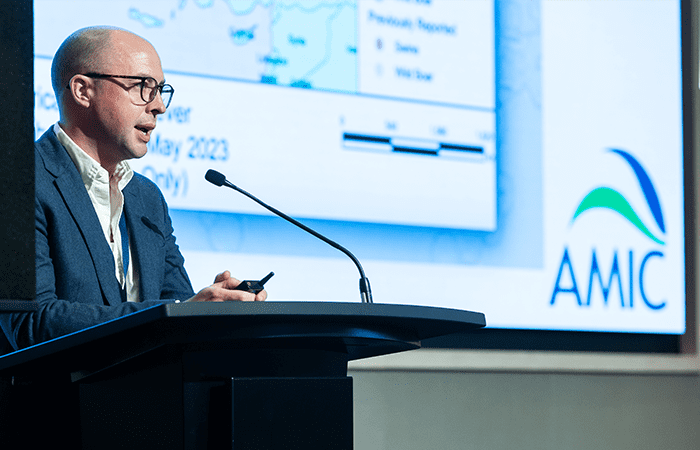
AMIC chief executive Tim Ryan.
AMIC chief executive officer Tim Ryan says industry needs actions and outcomes to stem the damage and ensure that the Australian meat industry remains viable and internationally competitive.
“While we have been raising these issues with Government, the fact is the operating environment continues to deteriorate, and decisions are being made which constrain, rather than support, meat processors and the regions and jobs that rely on them.”
Processing costs have risen far faster than inflation over the past decade. At the same time, industry modelling estimates around $2 billion worth of Australian meat exports are being affected by trade restrictions across China, Korea and Indonesia.
The industry also emerged from the Australia–EU Free Trade Agreement negotiations with an outcome AMIC says fell well short of delivering commercially meaningful red meat access after years of negotiations.
Export charges
Government-controlled export charges remain another unresolved pressure.
“Government does not control global commodity markets or international conflicts, and we understand that,” Mr Ryan says.
“But it does control the costs it imposes on exporters. It has a role in workforce policy. And it has enormous influence over how hard Australia pushes to protect and expand market access. These are the areas where we need government making the operating environment better, or at a minimum ensuring it does not become worse.”
AMIC says frustration is growing particularly around market access, where despite high-level discussions with Government, major outcomes in critical markets are not being achieved, resulting in Australia’s meat trade being systemically restricted.
“The Government has been fast to promote incremental market access improvements and wins, but the fact is that our access to key markets is going backwards. While we welcome the engagement, engagement has to produce outcomes. When market access disappears, when technical barriers remain unresolved and when new costs keep being added at home, something must give.
“The sheepmeat sector is in a genuinely precarious position, with acute livestock shortages and little capacity to absorb another major shock.”
Beef processor margins have dropped in recent months, while market access has deteriorated across several key destinations at the same time as the cost of livestock has remained elevated.
“What processors can earn in global markets and what farmers receive at the farmgate cannot remain disconnected forever,” Mr Ryan said.
“If we continue losing value and market options overseas, eventually that flows back to livestock producers. We are sounding the alarm while there is still time to correct course.”
See Beef Central’s earlier summary on the recent cost to operate report
Source: AMIC
HAVE YOUR SAY