
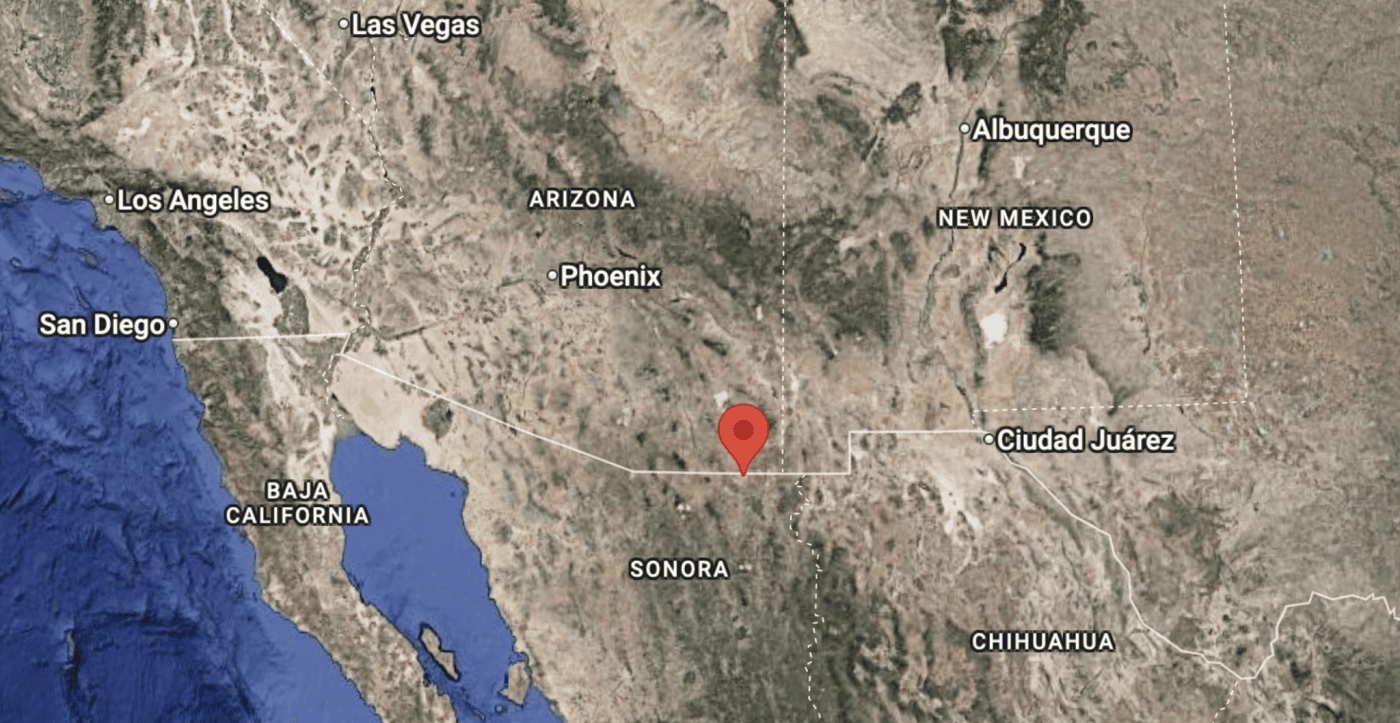
Google Maps image showing the location of the Douglas, Arizona, on the US/Mexico border.
THE US Department of Agriculture (USDA) has announced it will reopen one section of the US-Mexico border to Mexican cattle imports in August, easing a ban imposed in November 2024 in response to the spread of New World screwworm in Mexico.
According to an official USDA statement, cattle imports will resume through the Douglas, Arizona, port of entry on August 24.
The USDA said it would then consider a coordinated reopening of the Santa Teresa and Columbus ports in New Mexico, contingent on Mexico meeting the requirements of a Joint Action Plan.
Every animal entering the US through the reopened ports will undergo a full USDA inspection to ensure it shows no signs of New World screwworm, the department said.
US media outlets have reported that the Trump administration is under public pressure to reduce beef prices, with border reopenings and improved supply expected to help ease high prices.
As of July 2026, the USDA Animal and Plant Health Inspection Service (APHIS) has confirmed 42 domestically acquired animal cases of New World screwworm in the United States. The first case in the US was confirmed on June 3, 2026, marking the return of the pest after decades of being eradicated.
USDA says pest control remains top priority
In the same announcement, US Secretary of Agriculture Brooke L. Rollins said protecting the United States from New World screwworm and pushing the pest out of Mexico and back to the Darien Gap remained “a top priority at USDA” and had “the full attention of the Trump Administration”.
Secretary Rollins said the closure of southern ports of entry since November 2024 had been “a tough but necessary action” to control the spread of New World screwworm in Mexico and protect the American livestock industry.
She said it was “now safe to reopen” the Douglas port in 30 days and resume the “hundreds year old movement of cattle”.
Nearby Mexican states cited as ‘lower-risk’ areas
Secretary Rollins said the Mexican states of Sonora and Chihuahua, which border the US states of Arizona and New Mexico, had maintained strong animal health infrastructure built on successful animal disease control measures.
 “While the rest of Mexico has not been able to stop the spread of the screwworm or stop legal and illegal movement, Sonora and Chihuahua do have a track record of success in these spaces, giving USDA confidence that they can do the job,” the USDA statement said.
The USDA said the closest active case to the Douglas, Arizona, port was about 325 miles away and was detected on July 22, 2026.
Further port openings planned
After evaluating the success of the initial reopening and potential impacts or risk assessment changes, the Animal and Plant Health Inspection Service (APHIS) will then consider reopening the Santa Teresa, NM, and Columbus, NM, ports to live cattle, bison, and horses, the USDA said.
The USDA said the timeline would remain flexible and could be adjusted according to Mexico’s progress in meeting Action Plan milestones and addressing critical issues.
US ranch group supportive of USDA approach
The National Cattlemen’s Beef Association issued a statement supporting the USDA’s approach.
“Secretary Rollins and her team at USDA have been fighting the spread of New World screwworm with an aggressive five-point plan and comprehensive response playbook,” the statement from NCBA CEO Colin Woodall said.
“Their work – along with the diligence of cattle producers in border states – bought the United States valuable time to improve our domestic readiness.
“The whole-of-government response has put us in a strong position to begin safely and gradually reopening our southern border to cattle shipments.
“This decision will help normalize business for cattle operations throughout the border states and Southern Plains. We appreciate the continued work of USDA to support American producers and the US cattle industry.”
HAVE YOUR SAY