THIS week’s property review includes this wrap-up of interesting recent listings across Queensland, and separate articles on recent sales of note, and listings in the Northern Territory and New South Wales.
- Mungindi’s Inglestone offers scale & flexibility
- FNQ carbon & cattle station
- Desert Uplands breeder block
- Lawrence family’s well regarded Kendah lists
Inglestone offers scale & flexibility
Mungindi producers Rob and Sally Houston have listed their Western Downs cropping and grazing aggregation in southern Queensland’s feedlot corridor.
Held by the family since 2014, the couple runs Sandholes Farming, which focuses on dryland cotton and sorghum production, alongside Brangus cattle breeding near the Queensland-New South Wales border.
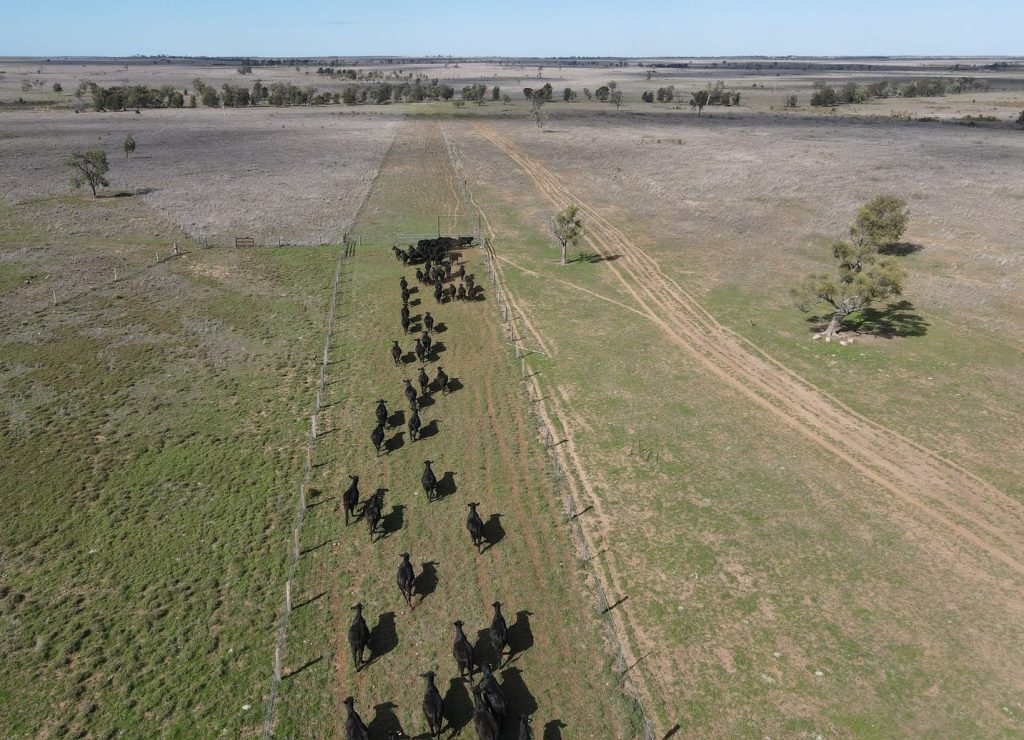
The 6445ha Inglestone Aggregation, pictured above, is located 15km south-west of Inglestone, 140km from Goondiwindi and 220km from Roma.
The aggregation is close to major grain and livestock markets, including feedlots between Condamine and Dalby and surrounds, the Dalby and Roma saleyards, and grain receival sites at Meandarra, The Gums, Miles, Toobeah and Goondiwindi.
It comprises three holdings – the adjoining 2557ha Warooka and 1777ha Woodville and the 2111ha White Hut, which is 7km away.
LAWD national director Tim McKinnon said the three assets work well together while also offering distinct entry points for different buyer groups.
 “Warooka provides the scale and operational base, Woodville brings a highly developed cropping profile and White Hut offers an even balance of cultivation and grazing, with water security and future land-use flexibility.”
Mr McKinnon said the location, combined with 9000 tonnes of grain storage, gives the aggregation a competitive advantage in supplying grain directly to the lotfeeding sector.
“Over the past 12 years of ownership, the vendor has produced 11 high-quality crops, positioning Inglestone as a highly consistent performer in a reliable rainfall area.”
“While extensive development has already been undertaken, only 50 percent of White Hut is currently arable, creating an opportunity to transition more country from grazing to cropping,” Mr McKinnon said.
He said the aggregation’s location and flexibility were expected to attract a broad buyer pool.
“The market in Queensland has remained strong compared with southern states due to positive seasonal conditions and commodity prices. Significant interest is anticipated from neighbours, large-scale family farming businesses and corporate investors.”
The open farming country is underpinned by chocolate to grey self-mulching cracking clays, with areas of red soils.
Around 4573ha, or 71pc, has been extensively developed for dryland cropping, supporting consistent yields across winter rotations of wheat, barley and chickpeas, complemented by summer sorghum.
Over the past 12 months, the vendors have undertaken contour bank development and completed LiDAR surveying across the aggregation.
A further 1872ha is used for grazing, supporting 580 Adult Equivalents, or 1AE per 3.3ha. That capacity may be further enhanced through targeted increases in fodder production.
Water is supplied by a network of 24 dams, supported by an equipped and reticulated sub-artesian bore on White Hut, in a 578mm average annual rainfall region.
The Inglestone Aggregation is being offered for sale as a whole or as separate assets by expressions of interest closing on August 27.
Three holdings, multiple pathways
Warooka
At 2557ha, Warooka is the largest of the three holdings and carries a significant share of the aggregation’s operational infrastructure. It includes 2018ha of cultivation and 540ha of grazing and native vegetation, along with a four-bedroom home, guest and staff quarters, numerous sheds, steel cattle yards and substantial grain storage.
Woodville
Woodville has around 1516ha developed to cropping and 262ha set aside for grazing. The 1777ha property includes near-new exclusion fencing and a recently renovated four-bedroom residence.
White Hut
For buyers seeking cultivation and livestock flexibility, the 2111ha White Hut offers a near-even split between cropping (1040ha) and grazing (1071ha). A significant proportion of the grazing country is considered to have arable development potential, providing scope for future land-use flexibility. Infrastructure includes steel cattle yards, 6km of near-new exclusion fencing and a four-bedroom home.
FNQ carbon & cattle station
A far north Queensland cattle station earning carbon credits is attracting good inquiry from carbon groups and Queensland and Northern Territory producers seeking additional breeding country.
The 62,800ha Astrea Station is located near Yarraden, 450km north of Mareeba and 60km west of the Musgrave Roadhouse in the Cape York Peninsula.
The boundary fenced property last changed hands in 2022 and has been listed by for sale by the current owner who is consolidating his assets.
Astrea has been involved in a Savanna Fire Management Project since 2018, with the vendor reporting strong results. The projected annual ACCUs is around 5000.
Vohland Real Estate agent Russell Wolff is seeking expressions of interest for the value for money property.
“The sale includes 2000 head of well-handled, branded Brahman and Gelbvieh cross cattle. The mostly females range from this year’s weaner heifers to older cows
with the calving season well underway.”
Mr Wolff said Astrea is a well-managed, fully operational cattle station earning additional income from carbon credits.
“Astrea can be purchased on a walk-in, walk-out basis including the existing carbon project. Alternatively, it can be leased for five years with the cattle, without the carbon project.”
The country ranges from hilly country in the north to undulating to flat country in the south.
It is timbered with semi open to heavy stands of ironbark, bloodwood, Cooktown
ironwood, stringybark with some areas of tea tree.
It is growing abundant spear grass, kangaroo grass and plume sorghum, as well as Townsville lucerne and some seca stylo.
The property has double frontage to the seasonal Lukin River and is well watered by 25 dams plus several spring fed waterholes and swamps.
Infrastructure includes a three-bedroom home, workers accommodation, two dongas,
numerous sheds and two cattle yards.
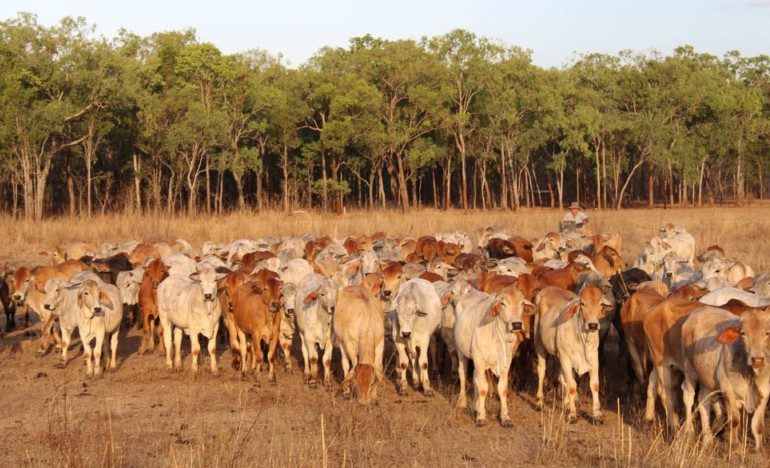
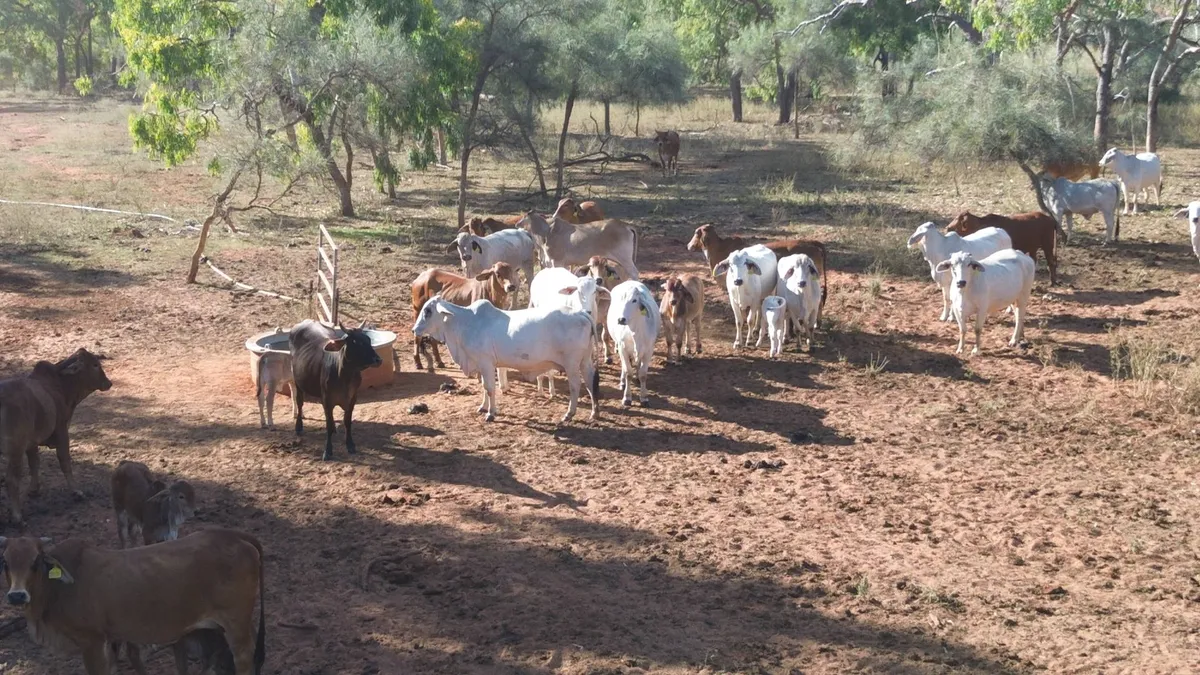
Red and Grey Brahman cattle on Astrea Station, in Cape York
Desert Uplands breeder block
A well-grassed Desert Uplands breeder block in North Queensland is expected to test recent local property values, as the Herrod family brings Thirlestone to market.
The 20,471ha leasehold property, in the Lake Buchanan district, is located 150km south of Torrens Creek and 260km south-west of Charters Towers.
It is being offered with about 800 cows, mostly eight years old or younger, 25 bulls and some plant.
Carved from the family-owned Yarrowmere, Thirlestone has attracted strong inquiry from local producers, as well as buyers from southern and western Queensland.
The listing follows the recent sale of nearby Ronlow Park, a 31,300ha property typically running 1500 breeders, which sold earlier this year for more than $8 million including around 430 head of mixed cattle and some plant.
Located in a tick-free area, allowing movement of cattle to the south and west, TopX agent Brett Christie said Thirlestone lends itself to a breeding or finishing operation.
“The property offers an expansion opportunity for existing operations but also works as a standalone calf factory,” Mr Christie said.
Rated to run 1400 cows, there is scope to increase carrying capacity by spreading water further and adding more fencing.
Mr Christie said Thirlestone had been conservatively stocked to maintain healthy ground cover and the excellent condition of the breeders and the impressive size of the weaners prove this.
The country features red sandy loam creek flats carrying coolabah and currant bush, rising to red and grey duplex soils through the Desert Uplands areas.
Thirlestone is carrying a large body of feed, including improved pastures and native grasses.
Water is supplied by 17 dams, five bores, seasonal swamps and waterholes, in a district averaging 508mm of annual rainfall.
Infrastructure includes a three-bedroom home, workers’ accommodation, steel cattle yards and a shed.
Expressions of interest close on September 4.
Cattle on Thirlestone
Lawrence family’s well regarded Kendah lists
In Central Queensland’s Banana Shire, Greg Lawrence is offering his family’s well-regarded cattle country to the market with a $7 million price tag.
The 575ha Kendah, held by the Lawrence family for the past 65 years, is located 9km from Wowan and 80km from both Rockhampton and Biloela.
Ray White Rural agent Netty Wendt, who has been appointed to handle the sale, said Kendah is regarded locally as strong country capable of turning off fat, good-quality cattle.
Estimated to carry more than 350 head, the property is currently running 110 steers, 170 heifers and 50 cows and weaners.
The country is cleared of brigalow, belah and vine scrub with heavy dark alluvial soils and rich red volcanic and heavier loams carrying a good body of feed. It slopes down to alluvial blue gum creek flats.
Situated in a district with a 730mm annual average rainfall, Kendah is watered by three equipped bores, three equipped wells, two dams and two semi-permanent waterholes.
Infrastructure includes a three-bedroom home, four sheds, cattle yards and three silos with a combined capacity of 290 tonnes.
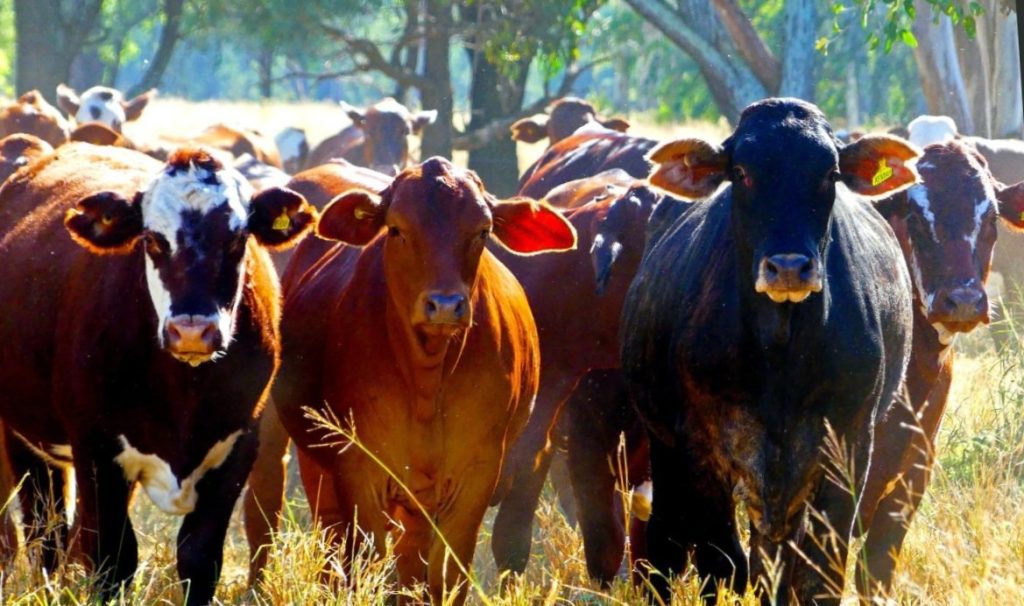
Country on Kendah is cleared brigalow, belah and vine scrub with heavy dark alluvial soils and rich red volcanic and heavier loams carrying a good body of feed
HAVE YOUR SAY