
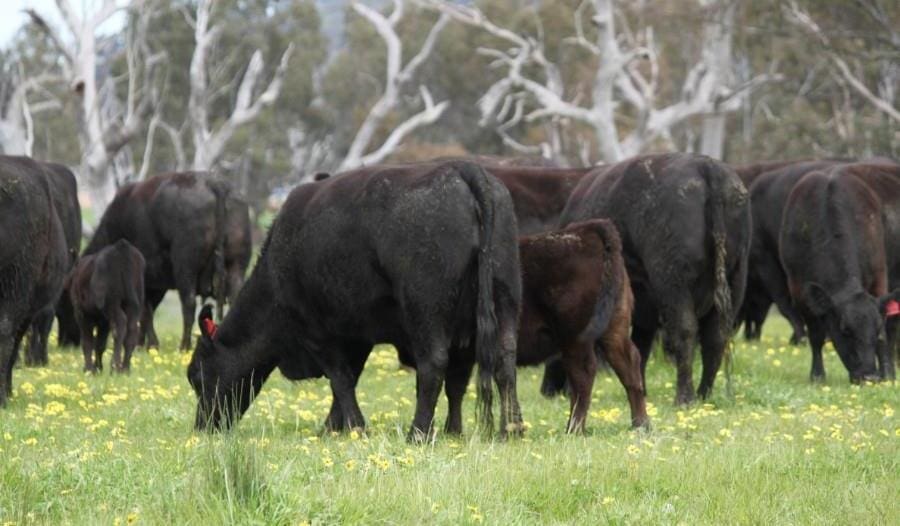
AS the bull selling season progresses, physical appearance will form an important part of many producers’ selection decisions.
However the assessment of each bull will have started well before sale day. From weaning onwards, seedstock breeders make decisions about which bulls to retain, develop and ultimately offer for sale based partly on their physical appearance and structural soundness.
These assessments consider whether a bull is capable of doing his job, which means walking across paddocks, finding cows and completing multiple joinings across several seasons. They also take in his muscle pattern, maturity pattern and overall structural soundness.
A bull’s phenotype reflects both his genetics and the environment in which he has been raised. Many structural traits also have a heritable component. The way a bull moves, stands and carries himself is therefore relevant not only to his own working ability, but also to the potential functionality of his progeny.
Structure is generally considered to be lowly to moderately heritable, although estimates depend heavily on the trait being assessed and how it is recorded. Visual conformation and structural scores commonly have heritability estimates between 0.15 and 0.40, while estimates for individual feet and leg traits are often between 0.10 and 0.30.
In practical terms, selecting against undesirable structure should reduce the likelihood of it appearing in future progeny. A bull’s appearance remains an indication of genetic merit rather than a guarantee, because nutrition, growth rate, injury and management all influence the structure presented on sale day.
Determining whether an observed problem is inherited or caused by environmental influence
This creates another challenge: determining whether an observed problem is inherited or caused by environmental influences. Two bulls may present with a similar problem, but the underlying cause, and therefore the likelihood of it appearing in their progeny, may be different.
Visual assessment can identify the problem, but not always how much of it is genetic.
For seedstock breeders, this is a significant consideration. Breed societies and breeding programs identify known genetic conditions relevant to their populations, while DNA testing allows breeders to remove carriers or manage their use to prevent affected progeny.
Structural defects are not necessarily the same as these recognised conditions. A single-gene mutation can be identified through a specific DNA test, but most structural traits are influenced by many genes and environmental factors. There is generally no single test that can determine the likelihood of a bull producing structurally unsound progeny.
Two studies offer useful direction for breeders preparing bulls for sale. The first, led by Brazilian animal genetics researcher Dr Juliana Salies Souza from the Federal University of Pelotas in Rio Grande do Sul, analysed records from 83,000 Hereford and Braford cattle. Published in Livestock Science in 2020, the study examined visual scores for limb conformation, breed characteristics, sexual characteristics, eye pigmentation and navel size.
The heritability of limb conformation was estimated at 0.38 at weaning and 0.25 at yearling. The genetic correlation between scores recorded at the two ages was greater than 0.94, indicating that selection at weaning should identify many of the same genetic differences evident at yearling.
‘Benefit of the doubt’
Most bull breeders begin selecting their future sale animals at an early age, although some are given the ‘benefit of the doubt’ and retained to see how they develop.
The authors concluded that selection for these scores can be carried out at weaning alone, and that selecting young animals for limb conformation should avoid problems appearing later.
 On that basis, retaining bulls in the hope that they improve may add development costs without materially changing their genetic ranking for structure. Consistent assessment at weaning can identify bulls with less desirable structure before significant costs are incurred in developing, photographing and marketing them.
It also provides an assessment before later nutrition, injury or sale preparation changes how their structure appears.
The second study, led by Brazilian researcher Milena Aparecida Ferreira Campos from the Federal University of Bahia, examined seven morphological defects in Nellore (Brazilian Bos Indicus) cattle, with collaborators from Purdue University, São Paulo State University and the University of Georgia.
Using records from Brazil’s DeltaGen breeding program, the researchers examined feet and leg malformations, jaw and muzzle deviations, loin and hump abnormalities, navel defects and depigmentation.
Unlike the Hereford and Braford study, which scored degrees of variation across all animals, the Nellore study recorded each defect simply as present or absent. Although the heritability estimates were relatively low, ranging from 0.03 to 0.12 when calculated from these records, the researchers found sufficient genetic variation to reduce the incidence of the defects through selection.
Visual assessment should not be the only consideration
For seedstock breeders choosing which young bulls will progress into a sale team, identifying and removing animals with visible structural defects is an important first step. However, this research suggests that visual assessment should not be the only consideration.
Most of the defects assessed in the Nellore study were considered polygenic, meaning they were influenced by many genes rather than a single identifiable mutation. A bull may appear structurally normal while carrying a combination of genetic variants that increases the likelihood of a defect appearing in his progeny.
Selection decisions should consider not only the individual bull, but also whether similar issues have occurred among his siblings or progeny, or within his sire and dam lines. Removing an affected animal deals with the immediate problem; monitoring the family in which the defect occurred provides a better opportunity to reduce the underlying genetic risk.
Together, the studies reinforce the value of assessing structure across the entire calf drop rather than relying on the final inspection of bulls that reach sale.
Records should include retained and culled animals, those with and without defects, and the reason each bull was removed. Recording only obvious problems or sale bulls provides an incomplete picture of structural variation within the herd.
Record keeping
The reasons for culling need to be clearly recorded as well. An injury shouldn’t be treated in the same way as a defect recurring among related animals.
Repeated problems within a sire or dam line shouldn’t be dismissed because no single mutation has been identified. Linking structural records with pedigree and performance information provides a better opportunity to recognise these family patterns.
For seedstock breeders, the objective is therefore not simply to remove bulls that would fail a sale-day inspection. It is to identify recurring problems earlier and reduce the probability of producing them in future generations.
 Alastair Rayner is the Strategic Account Manager for Southern Australia with Vytelle and Principal of RaynerAg. He has over 30 years’ experience advising beef producers and graziers across Australia. Alastair can be contacted here or through his website: www.raynerag.com.au
HAVE YOUR SAY