
SEASONAL conditions across northern NSW and southern Queensland earlier this year were among the most challenging of the past decade.
Pasture availability fell well below average from autumn onwards and, in many districts, reached some of the lowest levels recorded over the past ten years. The result has been one of the largest reductions in breeding herds for some time.
The National Livestock Reporting Service data clearly shows the impact of those destocking decisions. Weekly yardings across northern NSW and southern Queensland (see list of yards included in the data in caption below) peaked at around 74,000 head during April, more than double the long-term average of about 35,000 head.
Above average yardings continued from January through to early winter, confirming that many producers made significant reductions to stocking numbers.
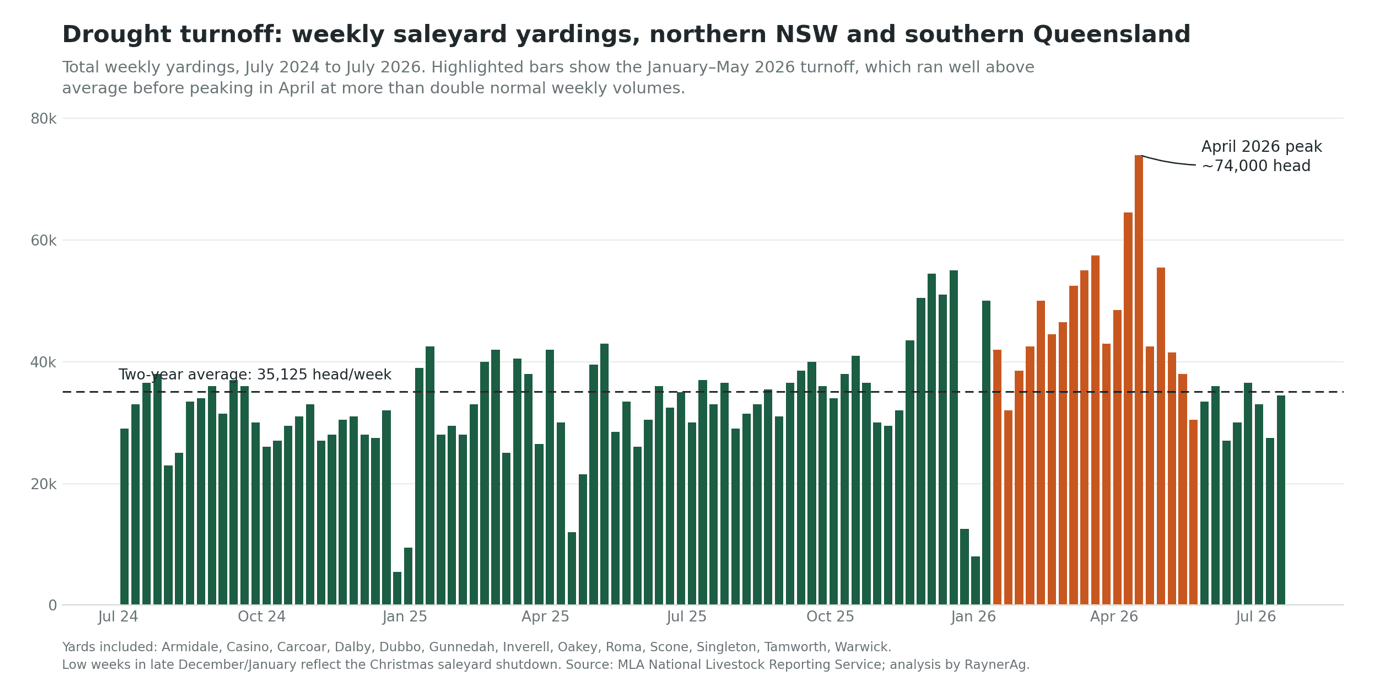
Click on image for a larger view
What do herd reductions mean for bull breeders?
For commercial producers, the decision to reduce numbers in the affected zone has often been unavoidable. However, for seedstock breeders preparing for spring sales targeting the region, the question is what those reductions will mean for bull demand over the next two years.
Current market signals suggest the outlook may be more positive than many expect.
 Restocker demand has strengthened considerably since the autumn rain, with the Eastern Young Cattle Indicator reaching four-year highs. During May and June, restockers also overtook lotfeeders as the dominant purchasers of young cattle. Those trends indicate that many producers are already positioning themselves for rebuilding rather than continuing to reduce numbers.
The broader market outlook supports that view. The United States entered 2026 with its smallest cattle herd in more than 75 years, while MLA’s latest industry projections indicate that the American herd rebuild has yet to commence. At the same time, Australian cattle supply is forecast to tighten from 2027 as the effects of recent high turn-off flow through the production system.
Bulls purchased this spring will sire calves entering exactly that market. Rather than becoming less important during a downturn, this year’s bull purchases may prove to be among the most significant producers make.
Younger, more productive breeder herd
There is another reason why herd reductions should not automatically translate into weaker demand for quality bulls.
Most producers haven’t reduced numbers randomly: where possible, they have retained younger, structurally sound and more productive females while selling older or less productive cows.
Although every enterprise is different, many retained breeding herds are now likely to contain a higher proportion of their better, younger females than they did twelve months ago.
Reducing herd size, while concentrating the breeding herd around better females, increases the value of every joining decision. Rather than focussing on rebuilding numbers, producers now have an opportunity to accelerate genetic progress within a more productive female base.
This places even greater importance on selecting bulls capable of lifting the genetic standard of the herd they have deliberately chosen to retain.
Early sales look promising
Early spring sale results appear consistent with this pattern.
Although clearance rates have been more variable than in recent years, average prices have generally remained resilient across the Angus, Hereford and Simmental spring sales conducted to date.
Merawah Herefords averaged $13,867 for 46 bulls this week, clearing 92pc. A fortnight earlier, Wattletop Angus at Guyra sold all 48 bulls averaging $11,541, while Greg Chappell’s Dulverton Angus at Shannon Vale sold 69/71 bulls averaging $14,333. Click here to view recent sales results across Australia.
Several other sales in the drought-affected regions of northern NSW have still achieved full clearances, with averages exceeding $11,000.
Perhaps the more interesting trend hasn’t been the number of bulls sold, but which bulls buyers continue to compete for. Competition remains concentrated on the better bulls, with top prices regularly reaching two to three times the sale average.
Rather than indicating a broad re-pricing of the market, the early results suggest buyers have become more selective rather than simply less willing to spend.
The key message for producers this spring is to be cautious about assuming herd reductions will automatically translate into cheaper bulls.
The bulls that buyers really want are still attracting strong competition. Southern rebuilding intentions may reinforce that demand.
The MLA April Beef Producer Intentions Survey reported the strongest expansion intentions from southern producers, suggesting interstate competition for quality bulls could remain an important feature of this spring’s selling season.
For seedstock producers approaching their sales, it is worth remembering that commercial breeding herds have certainly become smaller, but they have not disappeared.
In many cases they are now more heavily concentrated around a producer’s better females. That provides an opportunity to shift pre-sale conversations from replacing numbers to investing in the genetics that will shape commercial herds for years to come.
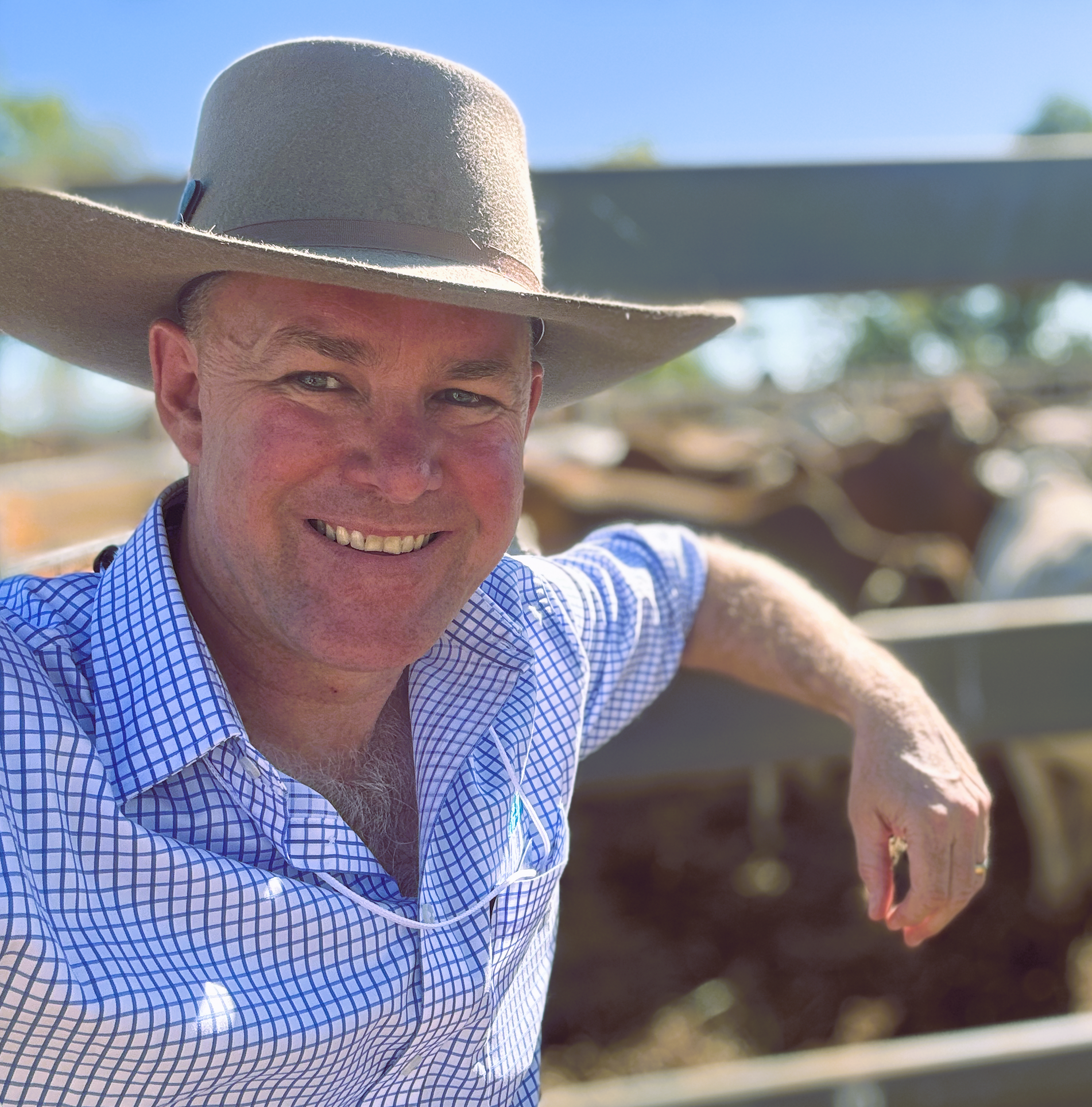 Alastair Rayner is the Strategic Account Manager for Southern Australia with Vytelle and Principal of RaynerAg. He has over 30 years’ experience advising beef producers and graziers across Australia. Alastair can be contacted here or through his website: www.raynerag.com.au
HAVE YOUR SAY