
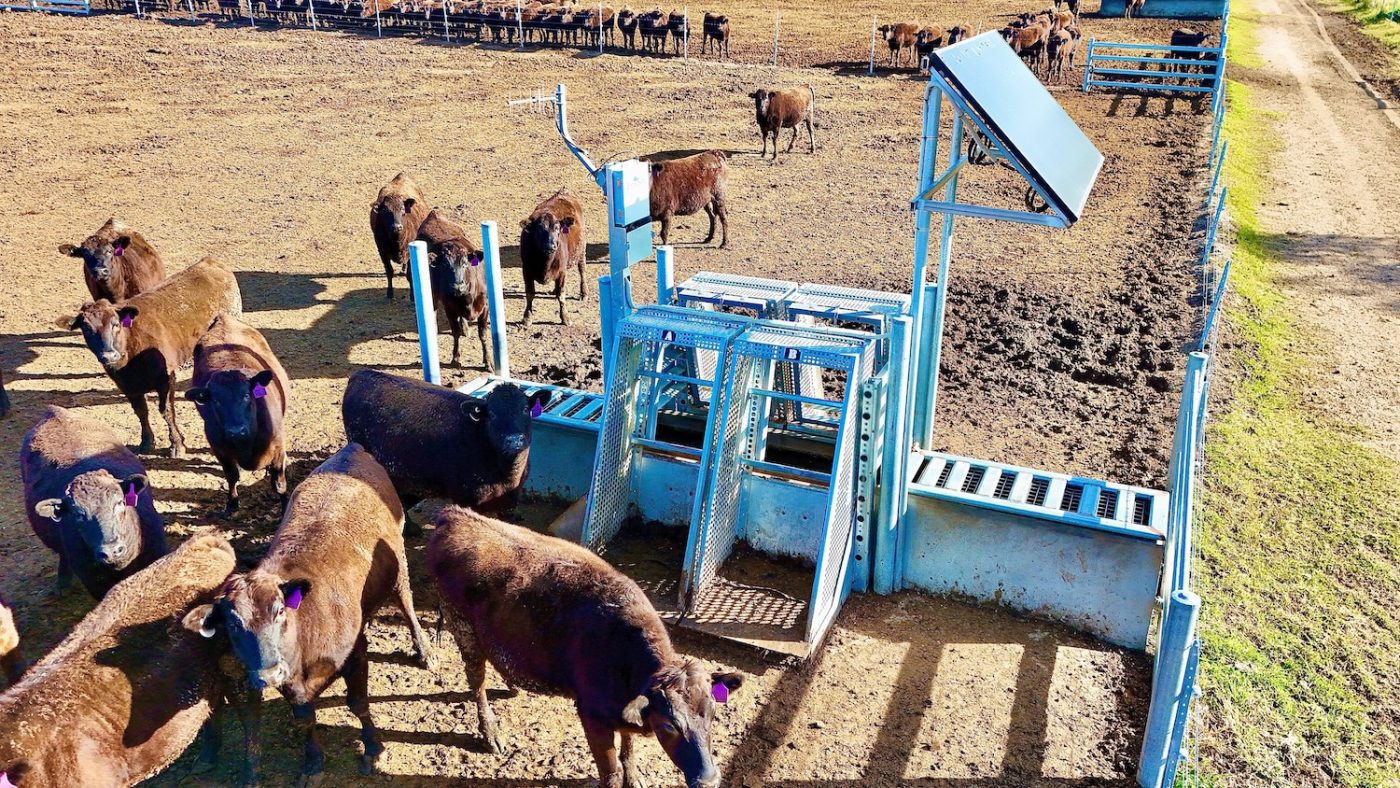
Vytelle Sence in-pen weighing system on Pukawidgi.
One of Australia’s largest Wagyu progeny testing programs is demonstrating that selecting cattle for improved feed efficiency can simultaneously boost profitability and reduce methane emissions.
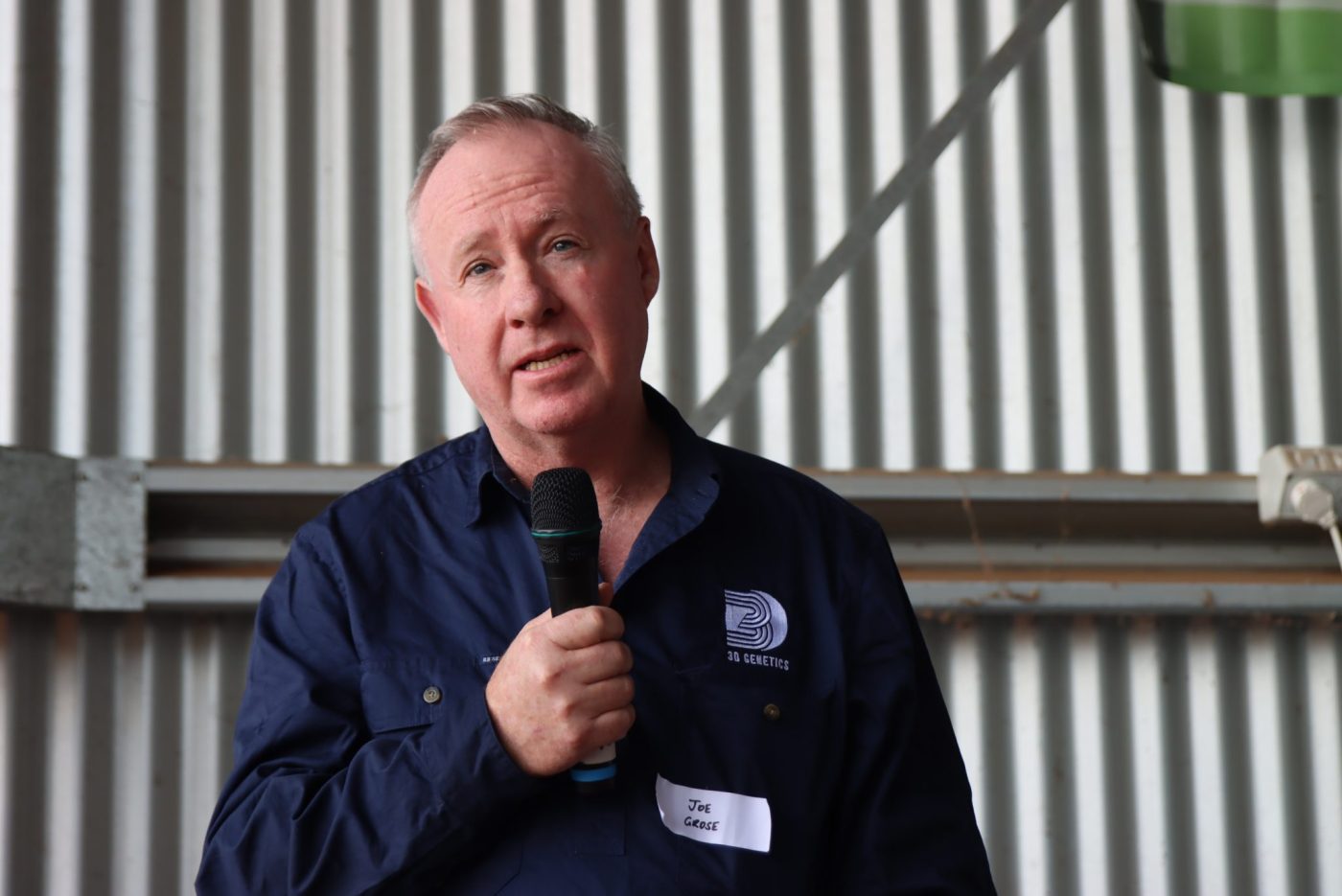
Veterinarian-turned-Wagyu breeder Dr Joe Grose told the Zero Net Emissions for Agriculture CRC field day at Champion Station, Blackall, last week that feed efficiency remains one of the industry’s biggest untapped opportunities, despite years of industry discussion about the trait.
His own high-performance Wagyu breeding business 3D Genetics is a testament to progress through measurement and benchmarking. It now follows about 60,000 progeny annually through commercial production systems, tracked from birth to slaughter using DNA, carcase and performance data to guide breeding decisions.
After using an external provider for nine years, 3D Genetics established its own feed efficiency testing facility on farm in 2021, now one of the largest in Australia, capable of evaluating about 1800 animals every year using individual feed intake and weight monitoring technology.
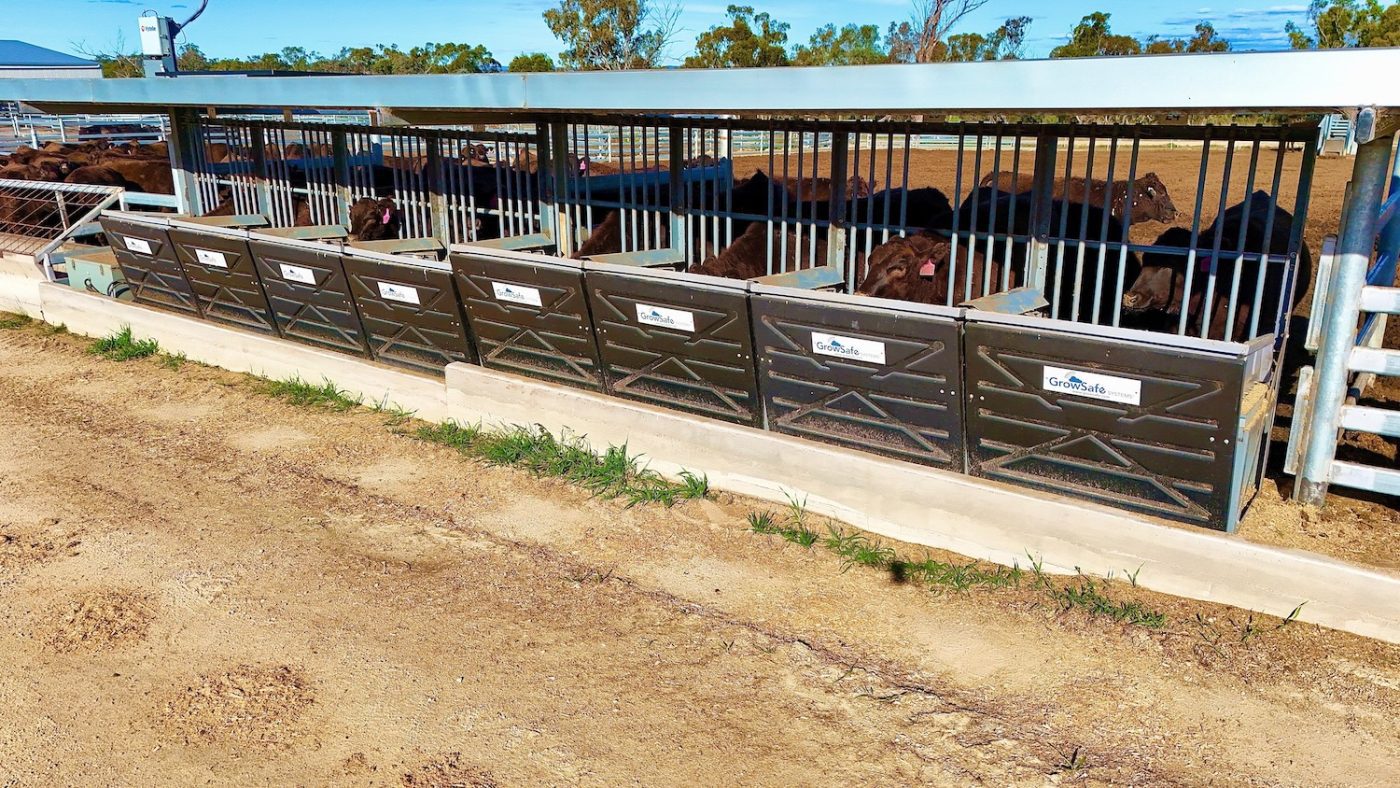
Vytelle Sense feed efficiency hardware on Dr Grose’s northern NSW farm Pukawidgi.
Dr Grose said the data has revealed enormous differences in how efficiently cattle convert feed into weight gain.
“We have animals now that can put on a kilo of gain with 4.5kg of dry matter, and our worst animals take 9kg of dry matter to put on a kilo of gain.”
The business is now combining feed efficiency measurements with methane monitoring through GreenFeed units from C-Lock deployed in partnership with the University of New England and the Zero Net Emissions for Agriculture CRC.
Eight methane monitoring units are now operating alongside four feed efficiency pens, allowing the 3D Genetics team to measure exactly how much each animal eats, how quickly it grows and how much methane and carbon dioxide it exhales.
 “So by September we’ll have 800 records of animals with feed intake and feed efficiency data, as well as the greenhouse gas emission data,” Dr Grose told the Champion Station field day.
While early results are still being analysed, he said the relationship between productivity and methane output was already becoming clear.
“I think one of the big messages that I wanted to say today was methane is a wasted energy opportunity,” he told last week’s field day.
“Efficient animals produce less methane, because they turn that methane into kilos of beef.
“So I don’t think you have to be scared of methane.
“I think we actually have to just make more productive, profitable animals, and by default we produce less methane.”
Don’t chase feed efficiency alone
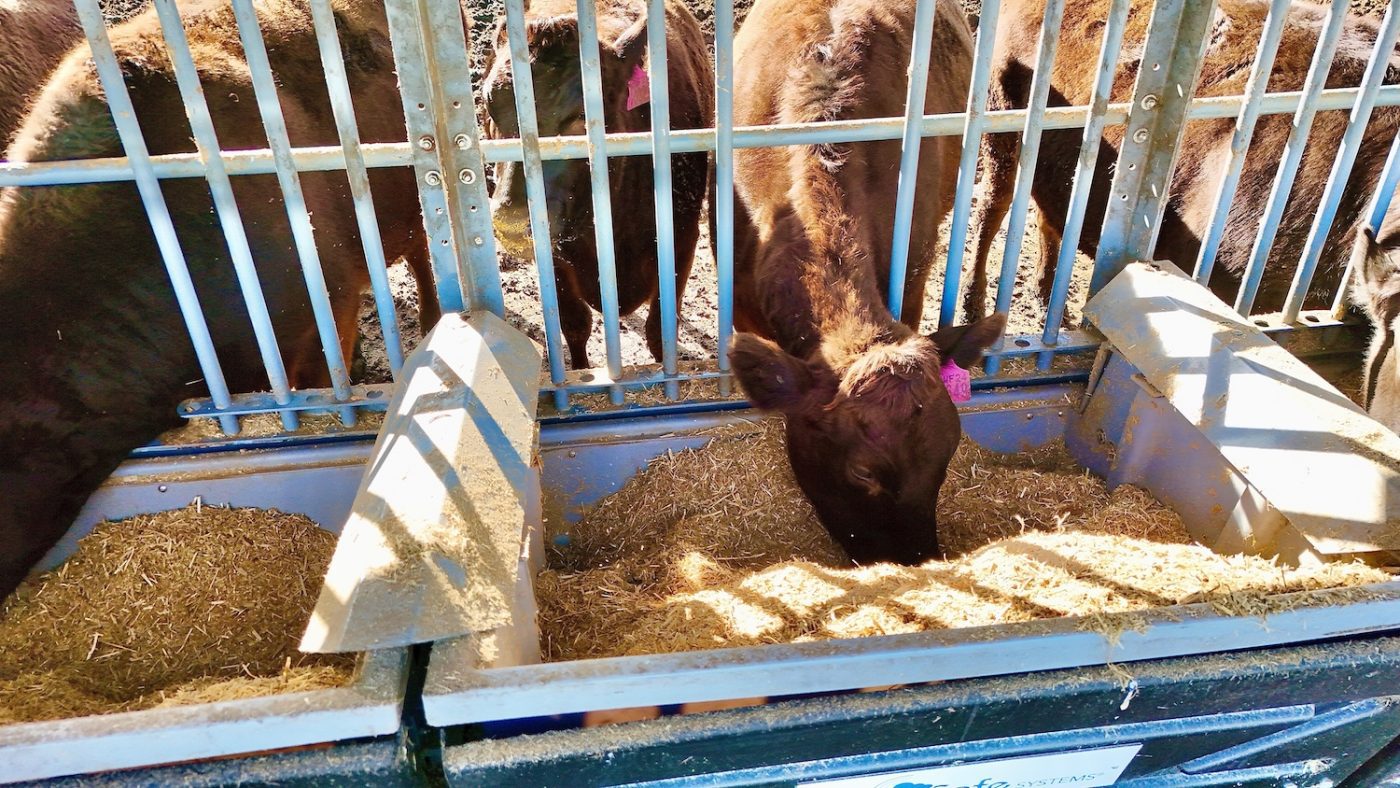
Vytelle Sense individual animal data capture system.
However, he also warned against chasing feed efficiency in isolation and maintaining balance in breeding decisions.
“If you select just on feed efficiency, you destroy a lot of the other important traits, he said.
“So you have to have a balanced approach to what are the economics of your business, and for us it’s in the end it’s kilograms sold and dollars per kilo, so we need to be exposed to that $17.50 grid, and we need to sell as many kilos of those as possible.”
That balanced breeding approach extended well beyond feed efficiency. In their own operation they also record traits including gestation length, birth weight, growth, pelvic size in heifers, scrotal circumference and extensive carcase measurements, while genomic information from hundreds of thousands of DNA records is used to make breeding decisions.
The aim is to produce cattle that combine faster growth, easier calving, feed efficiency and premium marbling performance.
He described this as a “modern Australian Wagyu”, representing a fundamental shift away from traditional Wagyu animal.
“We now have our best producers matching toe to toe with straight Angus, with a little bit of help from heterosis, and that’s where we see these animals going as modern
Australian Wagyu where they grow fast, they marble well and are fed for much shorter periods of time.”
As the industry moves towards greater reporting commitments of methane emissions, last Tuesday’s field day focused on ways to reduce emissions, with Dr Grose’s work demonstrating that strong link that exists between breeding cattle that convert more of their feed into saleable beef rather than lost energy through methane.