
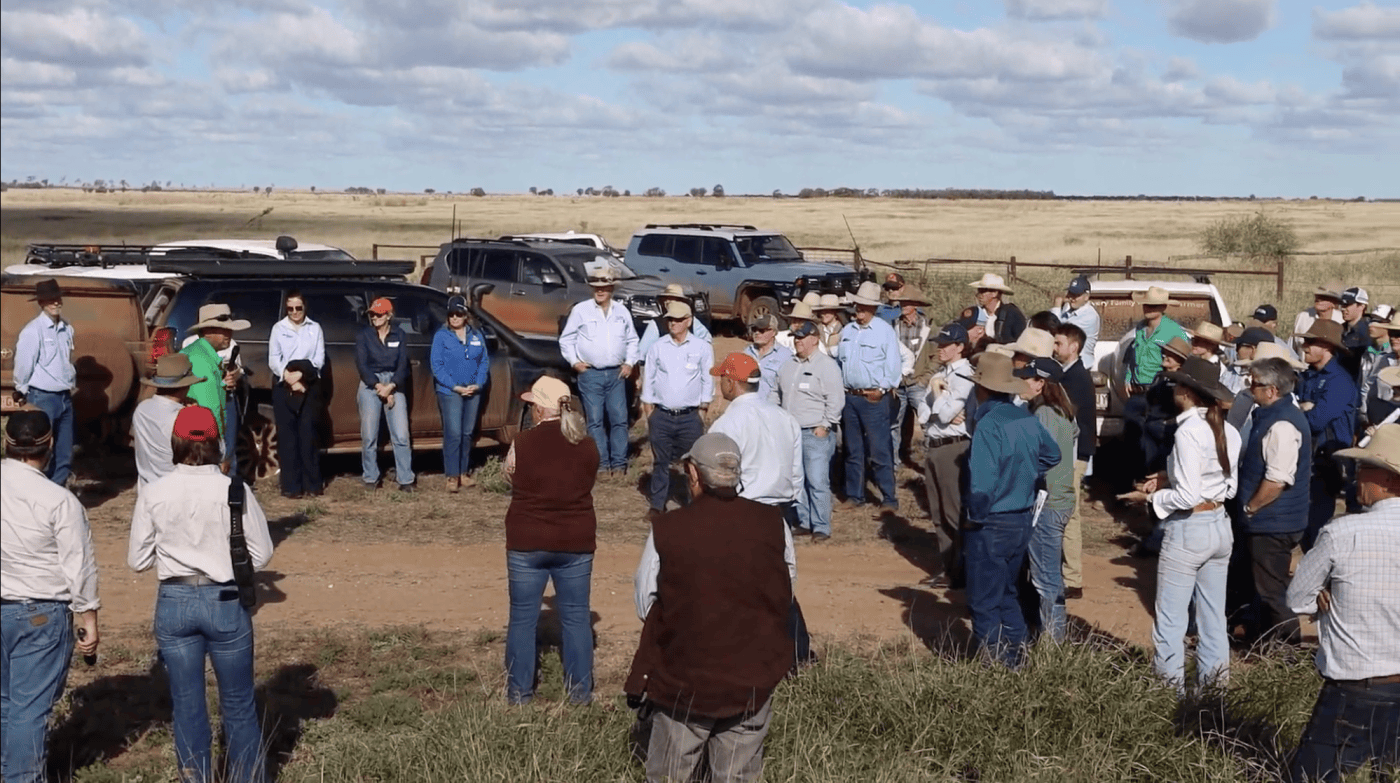
MORE than 100 cattle producers travelled to Champion Station near Blackall last week to inspect one of Australia’s largest commercial virtual fencing trials.
It was a long way to travel to see an “invisible” fence.
But what producers did see – cows with collars cows quietly grazing within invisible boundaries across showpiece paddocks of open Gidyea country – provided plenty of interest and discussion during the on-farm demonstration.
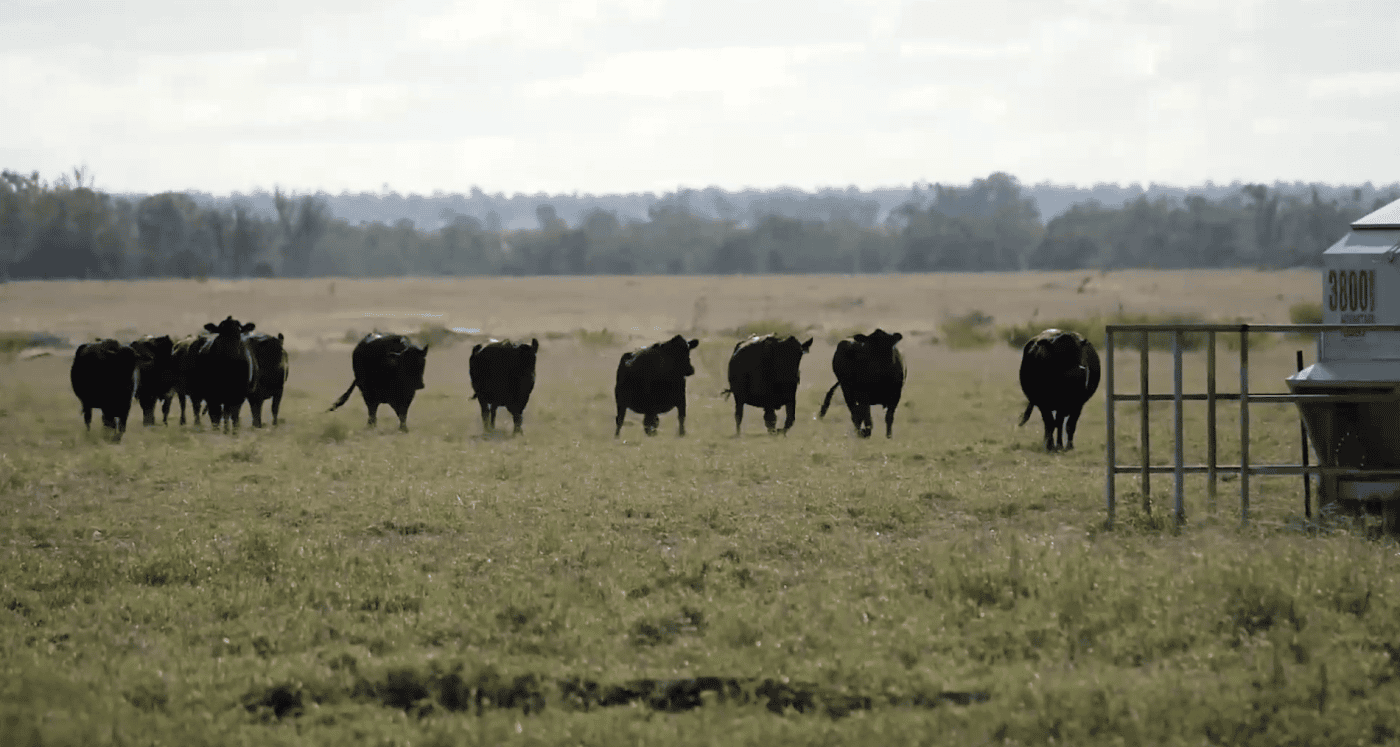
Cows fitted with Halter collars graze within a designated virtual fencing grazing break on Champion Station.
While virtual fencing has proven effective in smaller grazing operations, interest is now focusing on whether it can also perform reliably across the vast paddocks of northern Australia’s extensive grazing systems.
That question is currently being put to the test at Russell Pastoral Operations’ 55,000 hectare Champion Station, where about 1000 cows from the property’s 5000-head breeding herd were fitted with Halter GPS-enabled, solar-powered collars in March as part of a commercial trial conducted in partnership with the Zero Net Emissions Cooperative Research Centre.
Two 9m communications towers provide a coverage footprint for the collars across about 18,000ha of the property.
A direct-to-satellite option from Halter is also expected to be available for Australian farmers soon. The NZ-based company released direct-to-satellie collars in the United States and New Zealand in April but is waiting for regulatory approval of an agreement between Telstra and Starlink to be finalised before they can be deployed in Australia.
Rather than purchasing collars outright, producers pay an annual subscription to hire them. Producers at the field day told Beef Central the price is currently set at about $96 per collar per year for tower-based systems (pricing for the direct to satellite option is yet to be released but it is believed will slightly higher). Communications towers cost about $5000 installed.
Cattle don’t see a virtual fence, they hear it
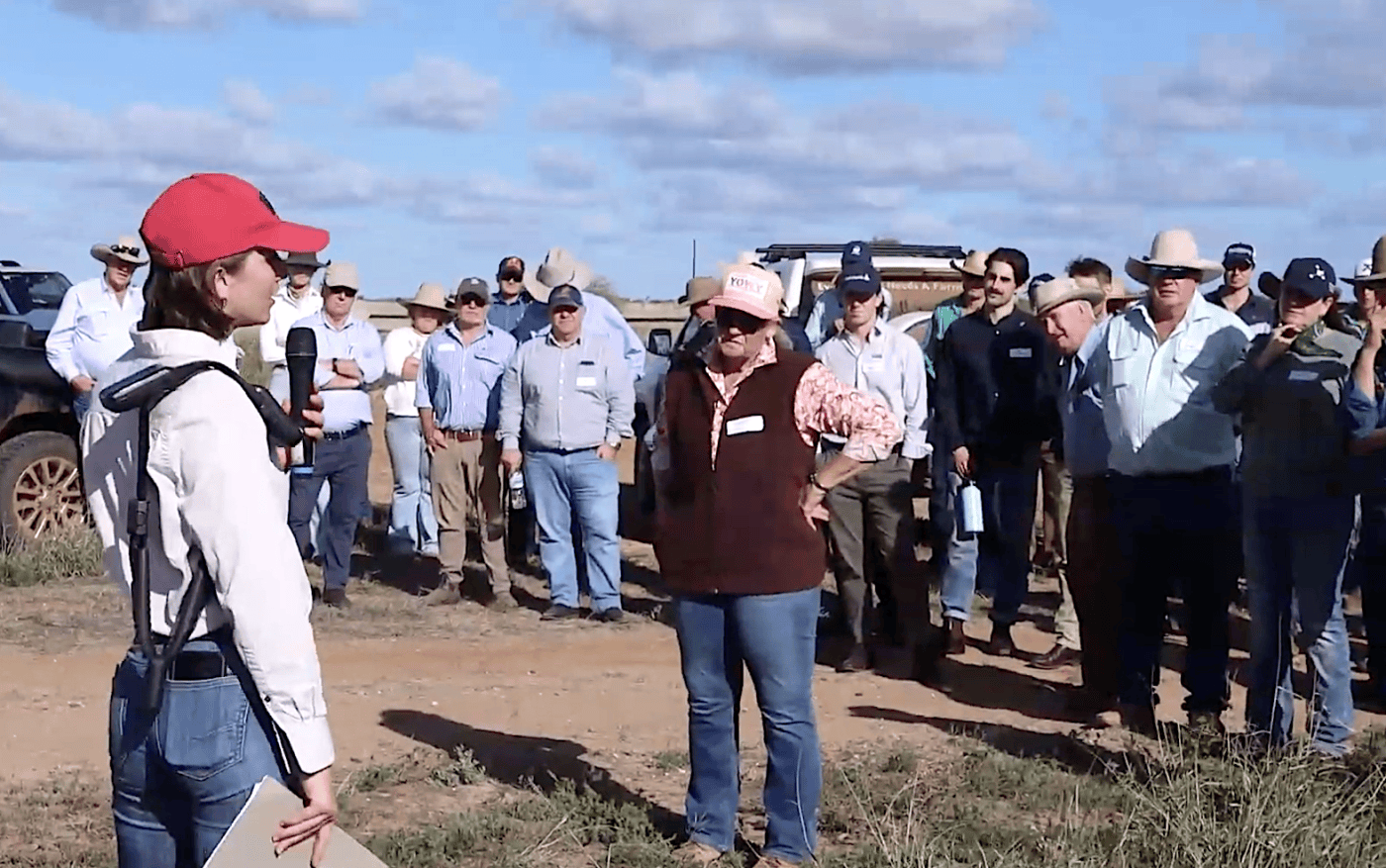
Kirsty Browne addresses the field day.
Explaining how the system works at the field day, Halter’s Kirsty Browne said cattle approaching a virtual boundary first receive an audio cue (a beeping sound) encouraging them to turn back into the designated grazing area.
If they continue towards the boundary, the beeping becomes more rapid before changing to a continuous solid sound. If the animal still does not respond, the collar delivers a vibration followed by a low-energy electrical pulse.
Halter says cattle typically learn the system within a week.
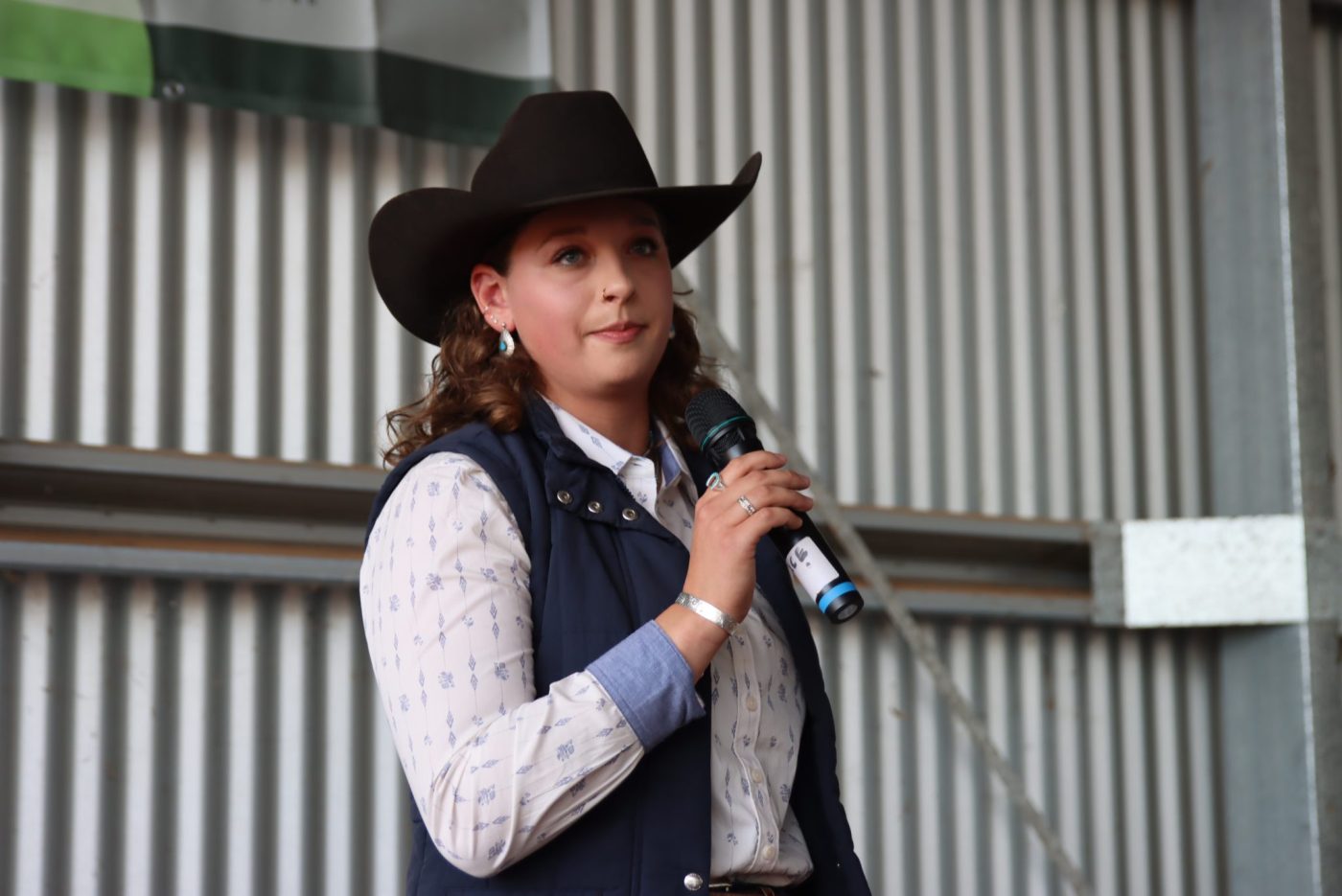
Megan Weil
Independent research presented at the field day by Oklahoma State University master’s student Megan Weil reinforced that message.
Her year-long US study found cattle achieved 96 percent compliance with virtual fencing, while sheep achieved 99pc during multi-species grazing trials.
The research found animals quickly learned to respond to audio cues before receiving an electrical stimulus, with compliance improving over time (Separate story here)
‘They are going to be game changers’
Russell Pastoral Operations managing director Adam Armstrong said the technology has proven itself in extensive grazing conditions in the four months it has been in operation.
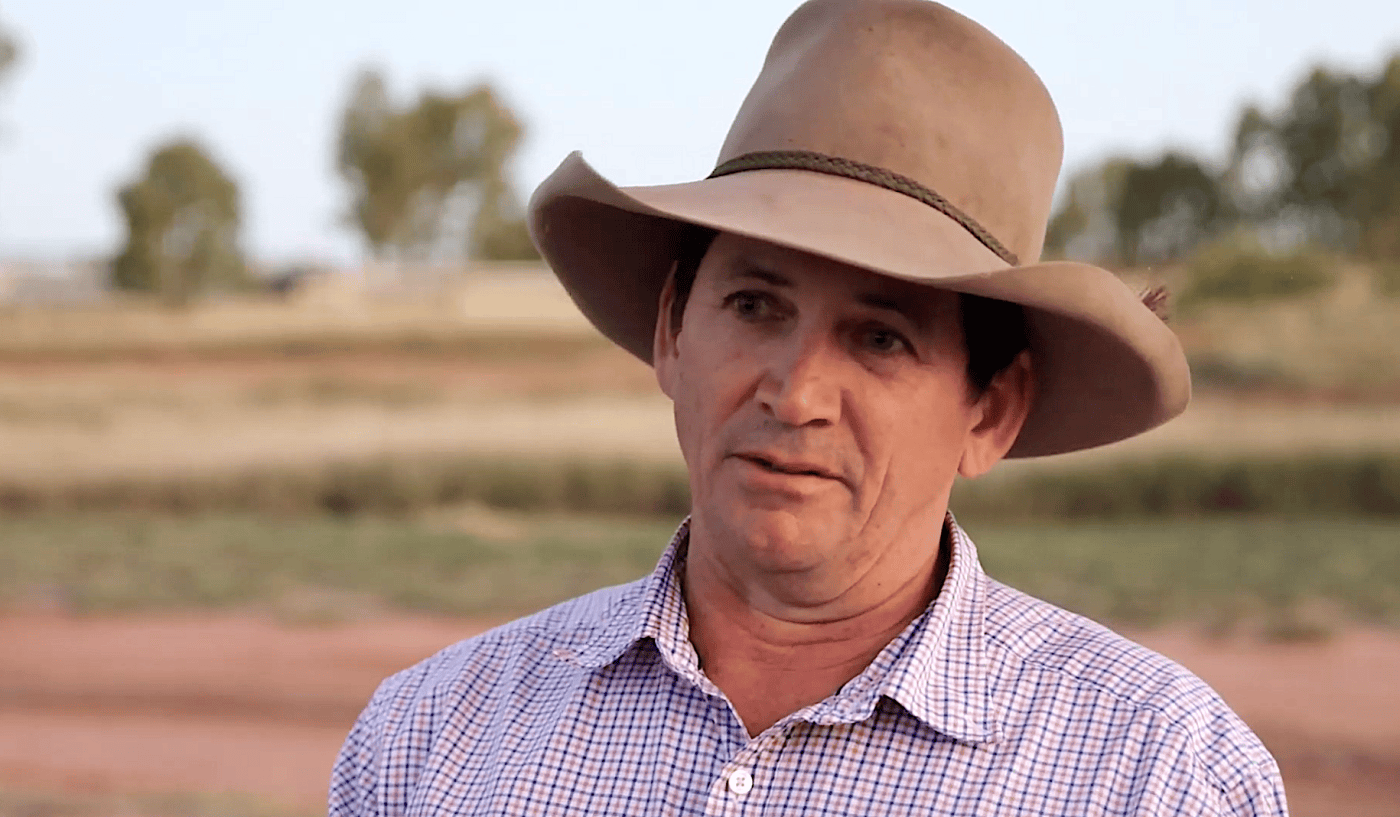
Adam Armstrong
He believes the improved grazing control it provides can ultimately increase Champion Station’s carrying capacity from about 5000 cows to 6000 cows, while reducing mustering and labour requirements.
“Before we put these collars on I thought they could be game changers,” Mr Armstrong told Beef Central.
“Four months later I still believe they are going to be game changers.”
Water capacity challenge when intensifying extensive grazing
The biggest management challenge they have encountered so far has been in keeping water up to cattle as the increased grazing intensity made possible by virtual fencing places greater demands on watering infrastructure designed for traditional extensive grazing systems.
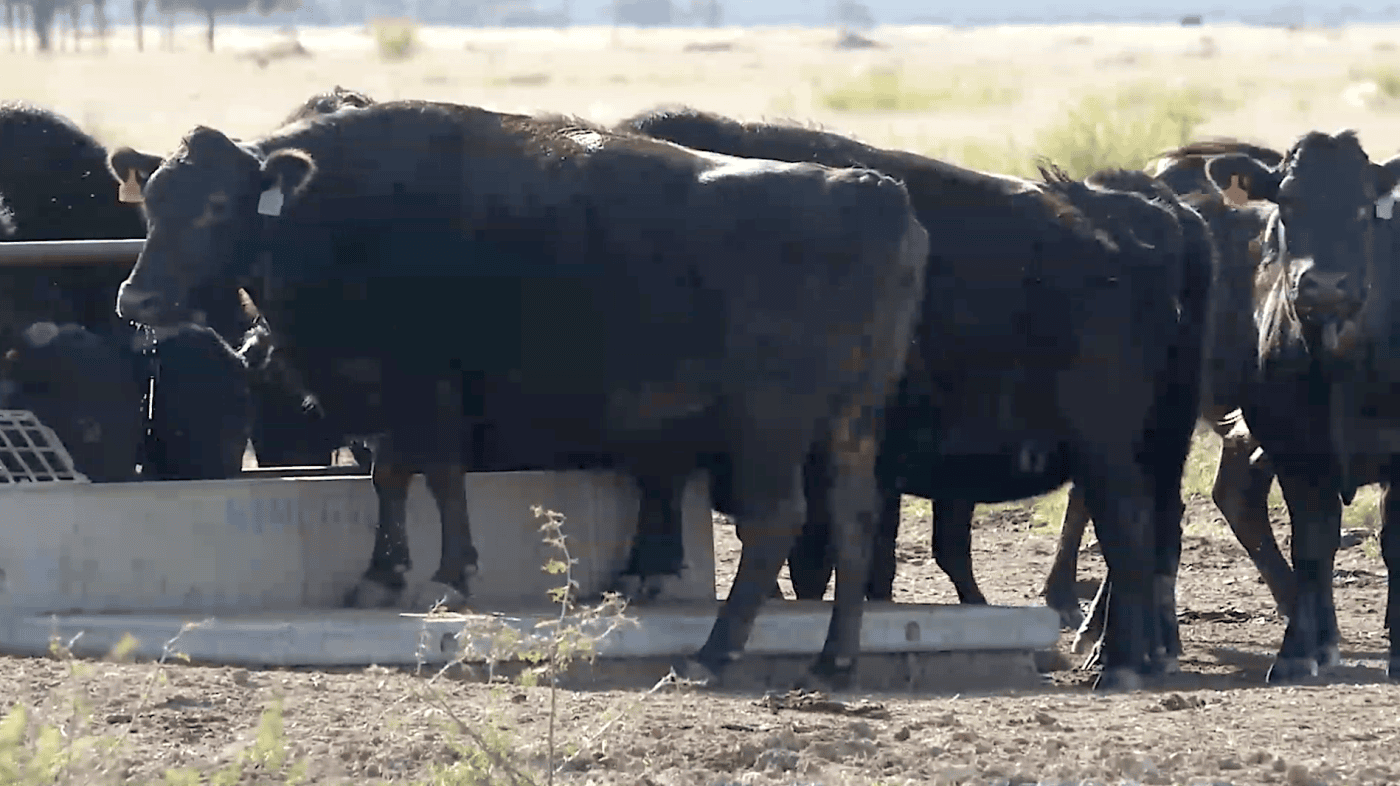
Generators were used to supplement solar pumps on Champion Station as an interim measure when virtual fencing intensified grazing pressure on watering points designed for traditional extensive grazing.
For example, one bore that previously serviced about 800 cows spread across four paddocks was unable to keep pace when virtual fencing concentrated all 800 animals around the one watering point at the same time.
“That was not unexpected, but effectively we’re in transition and learning and understanding the management changes and how cattle are behaving with collars before we spend significant money on new water infrastructure,” Mr Armstrong said.
He said they have had some cattle that have been non-compliant, but also added that is also expected from a traditional wire fence.
“A key point is that any technology is not perfect, and we’ve certainly had cattle that have had behavioural problems and don’t respect the virtual fence as well as they could.
“But by the same token a brand new four barbed wire fence doesn’t guarantee compliance either.
“And so I don’t believe we have got higher rates of non-compliance with the virtual fencing than we have with physical fencing.”
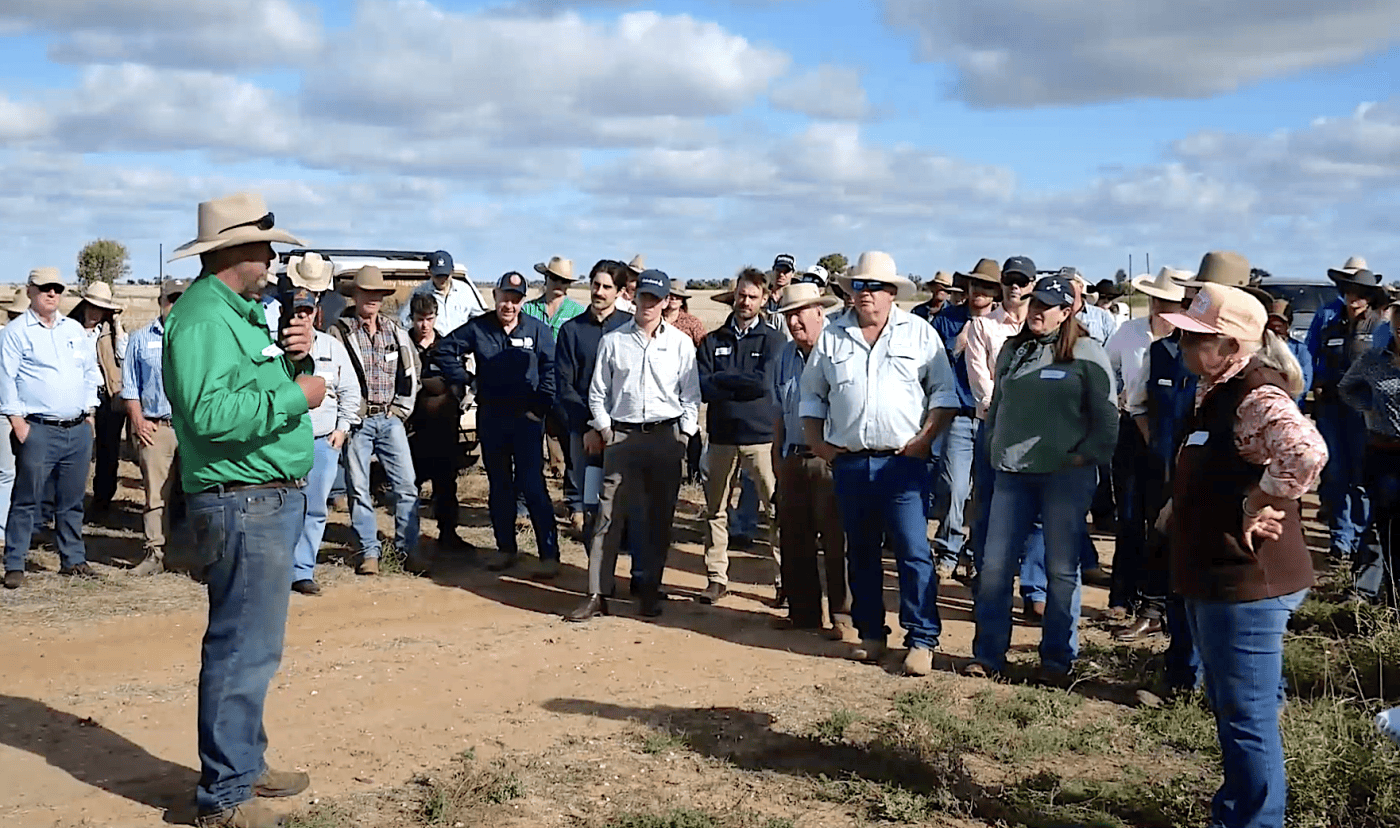
Champion Station manager Matthew Markwell sharing some practical learnings about virtual fencing at last week’s field day.
In short Mr Armstrong remains a firm believer in the technology and plans to increase the number of cows with collars on Champion to around 5000 in coming years.
“We think with the improvements in our pasture base that we get by being able to control that grazing intensity, that we can potentially lift that number from 5000 cows to 6000 cows,” he said.
 “Now that’s not going to be overnight. We’ve got a lot of work to do around water, because the key thing to making this all work is having enough water in the right places, and obviously if you’re cutting down your paddocks significantly then you’re talking about a lot more water points, or in some cases moving the water to the cattle.
“We’ve got a lot of playing to do before we perfect that, but if and when we do get that perfected, that’s where I expect to see those big leaps in cow numbers.”
Asked what would happen if the communications technology supporting the collars fails, Mr Armstrong said each collar stored its virtual boundary for up to 24 hours, which provided time to respond in the unlikely event of an outage for that length of time.
“It effectively means the fence does not stop working if the tower goes down.”
Russell Pastoral Operations plans to progressively expand with another couple of thousand collars expected to be deployed early next year.
Do the economics stack up?
Questions from producers at the field day largely centred on whether virtual fencing could generate a financial return compared with conventional fencing.
Oklahoma State University masters student Megan Weil said it was not necessarily a traditional return on investment equation because of the fast-evolving nature of the virtual fencing technology and the applications it enabled.
“When you’re talking broadly about return on investment, generally you see that as labour savings and material costs.
“So virtual fence can present a pretty significant upfront cost, which can be a little bit of a tough sell to someone who’s looking at those numbers just all at once, but when you spread it out over several years, you would see a decrease in labour, a decrease in material costs and building pens, particularly if you’re looking at rotational grazing systems.”
The rapidly evolving technology also meant the economics continued to change as new applications emerge.
Gyranda exploring technology
Central Queensland stud cattle breeder Peter Mahony from Gyranda Santa Gertrudis Stud, Cracow, whose family is currently hosting Megan on a research exchange, said he looked at virtual fencing six months ago and initially decided not to pursue it.
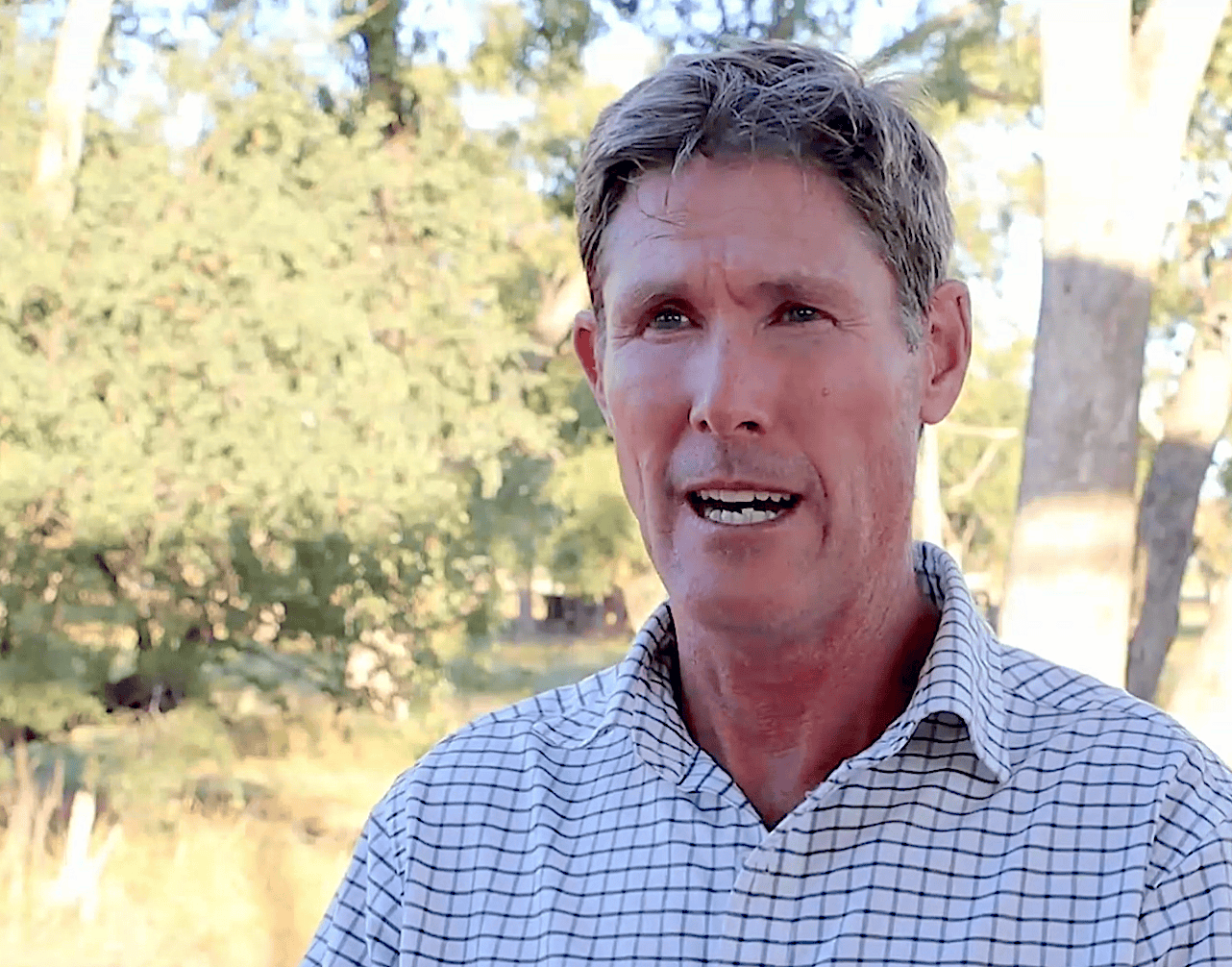
Peter Mahony
“It is probably very difficult to make a financial case where we are, because we have got (the property) fairly well fenced up, it is not big areas we would otherwise fence, so we said okay probably not.”
But he said was aware of some “fantastic applications” such as farmers using it to keep cattle off farming country or focusing grazing pressure on certain areas of larger properties that would be too expensive to fence with wire and steel.
Working with Megan, he said Gyranda is now looking at the technology more closely again.
“There are probably two areas I would see it immediately for making financial contribution, so we will probably look into it and do it,” Peter said.
“We have always used technology, but you are mindful of it being able to use to help you make good decisions, it is not just a toy and that is one thing we’re probably mindful of.
“If you do it make sure you have got a real plan of how to do it properly, how to do it well.”
He said he could also see potential applications as a stud breeder using the technology to rotate younger bulls around forage crops to maintain steady, consistent growth.
“I have come from a cell grazing background so I see the value of that high impact grazing,” he said.
“You would be looking more your bullocks and young cows and kilograms per hectare rather than kilograms per head.
“So I definitely see value in it, just trying to make that dollar system count, and hopefully with a bit of technology increase and competition, that we see that price even come back a bit so it becomes more of a financial reality for people.”
HAVE YOUR SAY