
Too often public debates about cattle production and the environment reduce complex land management issues to simple slogans that overlook the nuance involved.
A common tactic is to portray isolated examples of poor practice as representative of an entire industry. Another is to portray an opponent’s argument as one they did not actually make.
Examples of both were evident in comments by an environmental campaigner in a radio interview last week, in reply to Central Queensland cattle producer Ian McCamley talking about landholder concerns over Environmental Protection and Biodiversity Conservation (EPBC) Act reforms that came into effect on July 1.
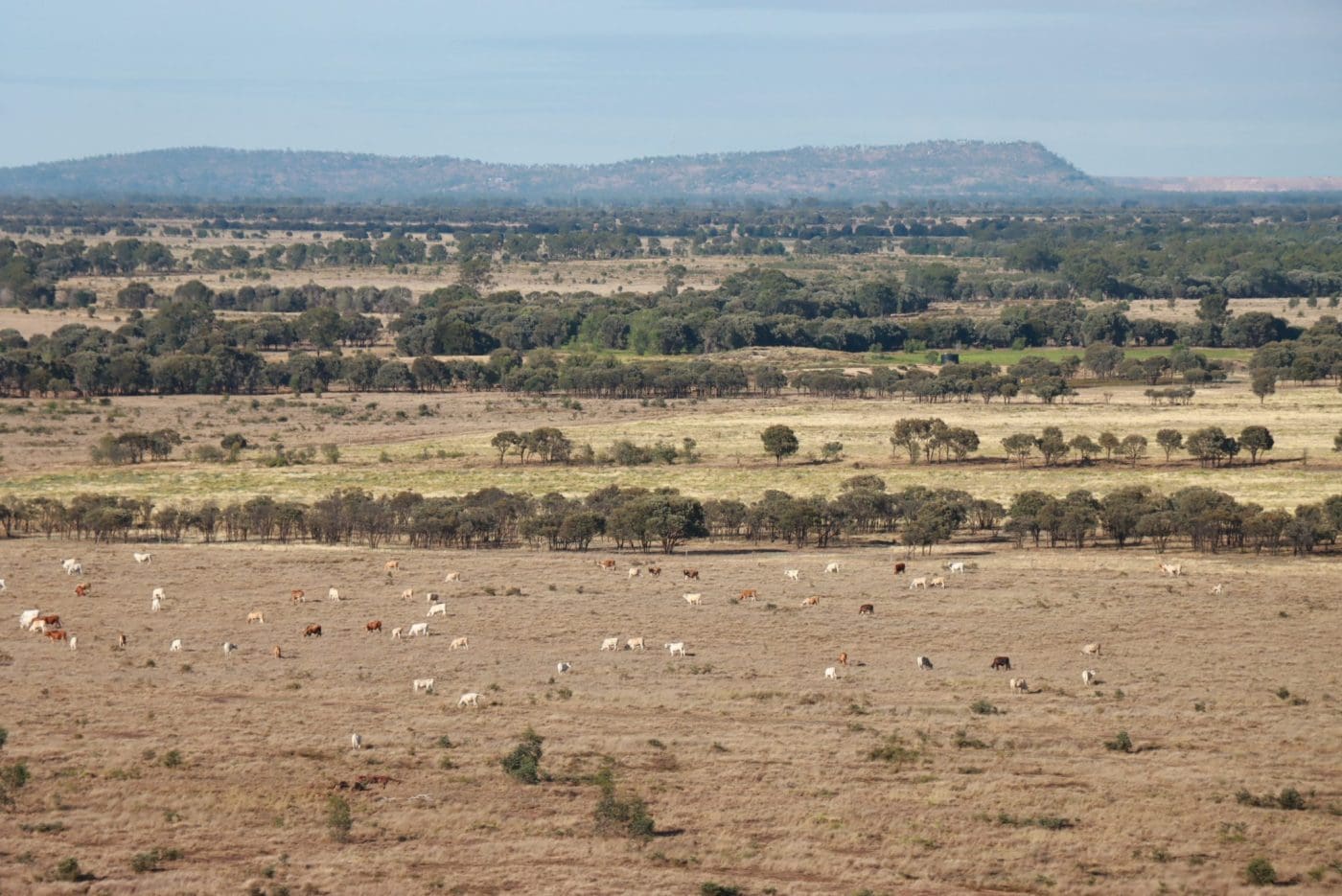
In his earlier interview Mr McCamley discussed why maintaining groundcover is of essential importance to good grazing land management in a continent which has some of the highest evaporation rates in the world.
Speaking to ABC Country Hour he said an important question for land managers was to ask themselves if the action they’re proposing to undertake is going to maintain ground cover, improve ground cover or “actually make it worse and detract from it and create more bare ground”.
 “And a lot of the laws that have been enhanced and changed are going to produce more bare ground, because they’re making it really difficult for us to control invasive trees and maintain and improve ground cover,” he explained.
He said the focus for landholders should be on “how do we keep all the rainfall we possibly can in the soil so it doesn’t run off, and we get it deep in the soil, and following that to have a blanket over the top to keep it in there the best we can and utilise it for the longest possible time to grow plants rather than just evaporate away again”.
From his lifetime of managing and observing the natural landscape Mr McCamley has become a vocal advocate of maintaining healthy groundcover as one of the most effective ways to reduce erosion, improve water infiltration and minimise sediment runoff.
He has also argued against the view that simply maximising tree cover is the answer to achieving the best environmental outcomes.
He makes a clear distinction between “good trees and bad trees”.
Talking to Beef Central during a visit to his property in 2024 he explained that in many grazing landscapes, thick stands of shallow-rooted, whip-handle-thin woody regrowth compete with pasture for surface moisture, restricting sunlight and reducing groundcover, resulting in bare soil, erosion and runoff.
By contrast, deep-rooted trees coexist with healthy grass cover while also providing shade, habitat and other environmental benefits.
His point is clearly not that all trees are undesirable.
Rather, it is that different types of trees perform different ecological functions, and some produce good environmental outcomes, others do not.
These are nuanced, practical land management observations that many people outside agriculture would not encounter and are unlikely to understand without hearing directly from those like Mr McCamley who have spent their lifetimes studying the land.
But this type of nuance was missing from comments made by The Wilderness Society in response to Mr McCamley’s views about the importance of maintaining groundcover.
Rather than engage with that point that different types of vegetation play different roles in the landscape, campaign manager Emily Dickson’s comments instead implied that farmers like Mr McCamley don’t care much about trees at all.
“I don’t think anyone would be able to convince a koala or a greater glider that some grass is enough,” Ms Dickson said.
“It is like saying to people it is fine to live in a house with just floor boards, no walls, no ceiling, no kitchen, no bedroom, and it’s no home at all.”
Mr McCamley had not argued that “grass is enough” and nor did he suggest that trees lacked environmental value or that habitat protection was unimportant.
Queensland producers have spent decades adopting practices aimed at improving groundcover, reducing erosion and protecting water quality, including significant investment specfically aimed at reef catchment programs in the past two decades.
This was not acknowledged in The Wilderness Society’s radio comments which used terms such as “relentless deforestation” in Great Barrier Reef catchments, “trashing waterways”, “muddying the reef” and “choking coral” to further its narrative that the beef industry is destroying the reef. Demonstrating a dim view of the willingness of landholders to manage their land in an environmentally conscious way, the Wilderness Society’s spokesperson said the new national Environmental Protection Agency must be fully funded to “ensure they can step in before the bulldozers move in”.
The Wilderness Society campaigner said it had identified 200 hectares of forest and bushland that had been “completely flattened” in the Rockhampton area, which they attributed to “deforestation for beef”. Overlooked was the broader context about land clearing occurring for other developments. The nearby Lotus Creek Wind Farm alone, for example, has approval to clear 400 hectares for its wind turbines but that did not earn a mention.
Brushing away deep, practical land management insights from landholders earned over decades and indeed generations as if it has zero value, and reducing important highly complex issues to simplified slogans ultimately benefits no one – not least of which the environment, given the type of outcomes proven to come from poorly thought out, unscientific policies.