
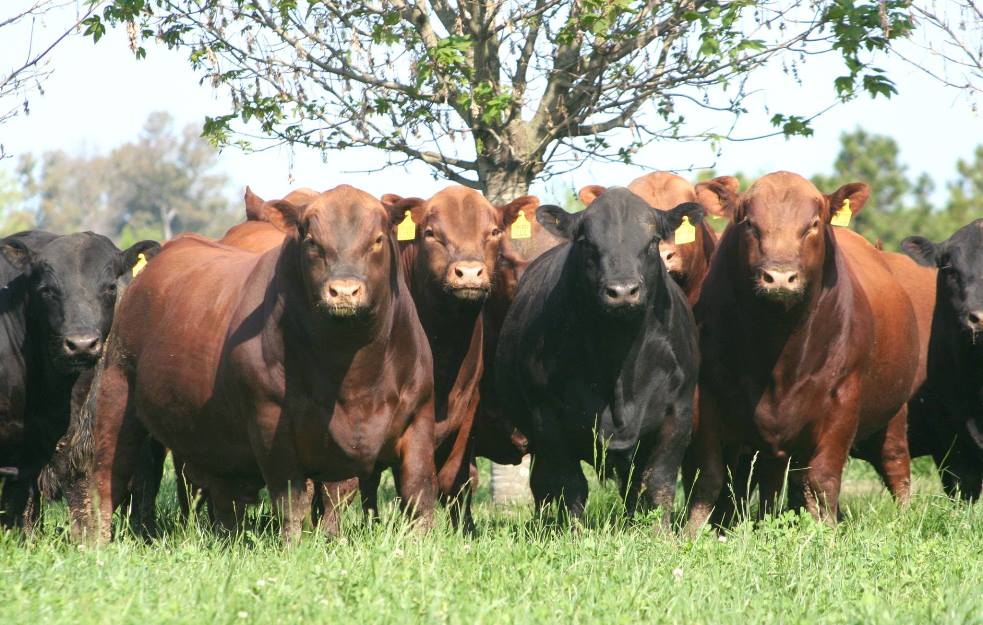
JULY is typically when the number of bull sales being held each week begins to increase rapidly.
A quick glance at Beef Central’s national upcoming bull sales listings or breed society sale calendars shows both the number of sales and the large number of bulls set to be offered.
Ahead of these sales it is worth reflecting on past experiences at sales and how these can prepare producers for a better result this year.
Over recent selection workshops, and as part of an online poll, I have asked producers to identify what they believe are the more common mistakes they have seen at bull sales. It’s been an interesting experience to take these results and look at the common themes and trends to emerge.
The most dominant theme was the clear need for a defined breeding objective.
Although developing a breeding objective and selecting bulls that suit that objective has been a focus of industry advice for many years, there still appears to be a large gap between those who know what their objective is, and those who don’t.
Many people see breeding objectives as an academic exercise and are often reluctant to define their objective as a result. However, in not being clear in their objectives, they expose themselves more to mistakes that can have costly and long-term implications for their program.
Many of the more common mistakes observed at sales can be seen as symptoms of a lack of clear and defined breeding objectives.
In reviewing producer responses to the more common mistakes made, a frequent answer identified the issue of achieving a balance between figures and the animal in front of the buyer. Many producers who provided a response, both to me online, and at workshops, would state that buyers pay too much attention to the figures and not enough to the animal itself.
One producer told me bluntly “people study the numbers and never properly study the animal for type and structure.”
Almost as frequently raised in these comments and conversations were issues associated with structural soundness. Feet and legs came up repeatedly, with one producer noting that it all starts from the ground up. Producers also raised mobility, length, testicle size, and the ability to tell muscle from fat.
A third theme around suitability to the environment also emerged. At a recent workshop in central NSW a producer made the point that buyers should look for a bull developed in conditions like their own, not one pampered through a stud paddock or pushed along on grain they have no intention of feeding.
Their position was that a bull that performs in a soft system and falls apart in a hard one has cost you twice, in purchase cost and lost opportunities.
Figures versus phenotype
Taken together, these comments could easily be interpreted as another chapter in the long-running figures-versus-phenotype debate. However, there was a smaller group of bull buyer comments that went past that argument to a more useful point. That is “that figures used without understanding are the problem, not the figures themselves.”
Several producers stated that the answer to this issue “isn’t to stop using them in selection.”
Indexes
Indexes are a good example of this issue. For the breeds that provide Indexes, they are built to suit a defined production system and target market, and the method behind it is published.
At the very least, there is generally an explanation in most catalogues to provide producers with a better understanding of what is being described. The issue is that many producers don’t read that explanation and end up selecting on an index built for a different target than their own.
The number isn’t wrong. It’s just answering a question the buyer didn’t mean to ask.
Matching the index to the enterprise, rather than simply choosing the highest one in the catalogue, is the step many buyers overlook. It is also, again, a symptom of the objective not being clear in the first place.
In the responses to my online poll, a stud breeder made a comment I keep coming back to:
“Finding a bull with both the phenotype and the data is genuinely hard. Of the two, it’s easier to find and breed a bull with good data than one with standout structure and type. So, if a compromise must be made, make it on the data, not the structure.”
He didn’t argue that the data was useless. His point was that improving data won’t improve a breed unless phenotype and structure improve with it.
I think this is possibly the best framing around the use of visual assessment and data than is usual. The bull with great numbers and poor structure isn’t a bargain.
Neither is the structurally-correct bull whose figures tell you he will produce calves that grow slower and will be less suitable for market requirements. The task is to find bulls that are structurally sound and suited to the environment, then use the data to separate those of highest to lowest merit for a breeding objective.
The lack of a clearly-defined breeding objective can also cloud a producer’s perception of price and value.
Rather than paying too much, producers repeatedly raised the mistake of buying too cheaply – iIn that they identified that the bull bought to save money at purchase, generally costs far more across his working life in lighter, later, fewer calves.
The same lack of focus from no objective, also drives the chasing of hyped names and pedigrees, bidding on what others are bidding on and following a prefix because it is in demand rather than because it suits the program. A producer who knows what the herd needs is less likely to get carried along when the bidding lifts.
In furious agreement
Reflecting on producer feedback from both workshops and online, there is actually less disagreement than it would first appear. The structure-first producers and the use-data-properly producers are arguing about emphasis, not direction.
Both types of producer want a sound, functional bull that suits the operation. Both are wary of buyers who lean on one source of information and ignore the rest.
The genuine divide is not between figures and phenotype. It is between buyers who walk in knowing what the enterprise needs and those who don’t.
With the bulk of sales still lying ahead this season, there is still time for producers to clarify their breeding objectives and determine what their herd needs from the next new sire.
Being clear about what the herd needs before the catalogues arrive makes it far easier to identify the bulls that genuinely move the herd forward. It is also the best protection against the mistakes producers repeatedly identified.
 Alastair Rayner is the Strategic Account Manager for Southern Australia with Vytelle and Principal of RaynerAg. He has over 30 years’ experience advising beef producers and graziers across Australia. Alastair can be contacted here or through his website: www.raynerag.com.au
All relevant points but the big miss is when the data delivered to the buyer doesn’t deliver over the lifetime of the purchase it reflects on the vendors credibility. Doesn’t matter if a false trail was laid by Breedplan, morphology, DNA or any other form of measurement / calculation . When the after sale feedback fails bull buyers quietly fade into the distance and are not present on your sale day.