
Change, if you want it…
If you see a need to change, don’t be held back by what you know.
Rather, identify the knowledge you need to effect change, then go for it.
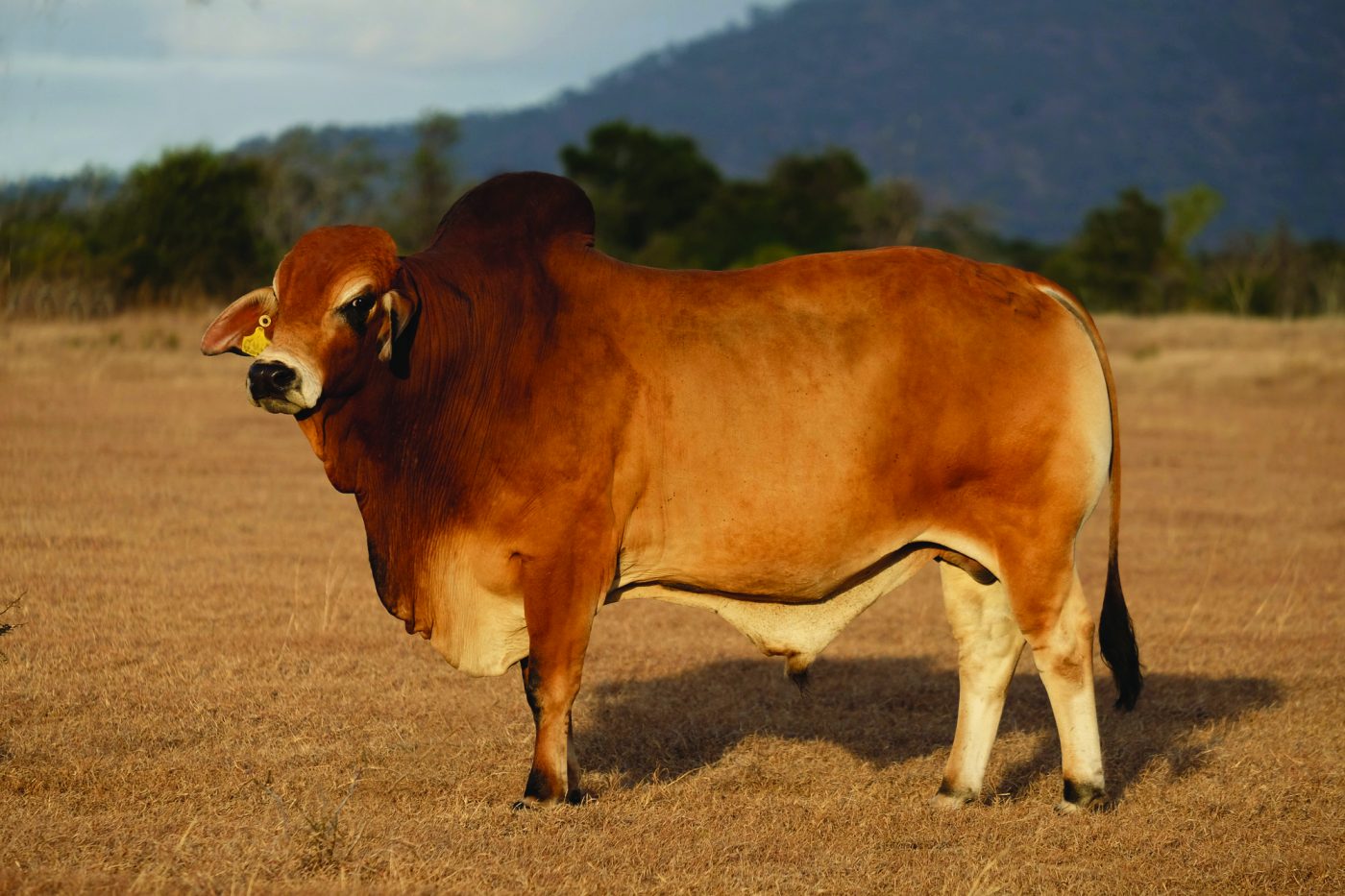
In a reflective and constructive mode, Alf Collins Snr was speaking from his CBV Brahman base at Belah Valley, Marlborough, Qld.
Often enough we are exposed to things worth celebrating with family or friends or our immediate community. The following is worth celebrating.
There is a pleasing breath of fresh air drifting through the stockyards and saleyard platforms or wherever cattle breeders or finishers gather in northern Australia. It is a willingness to discuss, quantify, and analyse increasingly for beef and grazing.
This state of mind has long been the case in cropping, pig production, poultry farming for eggs or meat, sheep for wool or meat, and dairying for fresh or manufacturing uses.
Northern Australia is a bit unique as the greater proportion of land is suited more to open-range cattle production than any other form of agriculture. That is, in itself, a pursuit of challenging margins and yields, and extreme weather and land types.
In my own experience in cattle, measuring and analysing has been a natural progression. This mind-set was born of a curious mind, and a hunger for knowledge. This was inspired most of all by my father Jarvis Collins, and his younger brother Harry. My childhood was peppered with visits to research stations, cattle ‘short courses’, visits to dairy and pig farms.
Importantly, the constant stream of visitors from QDPI, CSIRO, interstate and overseas visitors shed light into this bush kid’s mind.
This led to research bulletins, and books, Dr R B Kelley, CSIRO, wrote Native and Adapted Cattle, based on his observation in India, Africa, southern Europe, and the Americas, with some references to genetics and breeding methods. Then his later book on practical genetics added fuel to the fire of learning in my young mind.
Al Hagedoorn wrote Animal Breeding, and although I had very little real understanding of the science, these books were inspirational. Dr Hagedoorn had a hands-on approach to animal breeding, and was really competent at relaying his findings.
Prof Rex Butterfield (Univ.Sydney) was inspiring. I had read a bit of his works, then at age 12, approached him at a Cattlemens’ Shortcourse, where this courageous scientist took time to sit with me in discussions. I can only imagine what went through his mind. How we are blessed by the generosity of spirit of truly great thinkers.
How we are blessed by the generosity of spirit of truly great thinkers
A few years later an aged Dr RB Kelley gave me a whole morning in discussion, hypothesis and encouragement. At that time, Brahman cattle had not really ‘taken off’ but the writing was on the wall for their future. I was about 15 years old, and what I lacked in knowledge, made up for it in enthusiasm, and respect for Dr Kelley.
Dr Kelley selected the first official importation of Zebu or Brahman cattle for Australia in 1932 under the direction of Dr Gilruth of CSIRO. These early cattle were progeny of Zebu stock from the harsh environment of Brazil. In Australia, he conducted early recording and research of purebred and crossbred progeny with four collaborating cattle stations. The prevailing opinions from mainstream cattle breeders at that time was ‘no one in their right mind would entertain these exotics, and the only thing worse than the Zebu cattle was the people who bred them’. Later on in the 1950s influential cattlemen tried to ban the release of surplus research Brahman stock to the public, mandated to slaughter only. Fortunately, wiser heads prevailed. The rest is history.
At that time Mr & Mrs Lionel DeLandelles were storming ahead with innovation and faith in the future. Unorthodox and courageous folks.
One thing stood out, that in the adapted cattle realm as we knew it, all the progress was made on marginal country. Waverley, Wetherby, Wairuna, Walla, Cherokee, and Apis Ck, all had this in common … changing their world, and the cattle world around them. This was not unique to Australia.
The three monumental sires in USA Brahman history all came off the mongrel country of cactus, wire-grass and salines, at Sartwelle Ranch, Palacios, TX, right on the Gulf Coast. Those three bulls were Aristocrata, Imperator, and Manso. Environmental adversity certainly makes progress simple in genetics. Nature weeds out the unadapted. Survival and production IS based on ‘survival of the fittest’.
Fast forward to now, when Brahman breeders are embracing analysis more than ever before, which is an expression of ‘the breath of fresh air’ drifting wherever cattle people gather.
You may ask how this story up to now has bearing on my cattle journey.
In 1981 we started out to grow a commercial business, at Belah Valley, with 89 cows from my father’s estate at Wandilla, Marlborough, some heifers and key bulls, plus a number of commercial cattle of the same breeding.
We decided to go flat out for commercial production.
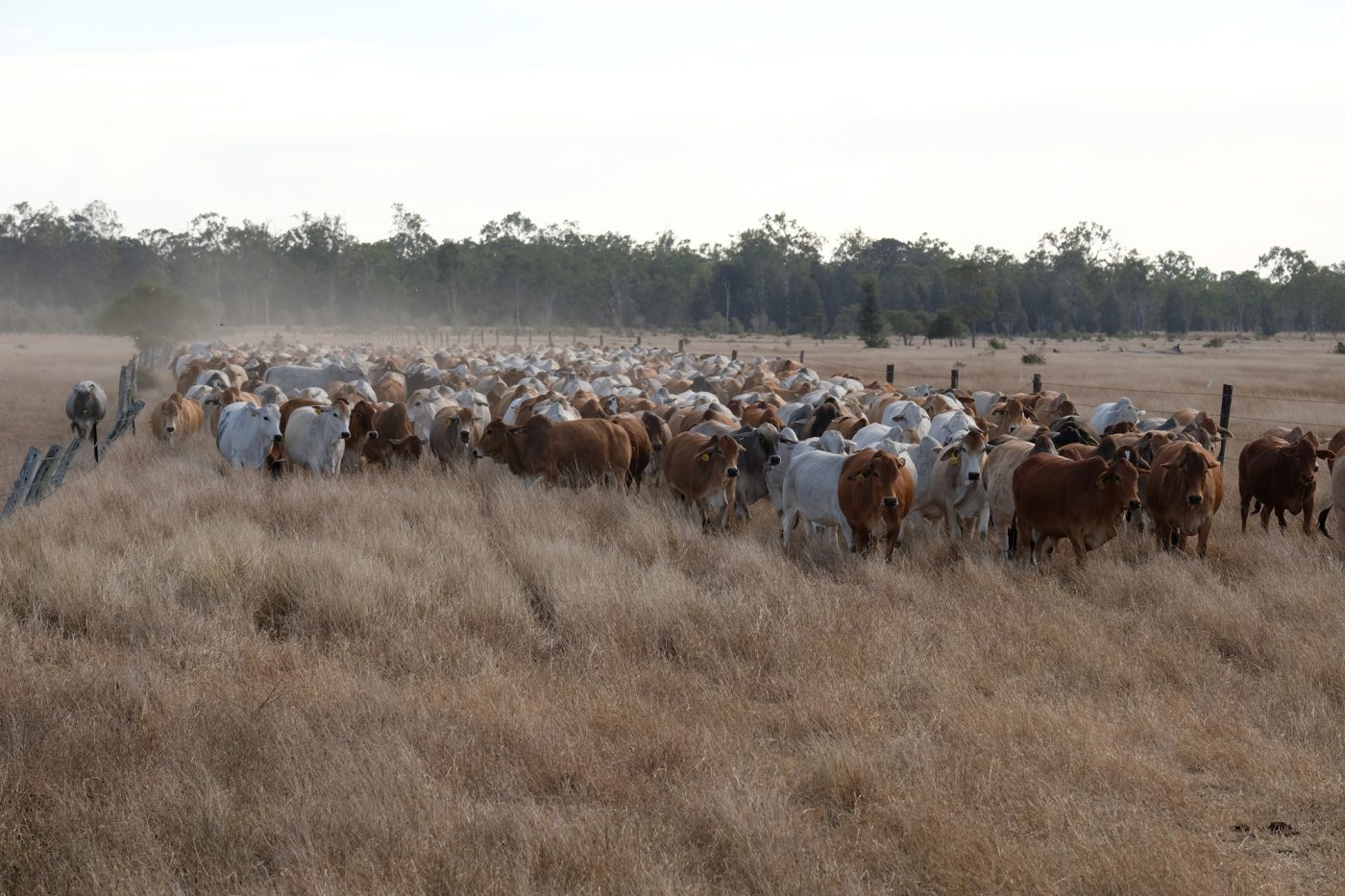
Advice from Ken Coombe, Waverley Station, Tom Rudder, QDPI, Rockhampton and Dr Vercoe & Dr Frisch at CSIRO Rendall Laboratory was sought and actioned. I sought financial scrutiny from Maurice Binstead, Ian Robertson, and Maurie Machin. They didn’t shrink from that duty.
Fertility was the key driver for rapidly changing our circumstances, and Mr Rudder had many years of supporting data, collated from businesses large and small. He did not beat about the bush. He also cautioned me about failure, as he quoted actual data illustrating the relatively low reproduction rates in CQ. I was a bit incredulous at first, saying “Hell we can do better than that”! Tom Rudder was a very credible man, so we proceeded as fast as possible to figure out how to make good on limited time, cash and cattle.
Mr Coombe was also a very serious man, with a world of experience, from southern Australia to the Peninsula. He oversaw Stanbroke’s transformation from moribund British bred herds to spectacular production. We were privileged that he asked if he and Mrs Coombe could visit us, on Belah Valley, in the first few weeks of our start-up. The older I get, the more I realise his commitment to our wellbeing and progress.
His encouragement was invaluable. He outlined where we could fail, colourfully, stating “look out you don’t end up breeding mice” from our normal looking cows, in the deadly pursuit of fertility.
Until Mr Coombe died, he was still encouraging and progressive in his advice. His earliest compact with me was when based at Marlborough Station in the early 1960s supervising Fairymead Sugars extensive properties for Mr CAN Young. Father and the young Mr Coombe as neighbours shared a valuable mutual respect, both men interested in making change. He would take valuable personal time out on Sunday afternoons to share knowledge about everything that mattered in commercial pursuits.
Worth noting is that he published calving records on all the bulls in his Avondale Stud bull catalogue, whether good or not, as a fact of seeking better results for his clients, and the Brahman breed. No one else in the game did that. He had courage and competence.
With that background, CBV results in 46 years have been an inspiration to cattle breeders, in at least four continents. Many more Brahman breeders are aspiring to these production drivers. They have seen the need for change.
What it illustrates is that anyone can achieve great change, by seeking knowledge, taking sound advice, and putting it in action.
We learned more from our failures than our wins; when we are forced to self-examine, accelerating our efforts to make up for lost time, lost revenue, and wasted cow-days.
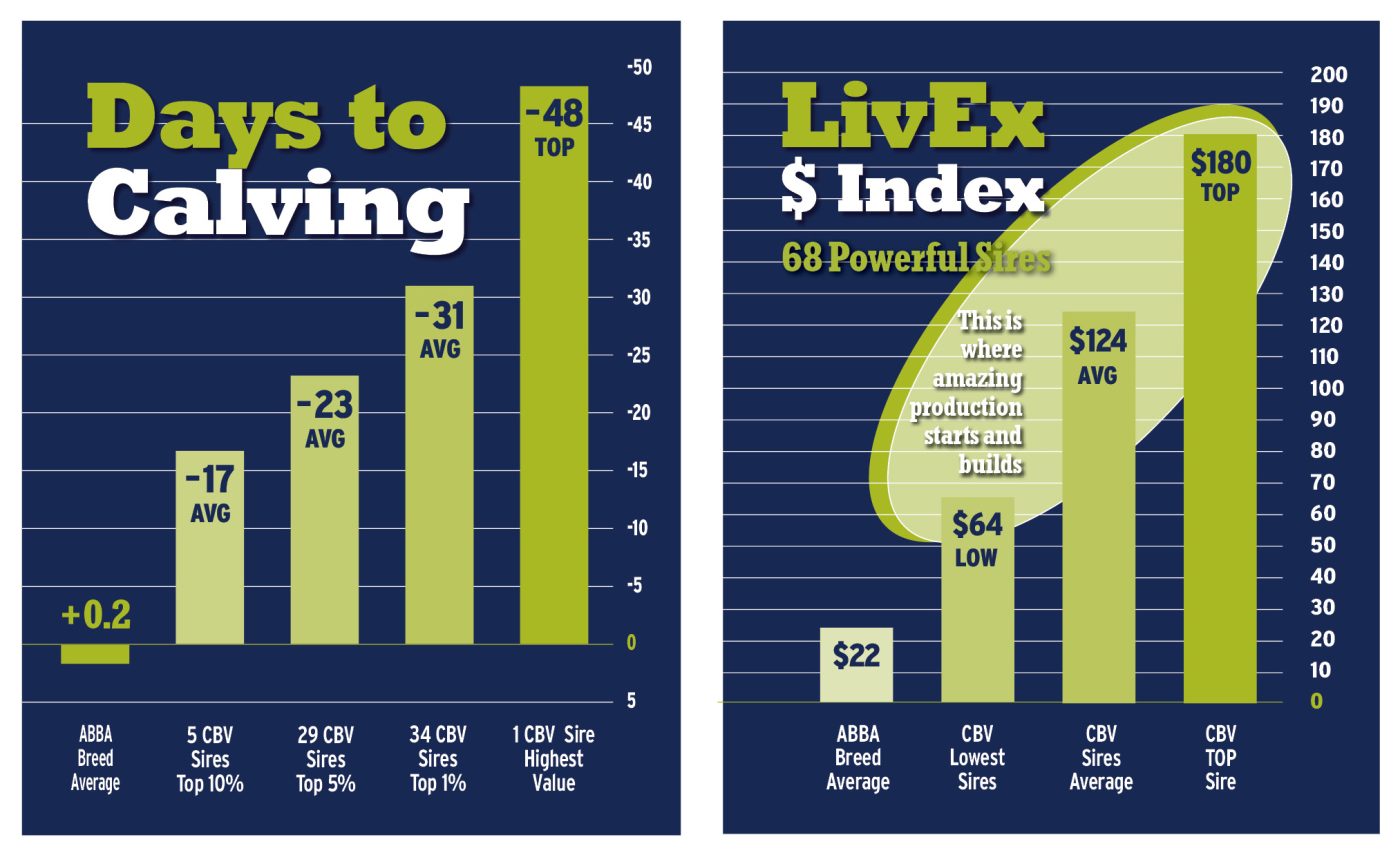
The vast disparity or bell-curve spread in Nature is obvious if you care to observe. Brahman cattle are no exception, especially for reproduction under the stressful conditions the breed has gravitated into.
In my lifetime Brahman cattle have been the rescue ship for the greater majority of cattle herds in Northern and central Australia economically.
Traditionally they have been adapted enough to stay alive in this difficult environment, far in excess of any other breeds that I have observed, at a cost of production that is very attractive. Reproduction becomes the field in which we can have the greatest impact on our ‘bottom-line’, and the field is wide open in genetic terms.
Just as in the past, sound advice is always available if we seek it. We notice now this breath of fresh air, as more cattle breeders recognise the need for change in this important trait.
On a personal note, I am sure the answers lie in your own herds and are accessible by simply measuring and hunting for the most competent genetics. That has been our route – by observing the differences and multiplying the amazing ones.
That has been our route – by observing the differences and multiplying the amazing ones.
To deliver commercially relevant genetics we must view a stud herd as just another commercial beef business with good records.
There will always be the fashion parades in chooks, horses, pigs, dairy and sheep. These are strictly important social events.
But … we need to self-examine in perspective and ask how those cosmetic activities relate to commercial production and economy.
Brahman cattle are not exempt from this challenge of commercial reality. We have some powerful tools now to speed up this process.
There is no ‘free ride’
Two of our leading geneticists, Hayes and Banks stated at a large public meeting in Brisbane, certainly that genomic values will rapidly turn to dust, if you think you don’t need to continue collecting real-time data in conjunction. There is no ‘free ride’.
Yet with just strong and unflinching management, as commercially essential, the task ahead seems to be easy.
As AL Hagedoorn stated all those years ago, measure meaningful traits, as identified in tight management, then embrace the changes enthusiastically. Apply the genes that you observe in measurement to do the most good in the shortest possible time.
Alf Collins stated that selection at CBV under duress seems to have borne fruit of a rare kind quicker than any other system. So far this looks sound.
Alf also believes, in humility, that his journey would not have had this trajectory without the help and inspiration from those mentioned and many others, including his family and God’s grace.
And…. No, the cattle in this massive experiment did not turn into mice. The relevant $ indexes are high scoring as well… Blessed indeed.