
RAINFALL OUTLOOK
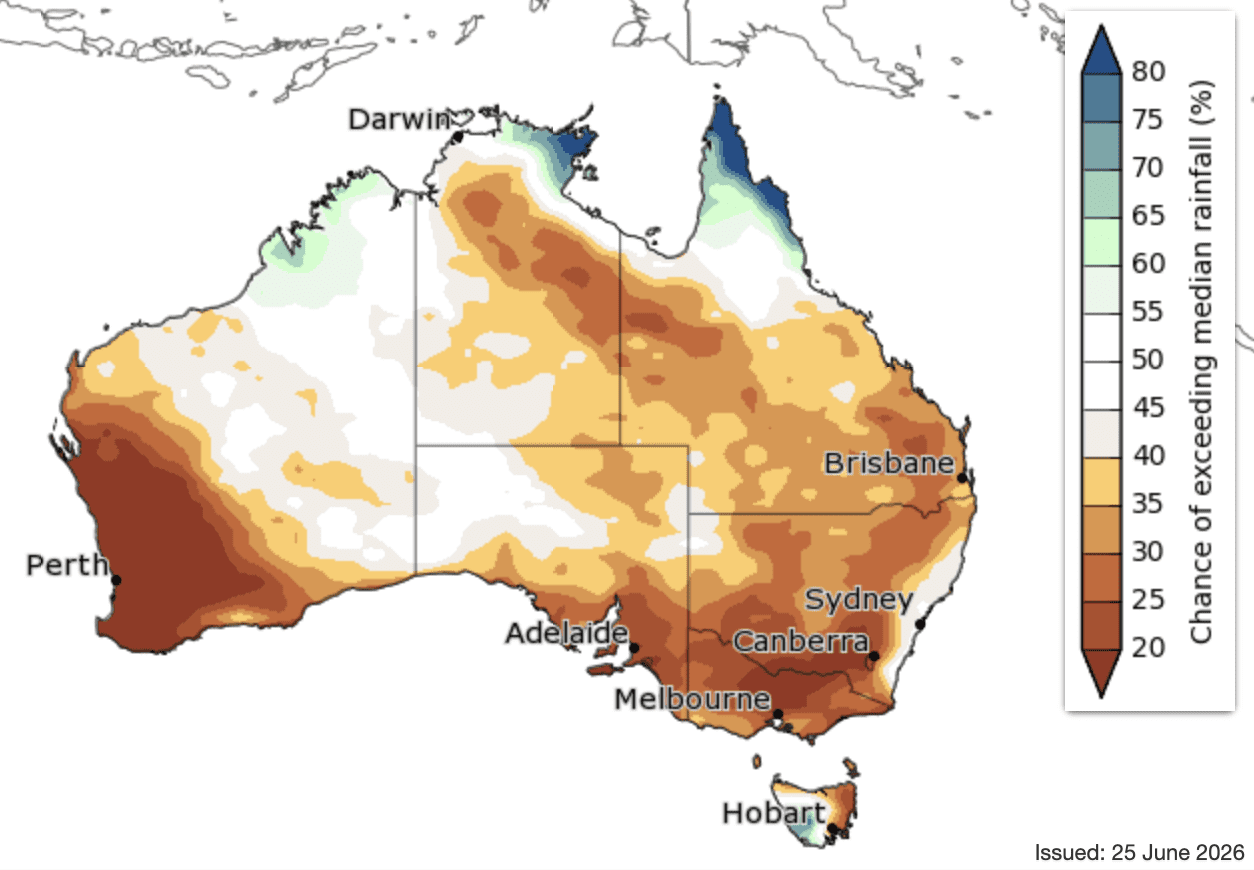
Below average July to September rainfall likely across much of southern and eastern Australia
July to September rainfall is likely to be below average (60pc to 80pc chance) for much of southern and eastern Australia extending into central Northern Territory but excluding much of the New South Wales coast, according to the Bureau of Meteorology’s latest seasonal climate outlook report released this morning.
 The Bureau says the highest likelihoods are over parts of the south-western and south-eastern mainland.
There is an increased chance of unusually low rainfall* (40pc to 70pc chance) across parts of south-west Western Australia and south-east Australia.
While there is an increased chance of above average rainfall across parts of the far north, this forecast period falls within the northern Australian dry season, when most of the tropical north, except for the east coast of Cape York Peninsula, typically receives very little rainfall. Therefore, only small amounts of rainfall, often less than 20 mm, can be enough to exceed seasonal averages.
For most other areas, there is no clear signal for either wetter or drier conditions, meaning there are roughly equal chances of above or below average rainfall.
Over southern and eastern Australia, this rainfall forecast from ACCESS-S is generally consistent with forecasts from most international models, which also show below average rainfall.
* Unusually low rainfall is that in the driest 20% of July to September records between 1981 and 2018.
Outlook video
TEMPERATURE OUTLOOK
Above average temperatures across much of Australia
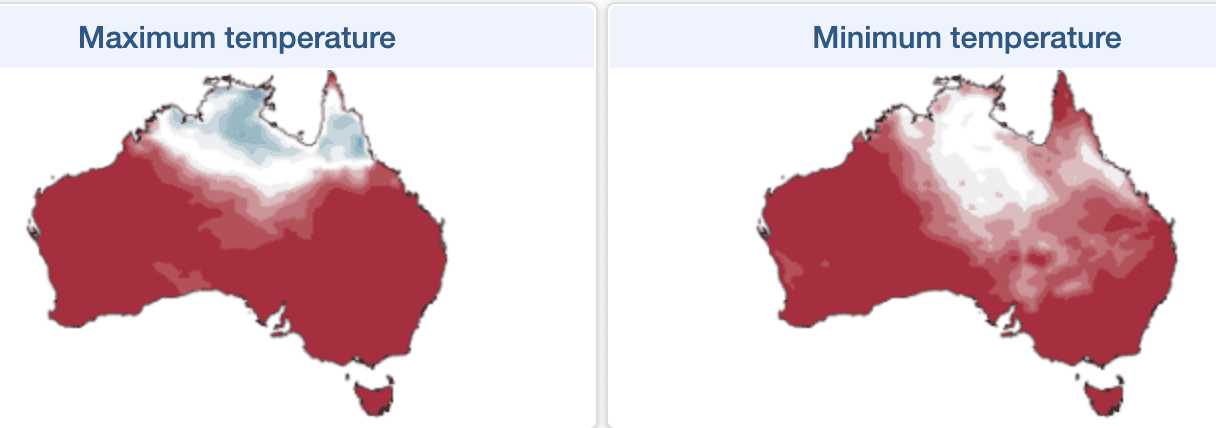
July to September maximum temperatures are likely to be above average (60pc to greater than 80pv chance) across most of Australia south of the tropics.
Maximum temperatures are likely to be below average (60pc to 80pc chance) across northern parts of Queensland, the Northern Territory, and Western Australia.
There is an increased chance (over 60pc chance) of unusually high maximum temperatures* across much of eastern and western Australia with the highest chances (over 80pc chance) across western parts of Western Australia, eastern New South Wales, Victoria and Tasmania.
Minimum temperatures are likely (60% to greater than 80% chance) to be above average across most of Australia away from central northern Australia.
There is an increased chance of unusually high minimum temperatures2 (over 60% chance) for south-east Queensland, eastern and southern New South Wales, Victoria, Tasmania, southern and western South Australia and much of the southern two-thirds of Western Australia.
These temperature forecasts are generally consistent with most international models, although ACCESS-S predicts higher chances of warmer than average temperatures.
* Unusually high maximum and minimum temperatures are those in the warmest 20% of July to September days and nights, respectively, between 1981 and 2018.
COMPARISON
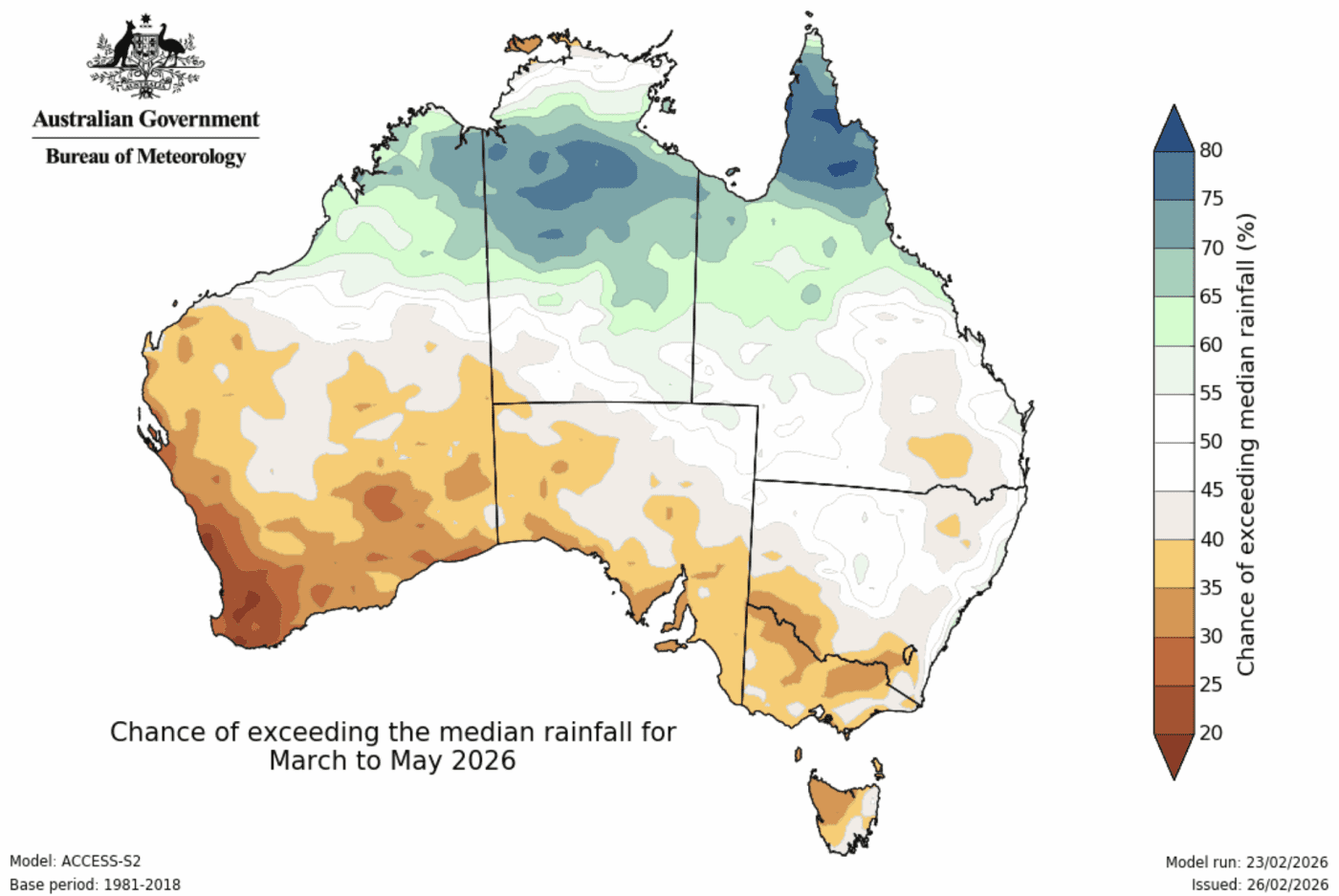
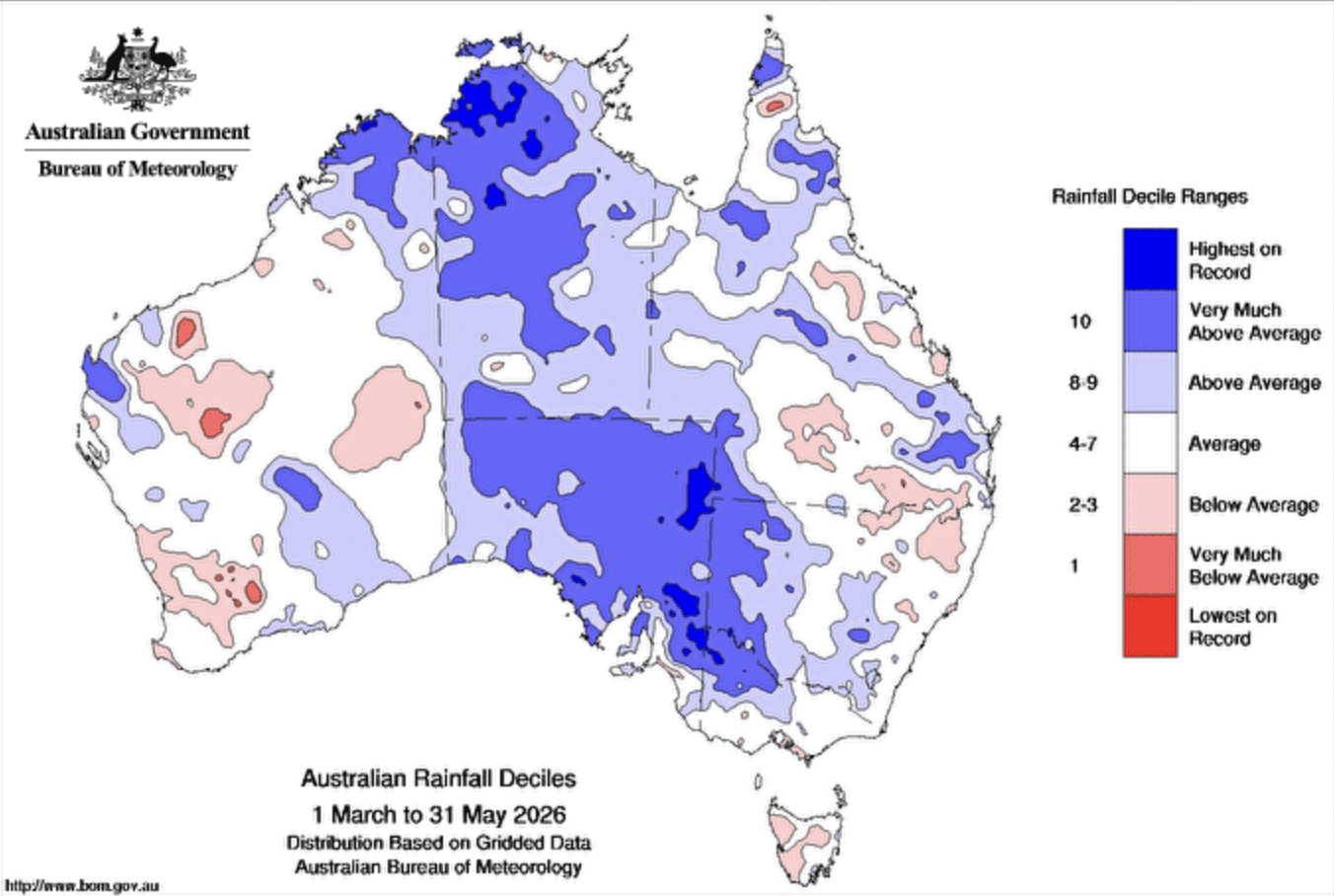
Previous three-month outlook versus actual rainfall received
March to May 2026 rainfall outlook (issued 26 February 2026):
March to May 2026 rainfall deciles:
Source: BOM