
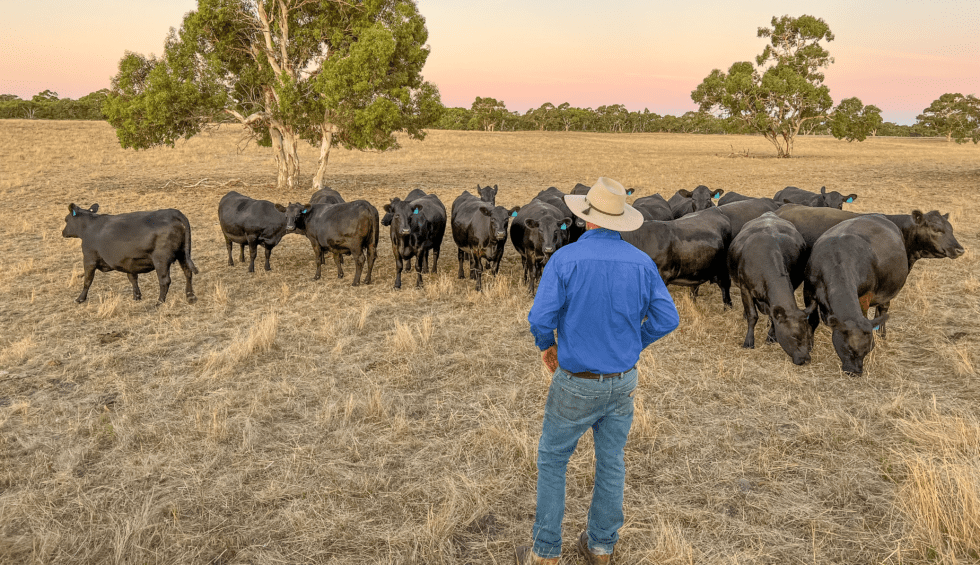
MANY producers highlight longevity, or stayability, as a key trait to focus on within their herds.
This reflects a broader belief that longevity is one of the more crucial traits underpinning herd productivity.
There are clear reasons why many producers hold that view. A cow that suits a particular environment has usually proven she can get back in calf, raise a calf and hold condition under the conditions where she lives, rather than the conditions of a seedstock operation in a totally different production environment.
There has been significant research into beef production, and the results do not point to longevity as a standalone driver of productivity.
The CashCow project, which measured the performance of around 78,000 cows across northern Australia, found that production is governed by annual reproductive performance. Most critically, lactating cows need to be back in calf within four months of calving (P4M), and foetal and calf loss between pregnancy testing and weaning needs to be kept low.
A cow that holds her place in the herd for years but fails to wean a calf every year does nothing for production. So, while it is true that longevity matters, it is more accurate to say it matters through annual fertility rather than as a trait in its own right.
This is an important, if subtle, distinction. Reframed as the cumulative result of a cow getting back in calf year after year, longevity is a real signal of fertility and adaptation expressed over time, and it earns a place in the breeding objective for that reason.
But it raises a fair concern for many producers. By focussing on fertile, adapted cows and continuing to breed from them because they keep performing, are they slowing the rate at which better genetics come into the herd?
Over time, does a focus on longevity leave a reliable herd that has quietly been overtaken by the genetic progress being made across the wider breed?
Generational interval versus longevity
The concern is not really longevity itself. It is generation interval. Every year an older cow remains in the herd, the average age of breeding animals increases and genetic progress slows.
Put simply, if genetics improve every year, replacing an eight-year-old cow with a genetically superior heifer will usually move the herd forward faster than keeping the older cow for another joining. The question is whether that genetic gain is worth the cost of replacing a productive cow.
Genetic selection
Research from Australia and North America suggests longevity can be selected for genetically, although heritability is generally low. The strongest relationships tend to emerge once cows have reached four to six years of age.
Genomic testing is helping improve the accuracy of breeding values for longevity and allows producers to identify superior animals earlier in life.
Genomics has increased the accuracy of breeding values across the board, and the gain is largest for traits of low heritability such as longevity, which start from poor accuracy on pedigree and performance records alone.
 Because a genomic test delivers that information from a DNA sample early in life, producers can select young animals as parents with confidence rather than waiting years for their own records or progeny to prove them, and joining younger parents is what shortens the generation interval.
Commercial multibreed data from the United States, published in the Journal of Animal Science in 2024, and work on Nellore cattle published in Livestock Science, both found that genomic information lifts the accuracy of breeding values and helps reduce the generation interval.
A practical example could be one where a productive eight-year-old cow is weaning a calf every year. Replacing her with a first-calf heifer may improve the genetic merit of the herd slightly, but it also introduces additional risk.
The heifer still needs to conceive, calve, rejoin and successfully wean a calf. If the replacement cost is high, the value of the genetic improvement may be smaller than the value of another productive calf from the older cow.
In most commercial herds the bull is the driver of genetic progress, because he sires far more calves than any individual cow can conceive. Retaining a cow for longer may slow genetic gain, but provided the bull has been selected on accurate genetics, his contribution to the herd’s productivity can offset that genetic lag.
Economic trade-offs
However, there is also an economic trade-off, as dairy research has shown.
Professor Albert De Vries of the University of Florida modelled this trade-off in a 2017 paper in the Journal of Dairy Science. His work showed that replacement costs often outweighed the value of the extra genetic gain achieved by turning cows over more quickly.
In simple terms, keeping a productive cow for another year was frequently more profitable than replacing her solely to accelerate genetic progress.
As a standalone trait, longevity is not a key productivity driver. What matters is the fertility and adaptation that longevity often reflects.
A cow that remains in the herd for ten years but misses calves is not productive, while a cow that consistently conceives, calves and weans a calf is contributing regardless of age.
The real question is not how long a cow stays in the herd, but whether she continues to generate profit.
In many commercial herds, the cost of replacing productive cows can outweigh the value of the additional genetic gain achieved by shortening generation interval.
Longevity matters, but largely because it reflects the traits that actually drive productivity.
 Alastair Rayner is the Strategic Account Manager for Southern Australia with Vytelle and Principal of RaynerAg. He has over 30 years’ experience advising beef producers and graziers across Australia. Alastair can be contacted here or through his website: www.raynerag.com.au
Hi Alastair,
Longevity is a really interesting topic, especially versus generation interval. As a stud producer, I believe longevity is one of the most important considerations in a cow herd, but it has to be viewed in conjunction with the management protocols of the herd. At Cree Santa Gertrudis we join our yearlings for 60 days at 13-15 months old, and the main cow herd for 90 days. While this hardly ground-breaking, it is not common in the sub tropics and females that produce without a miss, earn a spot here for as long as they are able to wean a calf. These older cows, (and I have one here atm that is 17, has raised 15 to weaning and is PTIC again) can still improve each generation with the right bull selection. The other benefit of longevity when it comes to buying bulls from older cows is the probability of buying good conformation, teats and udders and constitution.
Anyway, just my thoughts.
Kind Regards,
Shaun McGuigan
Cree Santa Gertrudis.
Well put Shaun.
A clear rigorous approach to identifying animals which are performing in the production system will find the best performers.
Problems invariably arise when non performers are retained e.g. cows that fail to conceive and raise a calf, cows that develop udder problems, poor temperament.
Regards
Mick Sullivan