
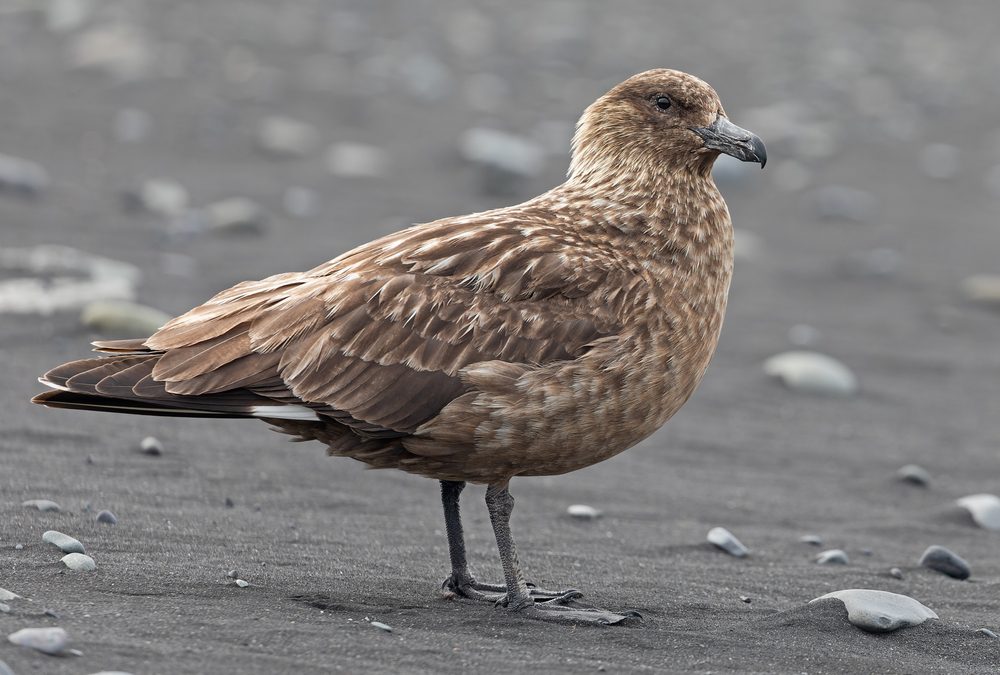
A brown skua seabird. Image source: Shutterstock
Australia’s livestock industries are on heightened alert following confirmation on Friday that the globally circulating H5 bird flu strain has been detected on the mainland for the first time, in what farm leaders say is a significant biosecurity event extending well beyond poultry.
Federal Agriculture Minister Julie Collins confirmed today that a second wild seabird in Western Australia had tested positive to H5 high pathogenicity avian influenza (HPAI), following the initial detection in a brown skua seabird in an isolated area of Cape Le Grand National Park, around 50km east of Esperance.
The second positive case reported today was detected in a northern giant petrel found in the same isolated region. According to Animal Health Australia (AHA) it remains subject to final confirmatory testing by the CSIRO Australian Centre for Disease Preparedness.
 AHA said the Western Australia Department of Primary Industries and Regional Development (DPIRD) had responded swiftly to the detection and wa leading response activities on the ground. This included enhanced surveillance, working closely with industry, veterinarians, wildlife carers and local communities.
The detections mark the first time the globally circulating H5 strain, which has swept through poultry, wildlife and mammal populations overseas since 2020, has been found in Australia.
Authorities stressed there have been no detections in commercial poultry, no signs of spread into agricultural systems and no evidence of mass wildlife mortality.
“H5 bird flu is a low health risk to the public and rarely affects humans. Bird flu is not a food safety risk for chicken meat and eggs if they are handled and cooked correctly,” the AHA website notes.
One of Australia’s largest poultry processors, Inghams Group, today announced it has moved to a state of heightened biosecurity vigilance, locking down all non-essential access to its Western Australian farms and processing sites as a precaution.
Its breeder farms and grower network are located 690km to 770km north of the Esperance detection site.
The company said supply to the Australian market remained unaffected.
The arrival of H5 has triggered a coordinated national response, with governments and livestock groups warning producers across all sectors to review on-farm biosecurity and remain vigilant.
The significance for Australia’s broader livestock industries lies in the virus’ ability to move beyond birds.
Unlike previous avian influenza outbreaks in Australia, typically H7 strains contained within poultry, the H5 variant has demonstrated an ability overseas to infect mammals, including dairy cattle, and in rare cases humans.
The US has recorded widespread H5 infections in dairy herds over the past 12 months, with infected cattle showing reduced milk production, fever, lethargy and reduced appetite.
That cross-species transmission is one reason industry groups say the issue deserves the attention of all livestock producers, not just poultry operators.
National Farmers’ Federation president Hamish McIntyre said the detection reinforced the importance of strong farm biosecurity across agriculture.
“This will undoubtedly be a stressful time for farmers and has the potential to create significant impacts across the sector,” Mr McIntyre said.
“Australia has worked hard to maintain its status as the only continent free from the H5N1 strain that has spread globally since 2020, which is why vigilance is so important.”
The NFF said the detection highlighted the need for producers to review biosecurity plans, limit unnecessary farm movements and ensure staff understood reporting obligations.
Animal Health Australia said the immediate priority is surveillance to determine whether the virus remains isolated to the two wild birds or has established more broadly in wildlife.
Australia has successfully eradicated multiple H7 avian influenza outbreaks in recent years, but Minister Collins acknowledged H5 presents a greater challenge.
“What we have seen globally is that it is very difficult to eradicate,” she said.
“We have been successful in eradicating the H7 virus twice in the last five years, but we do know that the H5 virus is much harder to eradicate if it gets into our agricultural system.”
Minister Collins said the Albanese Government has invested more than $113 million in H5 preparedness since 2024, including establishing a dedicated national taskforce and running simulation exercises.
For all livestock producers the advice from Animal Health Australia is to follow industry-led biosecurity programs to reduce the chance of disease entering farms by enforcing strict controls on shed access, cleaning and disinfection protocols, and keeping feed and water sources away from wild birds, monitor livestock for unusual illness and report any sick or dead birds or animals immediately.
For more information from Animal Health Australia click here