
Latest listings on AgJobs Central:
- Executive General Manager – Wilga Farming (Rimfire)
- Manager – Specialist Wagyu Feedlot, Darling Downs Qld (DroverAg client)
- Station Hand – Glentana Station (AA Co)
- Senior Station Hand – Cattle Operation, Qld (DroverAg client)
- Cook – Glentana Station (AA Co)
- Export Documentation Coordinator (Stockyard)
- Senior Manager – Dealer Networks (John Deere, via Agricultural Appointments)
- Maintenance All Rounder – Beef City Feedlot (JBS)
- Senior Agriculture Adjuster (AgClaims)
- Labourer – Excavator Operator, Bundaberg Qld (Elders)
- Field Labourer – Irrigation, Bundaberg Qld (Elders)
- Grain Quality Assurance Manager (Grain Trade Australia)
- Manager Sustainable Cropping Systems (GRDC, via Rimfire)
- Stock Agent – Rockhampton, Qld (Elders)
- Retail Sales Representative – Quilpie, Qld (Elders)
- Senior Business Manager – Applied Research, Development & Extension (GRDC)
- Non-Executive Directors (Rimfire client)
- Nutritional Sales Representatives – Northern Vic, Gippsland Vic (Rimfire client)
- Feedmill Operator – Queensland (Pakaderinga Feedlot)
Click here to access these and other exciting meat and livestock supply chain jobs currently listed on AgJobs Central.
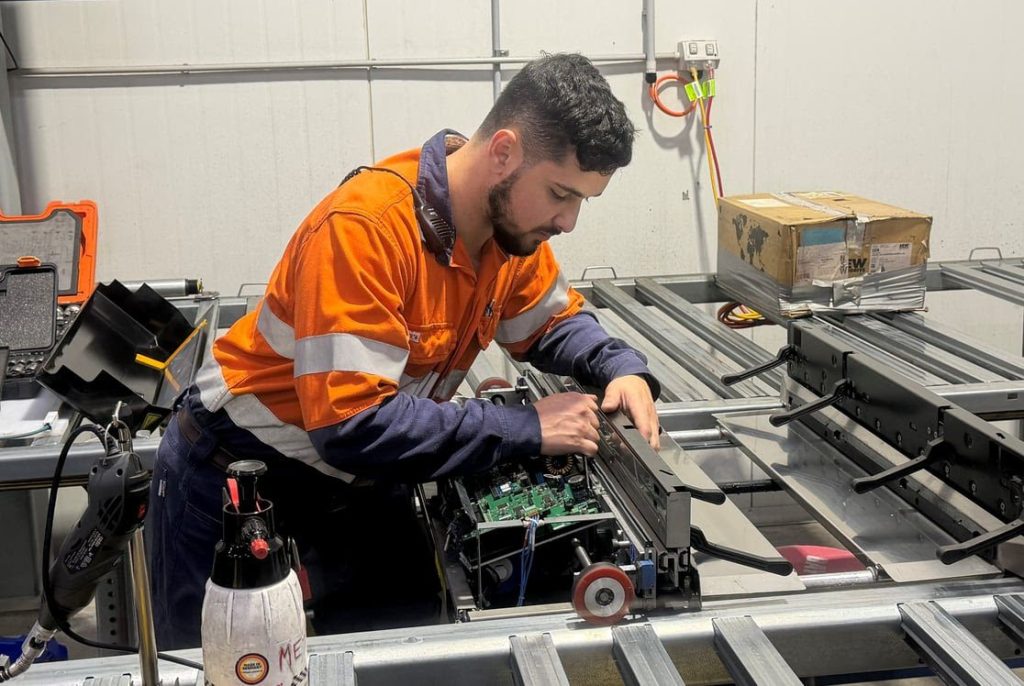
Thailon De Araujo on the job as an apprentice fitter at NH Foods Australia’s Oakey processing plant on Queensland’s Darling Downs.
A VIEWING platform that allows visitors to observe operations firsthand and a paid work experience program that sets career paths in motion are just two of the ways that regional communities are being strengthened thanks to the business of red meat processing.
Processors deliver a multitude of public value initiatives to the communities in which they operate. However social impact research has shown these types of contributions remain largely unmeasured and anecdotal.
A project funded by the Australian Meat Processor Corporation and conducted by experts at CQUniversity suggests this work needs to become more visible.
CQUniversity’s Dr Jaime Manning said consumers were placing increasing emphasis on an industry’s commitment to creating positive change.
“Processors undertake a wide range of meaningful social impact initiatives at a regional level, particularly through strong partnerships with local schools, training providers and community organisations,” Dr Manning said.
“These activities demonstrate the sector’s long-term commitment to regional communities and willingness to invest beyond core operations.
“But evidence is needed for these initiatives to challenge community concerns and scrutiny.”
AMPC sustainability project officer Lauren Smith, who herself has prior in-plant experience as a quality assurance and technical systems coordinator, said there were countless roles within processing, which reflects the diverse range of skills the industry depends on.
“This diversity strengthens the technical ecosystem of regional communities,” she said.
“Processors don’t just create jobs, they elevate the employability and capability of entire regions, delivering social benefits across Australia. The next challenge for this work is how to effectively measure and articulate this positive impact.”
Here are some case-studies on social impact initiiatives helping secure labour in the processing sector:
NH Foods Australia’s Schoolies Skills Starter
For data analyst Kamylly Camilo, quality assurance officer Corey McBride and fitter apprentice Thailon De Araujo, red meat processing has provided a level of career diversity, progression and satisfaction that they both had earmarked as school students.
As teenagers they took part in NH Foods Australia’s Oakey plant Schoolies Skills Starter program, set up to offer paid work experience to local secondary school students during the school holidays.
Being paid gave them the initial incentive to look at processing. That led to confidence building and learning workforce skills before they had even left school but it also opened their eyes to the plethora of career paths on offer at the Oakey plant.
All moved straight into a full-time role at the plant after finishing school.
Corey started 15 years ago as floor personnel, went on to work across a number of areas including carcase preparation, knife operations and scales operation and for the past eight years has been in quality assurance.
Kamylly started six years ago in carton handling before moving through to chill packing and scales and is now a data analyst in the boning room.
Thailon’s first role in 2019 was operating an air knife and he is now doing an fitter’s apprenticeship.
Since it kicked off in 2006, 172 students have taken part in the program at Oakey and for many it has translated into a career pathway.
It works on many levels, says NH Foods Oakey human resource manager Isabel Malferrari.
“Students who are paid gain not only financial support but also experience real workplace expectations, such as meeting production standards, following strict safety and hygiene procedures and demonstrating reliability in a commercial environment,” she said.
David Miller, from the Human Resources Office at NH Foods Oakey said the program also contributed further afield than the processing sector.
“For the local Oakey community, this style of program strengthens workforce development by creating job-ready young people, supports local families via student income and helps sustain the regional economy by building a pipeline of skilled workers for one of its key industries,” he said.
ACC’s words and windows transparency
Purpose-built viewing platforms that allow visitors to observe processing operations firsthand is the highlight of a multi-faceted strategy designed to improve transparency and perception of the red meat processing industry, and the careers within, at Australian Country Choice.
ACC, based in Cannon Hill, Queensland, believes openness is key to closing the gap between people and their food, according to chief executive officer Anthony Lee.
“We’ve been operating since 1960 across three generations of the Lee family, and we’re proud of how we do things,” Mr Lee said.
“People are asking more questions about their food, and rightfully so. We believe the best way to answer those questions is not just to talk about it but to show it. Giving people the opportunity to see our operations for themselves helps challenge misconceptions and provides a real insight into the care, standards and people behind what we do.”
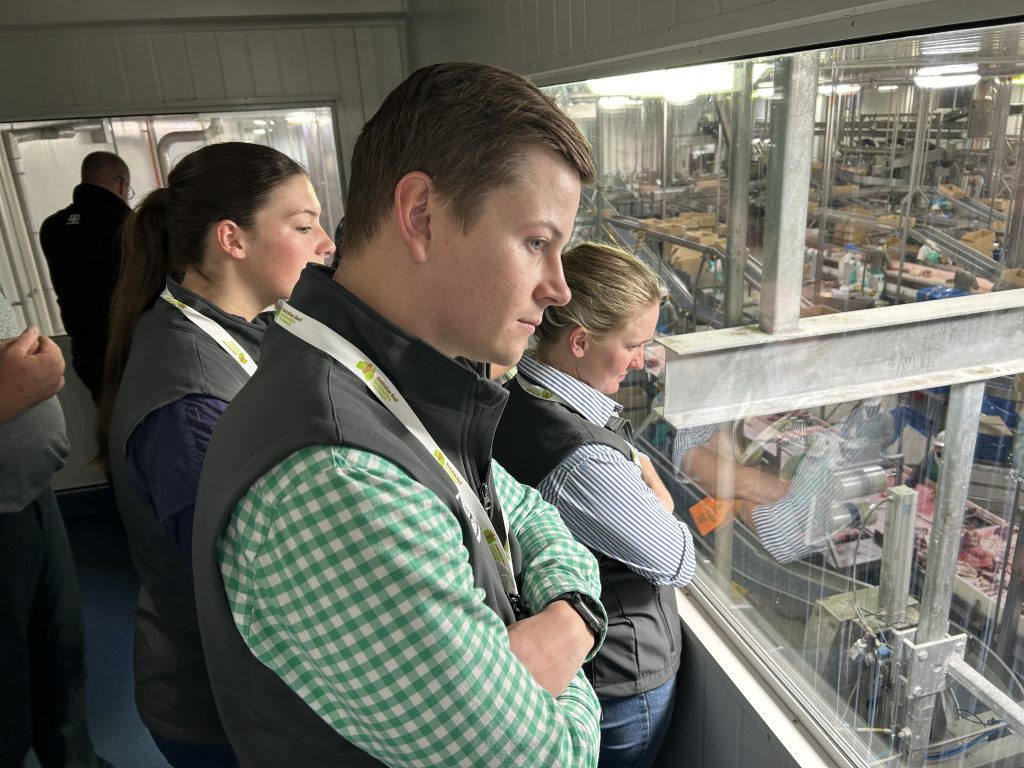
Visitors observe ACC’s fabrication floor below, from one of the site’s enclosed observation rooms
The platforms consist of enclosed observation rooms positioned throughout key stages of the processing facility, from livestock receiving through to value-adding. This design allows visitors to safely observe operations without entering the processing environment, addressing both workplace health and safety and food safety requirements.
Mr Lee said the investment represented a significant and deliberate commitment to engaging openly with the community.
“It’s not a marketing exercise. We believe very strongly in the importance of transparency and education,” he said.
“We know it works by the level of engagement we see from people outside our industry who are genuinely fascinated by what they learn from the tours.”
Source: AMPC
HAVE YOUR SAY