
Opinion

What’s the cost of doing nothing?

Guest Author 13/03/2026

Victorian beef and lamb producer Andrew Freshwater provides some thoughts and numbers based on a modelled farm in Northeastern Victoria, where a ‘do nothing’ fertiliser and soil improvement strategy cost the business $3.13m over a few years  …  

Inflation

The most significant mistake a producer can make in 2026 is to use 2022 prices as a mental benchmark. Between January 2022 and today, the Producer Price Index (PPI) for agriculture has outpaced general inflation.

  • The Adjustment: Cumulative inflation has reached roughly 21.4%.
  • Purchasing Power: $1.00 in 2022 now buys roughly $0.79 of equivalent goods.
  • The Inaction Fallacy: Our modelled farm looked at saving $54,000 a year by skipping fertiliser. In reality, the 2026 cost of the same fertiliser has risen, and the value of the cash they “saved” has eroded.

The Victorian Farm Monitor Project (VFMP) overheads

Data from the Livestock Farm Monitor Project (LFMP) for Northern Victoria shows that while producers tried to cut variable costs, their Fixed Overheads became an inescapable drag on cash.

  • 2022 Fixed Overheads: roughly $76.50/ha
  • 2026 Fixed Overheads: roughly $118.00/ha (+54.2%)
  • The Mechanics: Rates, insurance, power, and compliance are “production-blind.”

On our 714ha farm model, the cost of just existing rose from $54,621 to $84,252.

By doing nothing and allowing stocking rates to drop, the overhead cost per animal doubled.

The farm didn’t save money; it simply made every remaining cow more expensive to run with less productivity.

The regen ag viewpoint

The nutrient export reality

The Regenerative Agriculture argument often claims that biology and animal impact can replace mineral inputs, this isn’t right when reconciled with the Law of Conservation of Mass.

Every 450kg steer that leaves the modelled farm in North East Victoria is a physical export of minerals:

  • Phosphorus (P): 3.2kg
  • Nitrogen (N): 11kg
  • Calcium (Ca): 6.5kg

For a 10,000 DSE enterprise, the annual export is roughly 10,000kg of elemental Phosphorus.

The manure fallacy

To replace that 10,000kg of P using only manure (which is roughly 0.6pc Phosphorus):

  • You would need to spread 2,333kg of dry manure per hectare.
  • To generate this much manure, you would need to run 21 DSE/ha all year round.
  • The Paradox: To run 21 DSE/ha, the farm needs to grow 11,500kg DM/ha. But an unfertilised North East Victorian farm only produces 4,500kg DM/ha.

The logic just doesn’t add up You can’t run enough cattle at the stocking rate required to grow the grass unless you already have the fertility to grow the grass. Doing Nothing isn’t regenerative; it’s extractive!

Aluminium levels in soil

pH Acidification (0-10cm vs 10-20cm)

In the granitic soils around this region, soil acidifies at a rate of ~0.05 pH units/year under grazing.

  • The Threshold: When pH (CaCl2) drops below 4.8, Aluminium (Al) becomes soluble.
  • The Toxicity: Soluble Al is a root-tip poison. It stops cell division.

The club root effect

In the Do Nothing model, by 2026, the soil pH has dropped from 5.1 to 4.9. The Aluminium percentage on the exchange complex has spiked to >15pc.

  • The Result: Phalaris roots, which should be 1.2 metres deep, are now “clubbed” at the 10cm mark.
  • The February Consequence: In a week of 38°C days, a plant with a 10cm root system dies. A plant with a 1-metre root system continues to access the sub-soil moisture we saw in the SOI data.


Poor animal growth rates

Average daily gain (ADG) collapse

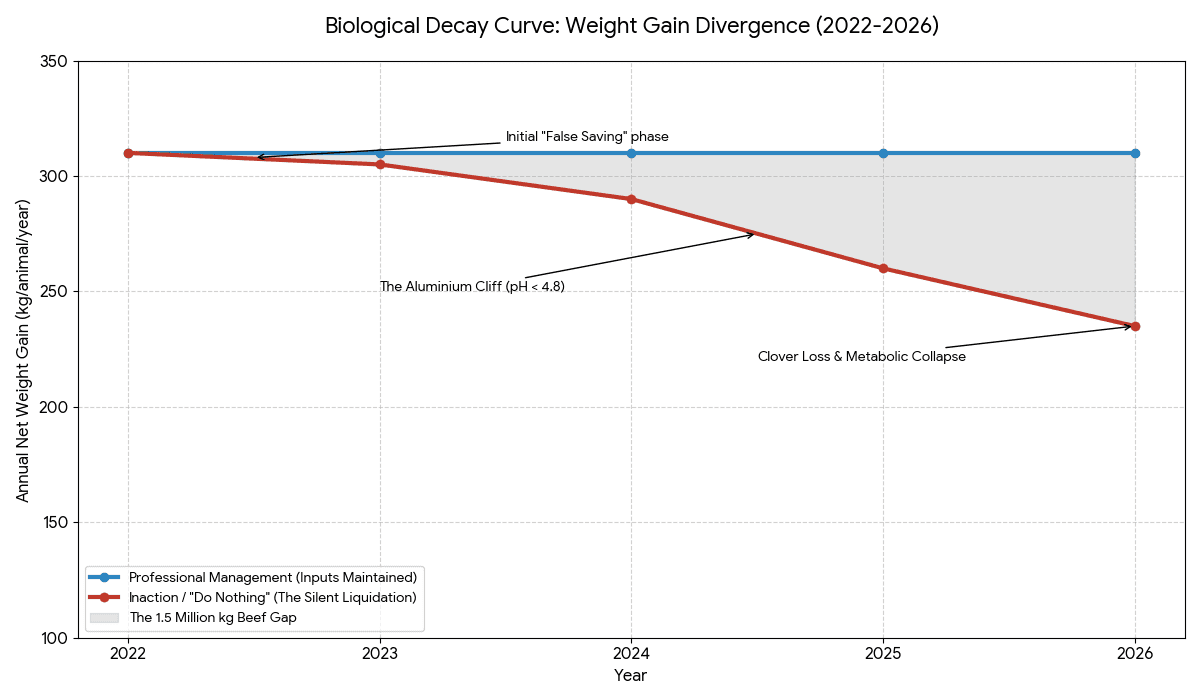
The most expensive part of “Doing Nothing” is the shift in botanical composition. As Phosphorus (P) drops, Clover (the high-protein driver) disappears.

  • The Weeds: Silver Grass and Capeweed take over and animal growth plummets.
  • The Energy Gap: In 2022, the steers that were gaining 1.2kg/day on a Clover/Phalaris mix are by2026, on a Silver Grass/Onion Grass mix, they are gaining 0.4kg/day in spring and losing weight in winter.

This Maintenance Feed Only state means the model farm is paying $84,252 in overheads to run animals that aren’t actually growing. It’s now essentially a low productivity farm that doesn’t grow much grass, doesn’t put much weight on cattle and has sub optimal cow fertility rates – that’s just simply not sustainable in anyone’s language.
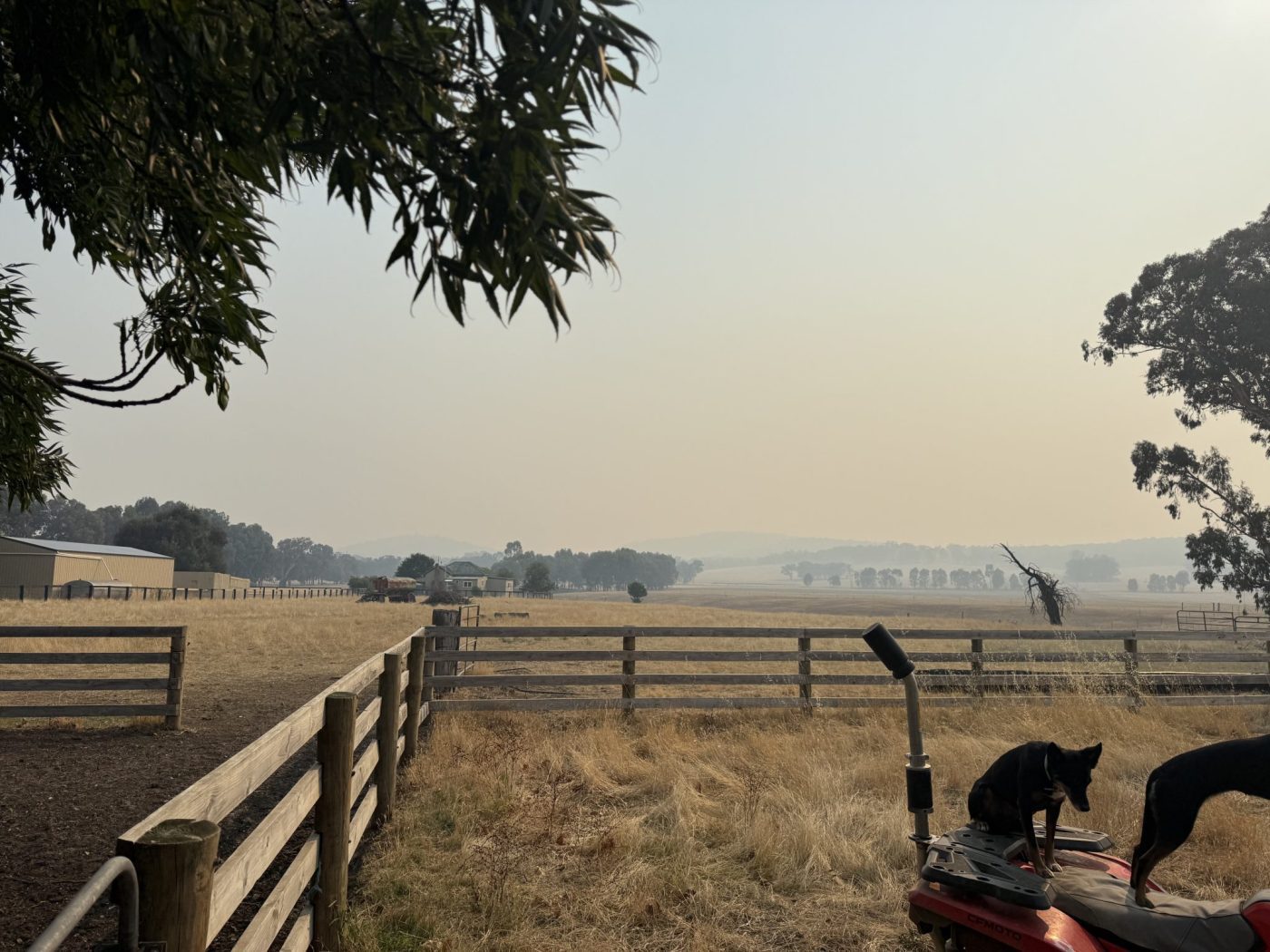
Image by Andrew Freshwater via Writers Who

Where’s the money gone?

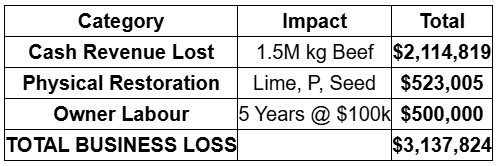
Our modelled farm has gone down the path of saving money for a few years but this has in fact lead to a total destruction of value.

The Revenue Gap ($2,114,819)

This is the Opportunity Cost. If the farm had stayed at 14 DSE with an industry competitive Average Daily Gain, it would have produced 1.5 million kilograms more beef than the Do Nothing farm over the four year period. Adjusted for 2026 dollars, this is the hard cash that never hit the bank.

The Asset Restoration Bill ($523,005)

To fix the damage of four years of mining the soil, the Do Nothing farm now has to pay a Capital Reset:

  • Capital Lime: $196,350 (To lift pH back to 5.2)
  • Capital P: $98,175 (To lift Olsen P from 8 to 15)
  • Pasture Re-sowing: $199,920 (To replace the dead Phalaris)

Labour Opportunity Cost ($500,000)

A farm manager’s time is worth $100,000 per year. Over five years, the “Do Nothing” owner essentially donated $500,000 of their life to a project that resulted in a negative return on equity.
Supplied by Andrew Freshwater via Writers Who

Image by Andrew Freshwater via Writers Who

How soil-types differ

In North East Victoria, “doing nothing” does not result in a uniform decline. The speed of biological decline is dictated by the parent material of the soil. On our 714-hectare model farm we are likely managing a cocktail of three distinct soil types.

The granitic uplands (The fast burn)

These are the light, sandy loams. They are chemically fragile.

  • The Mechanic: They have low Cation Exchange Capacity (CEC), meaning they can’t hold onto nutrients. When you stop applying Phosphorus, the “bank” is empty within 18 months.
  • The Acid Trap: Granitic soils acidify faster than any other type in the region. By Year 3 of doing nothing, the Aluminium levels in these paddocks will have hit the 15–20% toxicity threshold.
  • The Vegetation Shift: You will see a rapid transition to Silver Grass (Vulpia) and flatweeds

The sedimentary slopes (The hidden erosion)

These are the buckshot gravelly soils. They are tougher than the granite but possess a high P-Buffering Index (PBI).

  • The Mechanic: These soils tie up Phosphorus. When you stop applying maintenance Super, the soil biology tries to pull Phosphorus from the locked pool, of nutrients, but in an acidic environment, this process stalls.
  • The Vegetation Shift: These paddocks often stay green longer, giving a false sense of security, but the green is Onion Grass and Flatweed – species with zero nutritional value for growing cattle

The alluvial flats (The buffer zone)

These are the heavier, productive soils near the creek lines.

  • The Mechanic: They have higher clay content and can mask the Do Nothing strategy for 4–5 years.
  • The Trap: Because these are your most productive hectares, the Opportunity Cost of them running at 60% capacity is actually higher than the loss on the hills.
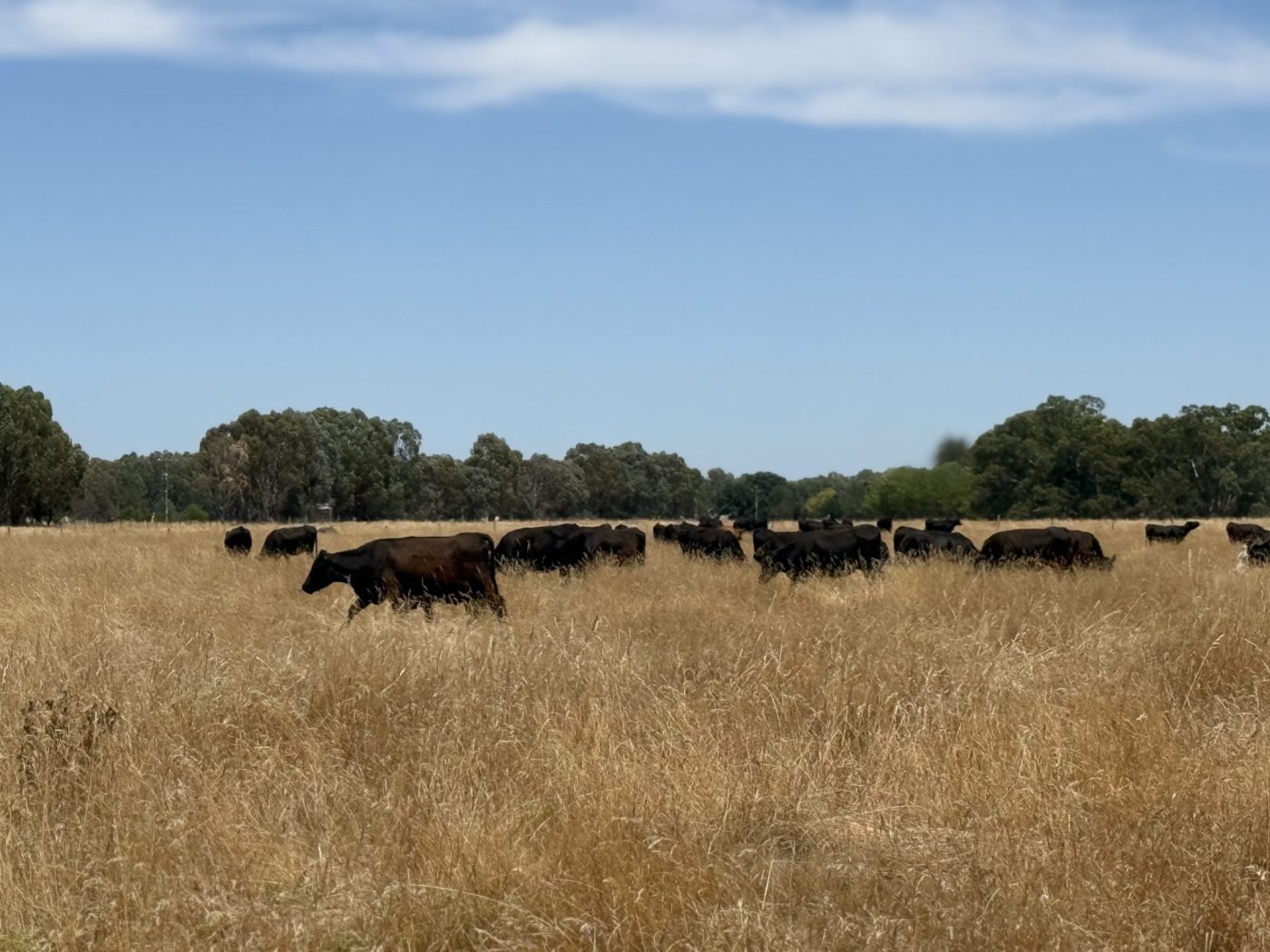
Photo supplied by Andrew Freshwater via Writers Who

The 10-year financial forecast (2022–2032)

To understand the 2026 cliff, we must project the inaction path into the next decade. Using Victorian Farm Monitor Project historical trends and 2026 inflationary modelling, its best expressed with a comparative cash-flow analysis.

The maintenance model (14 DSE/ha)

  • Total Revenue (Real): Stays stable as Average Daily Gain is maintained.
  • Input Costs: Rise with inflation, but are offset by the high volume of kilograms produced.
  • Net Present Value (NPV): After 10 years, the business has generated $4.8M in net profit (adjusted for inflation).

The do nothing model (The decay)

  • Year 1-2: Looks profitable. Cash is saved.
  • Year 3-5: Production drops 40%. Fixed overheads (Rates/Insurance) now consume 65% of gross revenue.
  • Year 6: The Restoration Bill falls due. To stay viable, the producer must borrow $523,000 at 2026 interest rates.
  • Net Present Value (NPV): After 10 years, the business has accumulated $1.2million in losses.

Note: The savings from 2022 are completely obliterated by the Capital Reset required in 2027. Its not actually saving $200k; but delaying a $500k bill while losing $2 million in farm revenue.

Livestock health & genetic erosion

We often focus on the soil, but the 10,000 DSE of livestock are the engine room of turning grass into protein and cashflow! In a Do Nothing system, the model farm isn’t just losing weight; it’s also destroying the genetic capacity of the livestock.

The heifer development crisis

To maintain a 10,000 DSE herd, you need a 20% replacement rate. Heifers raised on Phosphorus-deficient, acidic country fail to hit critical mating weight.

  • The Impact: Conception rates drop from 92% to 74%.
  • The Financial Hit: You are forced to buy-in expensive replacement breeders from the market, further exposing exposing the business to unknown bloodlines, and unknown genetic capabilities.

The trace mineral black hole

As pH drops, the availability of Molybdenum and Selenium changes.

  • The Result: Increase in ill-thrift, lower immune response to worms, and higher mortality rates during mid winter or summer.
  • The Cost: Veterinary bills and supplementary lick costs spike by 300% as you try to buy back the health you lost by skipping the fertiliser.
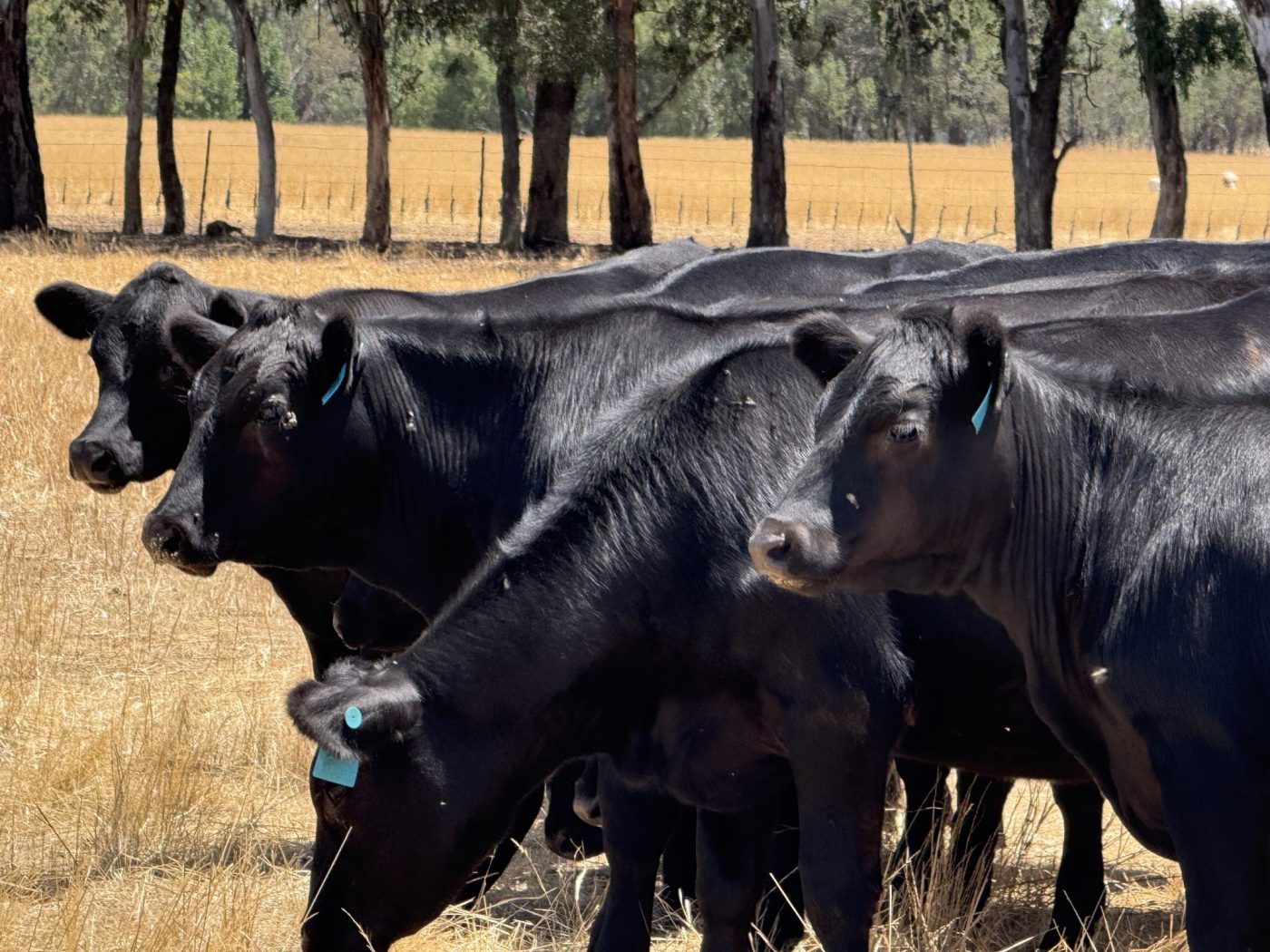
Photo from Andrew Freshwater via Writers Who

How do I get back on track?

If you find yourself in 2026 with a mined farm, how do you spend that $523,005 restoration bill to get the biggest bang for your dollar?

Just throwing Superphosphate at the problem isn’t the best answer in reality.

Step 1: The lime bridge (Months 1–6)

Before a single tonne of Phosphorus hits the ground, you must neutralise the Aluminium toxicity.

  • Action: Apply 2.5t/ha of high-neutralising value Lime – Galong lime is the best for this area.
  • Goal: Lift pH from 4.8 to 5.2 to unlock the root zone.

Step 2: The phosphorus-reset (Months 6–12)

Once the Aluminium has started to be neutralised, you apply a Capital Application of Phosphorus.

  • Action: 250kg/ha of Single Super.
  • Goal: Jump-start the Clover nodulation.

Step 3: The genetics over-sow (Year 2)

The old Phalaris is probably dead and was probably not the best variety for productivity. Its perfect timing to be direct drilling a variety like Holdfast GT Phalaris in as a good base plant for pastures

Between 2022 and 2026, the 10,000 DSE model farm in North East Victoria faced a choice: Invest in business sustainability or invest in flawed cost savings.

The choice to save money by doing nothing didn’t actually save a cent. The model farm took a biological loan from their land at an interest rate that exceeds any bank. When you factor in:

  1. Inflation eroding cash (21% loss in power).
  2. Overheads rising (54% increase in fixed costs).
  3. Revenue collapsing (red meat production lost).

The Do Nothing strategy has cost this enterprise $3,137,824.

As we look at the SOI charts for the remainder of 2026, the message is clear. High-fertility, deep-rooted systems will survive the El Niño. The mined farms will be forced into a total destock by April.
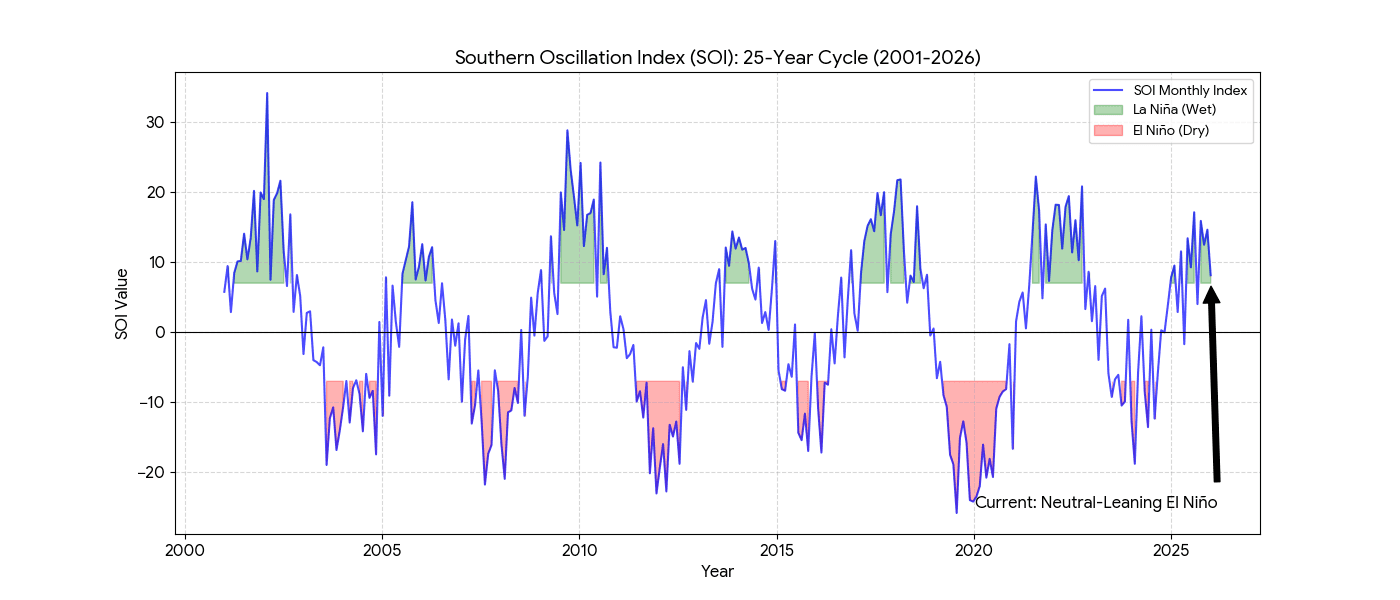
Images supplied by Andrew Freshwater via Writers Who


HAVE YOUR SAY

Your email address will not be published. Required fields are marked *

Your comment will not appear until it has been moderated.
Contributions that contravene our Comments Policy will not be published.

Comments

  1. Matt King

    I’ll add that deep soils contain large mineral deposits that aren’t mined when soil biology is low.

    Many operators farm only the top 12 inches because the soil biome doesn’t reach further below.

    There is enough mineral content down there to last for decades in a grazing context, sometimes longer – particularly in basalt soils.

    If you are farming shallow soils, biology is still important for water infiltration and moisture retention and disease resistance and decomposition etcetera, but also for digesting raw fertilisers such as rock phosphate (mycorrhizal fungi) and sequestrating nitrogen from the atmosphere (diazotrophs).

  2. Bruce Gardiner

    There are a range of management options available to beef producers, ranging from “do nothing” to maximising production. Given the non-linearity of both plant and animal production potential, it is highly unlikely that either of these options will be optimal. For example, Dairy base pasture productivity figures show that pastures achieving 85% of their potential require half as much fertiliser as pastures achieving 95%. As livestock approach the limit of their weight gain potential, it takes large increases in pasture consumption to achieve incremental increases in weight gain. As pasture approach maturity, both energy and protein content declines, meaning that pasture productivity declines. Unfortunately, the necessary data to draw such conclusions is not presented.
    There are some issues with the maths around P drawdown. Based on accepted conversion factors, 10,000 DSE equates to a breeding herd of 500 to 550 head with followers, bulls and steers being backgrounded to 450 kg/head. Assuming the higher number and a weaning rate of 95%, sales of around 520 head/year. Again assuming the quoted figure of 3.2 kg/P/head of P export, the enterprise exports about 1,700 kg of P per year or about 2.5 kg/P/ha/year. The article then quotes 10,000 DSE at 1 kg/P/DSE or 10,000 kg/P/year or 14 kg/P/ha/Year. Based on global research, the 2.5 kg/ha/year is most likely to be true. Even if 1 kg/P is tied up for every DSE, the vast bulk of this is not exported and is still available in the system. Granite soils usually contain at least 1.5% soil organic carbon (SOC) giving about 200 kg/P/ha to a depth of 10 cm. Any rate of SOC mineralisation above 300 kg/ha/year would meet P export requirements. Pastures producing 10 t/ha at 1% P would take up 100 kg/P and return 97.5 kg/P, annually, hardly a P cliff. Available P in SOC would not be significantly depleted in the short term which explains why SOC diminishes slowly under grazing conditions.
    I have some issues with the explanation of the acidification effect. Granite soils tend to become less acid with depth in the surface soil layer implying that it should be a problem before the 10 cm quoted. Even though acidification is a much bigger problem than P availability, it is relatively cheap to address with either lime or gypsum or the use of acid tolerant pastures such as serradella and cocksfoot. On-farm trials that I have conducted show that gypsum applied at the same rate as superphosphate improves pasture palatability and productivity while addressing other problems such as aluminium and manganese toxicity and soil sodicity.
    Use of gross margins to determine production decisions uses linear assumptions about inputs and output and is inherently misleading. As stated earlier. non-linearity between input and output responses means that the optimal solution lies somewhere between the two scenarios presented. Better analysis of the Monitor Farm data should provide the answer.

    • Andrew Freshwater

      Thanks for taking the time to engage with the numbers, this is exactly the kind of discussion the article was intended to provoke, and you’ve raised several points that deserve a proper reply.
      On the P export maths, you’re right, and perhaps I should been clearer. The 10,000 kg P figure represents the total P cycling through a 10,000 DSE system, not the net export leaving the farm gate. Your calculation is more accurate: approximately 520 head sold at 3.2 kg P/head gives a net export of around 1,700 kg P/year, or roughly 2.5 kg P/ha. The principle doesn’t change though and that P needs to be replaced, but the quantum matters and I perhaps I should have separated cycling from export.
      Where I’d push back is on the implication that because most of the P stays in the system, it remains plant-available. And this is where I think the landscape context matters, because the country I’m describing is quite different to the Northern Tablelands.
      The modelled farm sits on granitic and sedimentary parent material in NE Victoria – light sandy loams on the hills, buckshot gravelly soils on the slopes, and heavier alluvial flats along the creek lines. These are not the deep, well-structured basalt-derived soils of the New England. They have low Cation Exchange Capacity, they acidify faster, they have a higher P-Buffering Index on the sedimentary country, and they have almost no natural buffering capacity on the granite. A soil chemistry principle that holds up well on Armidale’s basalt red earths, where CEC is higher, SOC is more stable, and pH decline is slower – behaves quite differently on a granitic sandy loam at Byawatha where the topsoil is 8cm deep and the CEC is a third of what you’d see on the Tablelands.
      Three things break the P recycling logic on this country. First, camp bias, cattle deposit 60–70% of their dung within 200 metres of water and shade, not uniformly across the paddock. On undulating granite country with scattered shade timber, the hilltops and upper slopes are being mined while the camps and laneways accumulate surplus. The redistribution problem is worse on hilly country than on the more open, flatter Tablelands landscape. Second, as pH drops below 4.8 on these granitic soils – which you rightly identify as a bigger problem than P availability – the P that is theoretically present in the organic pool becomes progressively fixed by aluminium and iron. The bank has money in it, but the ATM is locked I guess is the best metaphor to describe the situation! And on granite parent material, that aluminium threshold arrives years earlier than on basalt. Third, the SOC mineralisation rate you reference assumes a stable or increasing SOC pool. On our granitic soils, SOC levels sit around 1.2–1.8% – roughly half what you’d expect on good New England basalt. The pool is smaller to start with, it mineralises more slowly in acid conditions, and it’s shrinking as legume content declines. You’re drawing down a smaller capital base at an accelerating rate.
      I’d respectfully suggest that the SOC buffering and mineralisation rates you’re working from reflect the deeper, more fertile, higher-CEC soils of the Northern Tablelands – and they overestimate the resilience of the lighter, more fragile granitic country that makes up the majority of grazing land in North East Victoria where this farm is modelled.
      On non-linearity – I completely agree. The article deliberately presents two bookends to make the cost of inaction visible, not to argue that every hectare should be fertilised to 95% of potential. Your point that 85% of production potential requires half the fertiliser of 95% actually reinforces the argument – a moderate, targeted investment captures most of the return. The Part 2 piece addresses exactly this: a triage approach based on soil type, where you invest heavily on responsive country and accept lower inputs on non-responsive hills. Not every hectare deserves the same dollar.
      On gypsum – I’d be genuinely interested to see your trial data. Gypsum has a legitimate role in displacing aluminium from the exchange complex and improving soil structure, and its mobility through the profile gives it an advantage over lime for addressing subsoil constraints. But on the granitic sandy loams I’m describing at pH 4.8 CaCl₂, gypsum alone won’t shift the pH. It supplies calcium without the carbonate that drives the acid-neutralising reaction. On the New England basalts where sodicity is more commonly the limiting factor, I can see gypsum delivering strong results – it addresses a genuine constraint in that landscape. On our granite, the primary constraint is acidity and sodicity is barely relevant. You need lime first to unlock the root zone, and gypsum can complement that by working deeper than surface-applied lime can reach. If your trials are on basalt-derived soils, the results may not transfer to granite – and that distinction matters for producers reading this who might reach for the cheaper input without understanding why it works on your country but not on theirs.
      On acid-tolerant species – you suggest serradella and cocksfoot as alternatives to liming. Neither species persists reliably in NE Victoria. Serradella is suited to the deep sandy soils and summer-dominant rainfall of the Northern Tablelands and Western Australian sandplain – it doesn’t establish in our heavier, winter-dominant rainfall environment. Cocksfoot struggles here too, it lacks the summer dormancy mechanism to survive our February heat events and doesn’t compete well in the botanical mix on our lighter granitic soils. The species that actually anchors productive pasture on this country is phalaris – deep-rooted, summer-dormant, persistent under grazing, and capable of accessing subsoil moisture through a week of 38°C north winds that would kill anything shallow-rooted. But phalaris needs a pH above 4.8 to maintain that root depth. That’s the entire point of the liming argument.
      The fact that both species offered as alternatives to liming are species that don’t grow in the landscape being discussed reinforces what I think is the most important point in this whole exchange – soil management recommendations have to be built on local knowledge of what actually persists and performs on the parent material and climate you’re dealing with. They can’t be extrapolated from a different environment 600 kilometres away with different parent material, different rainfall distribution, different soil depth and different temperature extremes.
      The core argument of the article remains: on improved pasture country in North East Victoria running a commercial beef enterprise, the cost of doing nothing compounds faster than most producers realise, and the restoration bill eventually exceeds what they thought they were saving.
      The science of soil chemistry is universal. The application of it is entirely local.

  3. Stuart Halliday

    Really enjoyed your article. Well written, simple to understand. I’ve been looking for a factual approach to these issues for years. Well done

    Great you have addressed the input/output issue with nutrients like P. I’ve always questioned the fundamental logic of cell grazing without replenishing nutrients, and decided 20 years ago I would work towards a model at our own place with rotational (Spelling) grazing as often as labour, wire and water allows as well as replacing nutrients within cashflow limits. I note that you wrote about a high stocking rate cap that actually could replace P….and got to wondering…what if technology like virtual fencing could actually deliver condensed grazing/utilization…could you actually nearly reach the no or (at least) limited replenishment model. Your thoughts?

    The other thing i struggle with is the use of synthetic P and the locked-up portion…. what is the point of fertilizing if half or, at least, a large portion doesn’t even get used??? I’m also not a great fan of the practice up here (Walcha NSW) or spraying in Spring, fallow until Autumn then spraying twice before putting an annual ‘Cleaning Crop’ two years in a row before the third year putting in a perennial pasture….really….try doing that at the start end of 2018, and ending up with a foot of top soil in the neighbours by the break in drought February 2020….

  4. Gen Hawkins

    Thank you, what an interesting article. Putting some figures out there to consider certainly paints the picture! Helps see that doing nothing is in fact for themselves, their herds and their pastures a costly exercise and not in fact regenerative at all.

  5. Paul Whinney

    Victorian Farm Monitor Project is a credible picture of a range of enterprises . A great insight into what is going on behind the scenes . Objective data .

  6. Bernie English

    Great article Andrew
    Its very concerning how grazing and cropping producers are going down the regen-holistic pathway and ignoring over 50 years of Agribusiness and government research. A lot of the funding for this movement in Qld comes from reef NRM groups.

  7. Patrick Francis

    Great that Andrew points out the common argument put by regenerative agriculture (RA) advocates that livestock production does not need fertilisers to replace nutrients removed in cattle and sheep exported off farm. Nutrient budgeting doesn’t seem to exist in RA principles. Nor do the principles promote the importance of maintaining a significant percentage (25%) of perennial clover/sub clover in pasture mixes which need moderate available phosphorus levels to persist. Many RA advocates seem to extrapolate their principles for livestock grazing financial success from low carrying capacity, (preferred) native pasture species grazing areas to higher carrying capacity introduced pasture species grazing areas. Both can work to meet individual business and or ideological goals but there are significant soil nutrient, grazing management and pasture species differences whose science needs to be understood then put in place every year for success.

  8. Matthew Della Gola

    finally some common sense. cheers Matthew Della Gola

  9. Peter Train

    great article
    we have used gypsum in South Africa with great success. Al toxcity a huge problem in the midland of KZN

    • Matt King

      I’ll add that deep soils contain large mineral deposits that aren’t mined when soil biology is low.

      Many operators farm only the top 12 inches because the soil biome doesn’t reach further below.

      There is enough mineral content down there to last for decades in a grazing context, sometimes longer – particularly in basalt soils.

      If you are farming shallow soils, biology is still important for water infiltration and moisture retention and disease resistance and decomposition etcetera, but also for digesting raw fertilisers such as rock phosphate (via mycorrhizal fungi) and sequestrating nitrogen from the atmosphere (via diazotrophs).

  10. Fergal OGara

    A very balanced and logical explanation of production outcomes from different farming approaches that is now front and centre of the discussion on sustainable farming today.

  11. Geoffrey Saul

    This is a great article. Regenerative ag whatever it is, has been getting a free ride for years, especially from the ABC.
    You need to publish this article far and wide to promote sensible farming practises.

  12. Ian McLean

    Well done Andrew. A good example of science and economics in practice.

Get Beef Central's news headlines emailed to you -
FREE!