
Australia’s world-leading live export standards underpin strong animal welfare outcomes, but a shrinking pool of accredited vessels is emerging as a serious constraint on future trade growth.
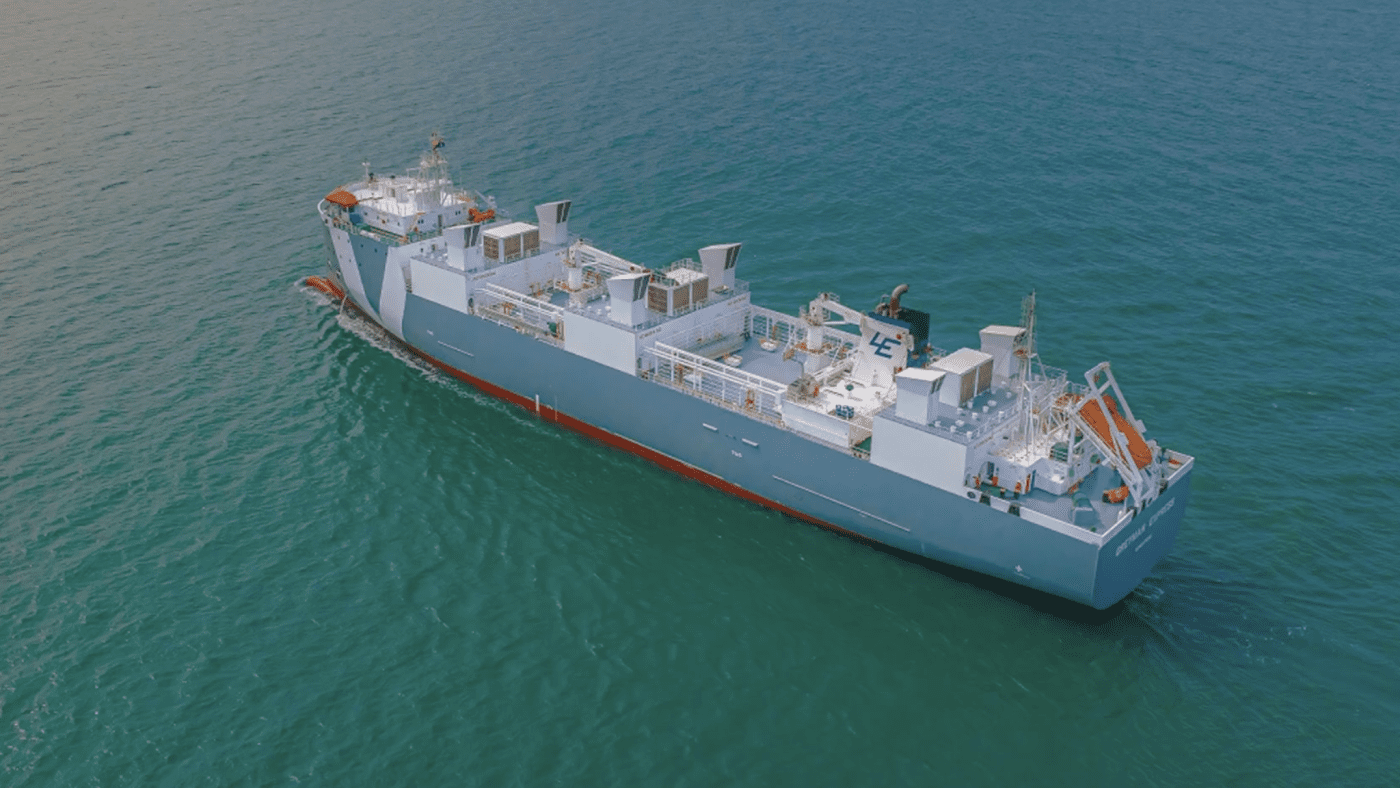
A modern purpose-built G-class livestock export carrier owned and operated by Livestock Express.
AUSTRALIA’S strict regulatory standards for maritime vessels are something of a double-edged sword for the country’s livestock export trade.
They help underpin Australia’s status as a world leader in livestock shipping and animal welfare standards.
But they also limit the trade to using a small and recently diminishing pool of accredited vessels, which some warn is now emerging as a serious choke point for the industry.
Late last year, as the livestock shipping trade gathered to discuss the year ahead at the LiveXchange conference in Perth, the thinning number of accredited ships available to Australian exporters was a major talking point.
Australia’s place in global livestock shipping
Australia’s position in the global livestock shipping trade was outlined at the conference in a presentation by Lennart Ephraim, managing director of Livestock Express, the largest supplier of shipping capacity to Australia’s cattle export trade.
A division of Dutch-owned shipping giant Vroon, Livestock Express operates 13 livestock vessels around the globe, including 11 that are accredited to operate in Australia by the Australian Maritime Safety Authority (AMSA).
Globally, Mr Ephraim noted there are currently about 120 livestock vessels in operation.
They span the full spectrum of quality, size and age, and all are in strong demand.
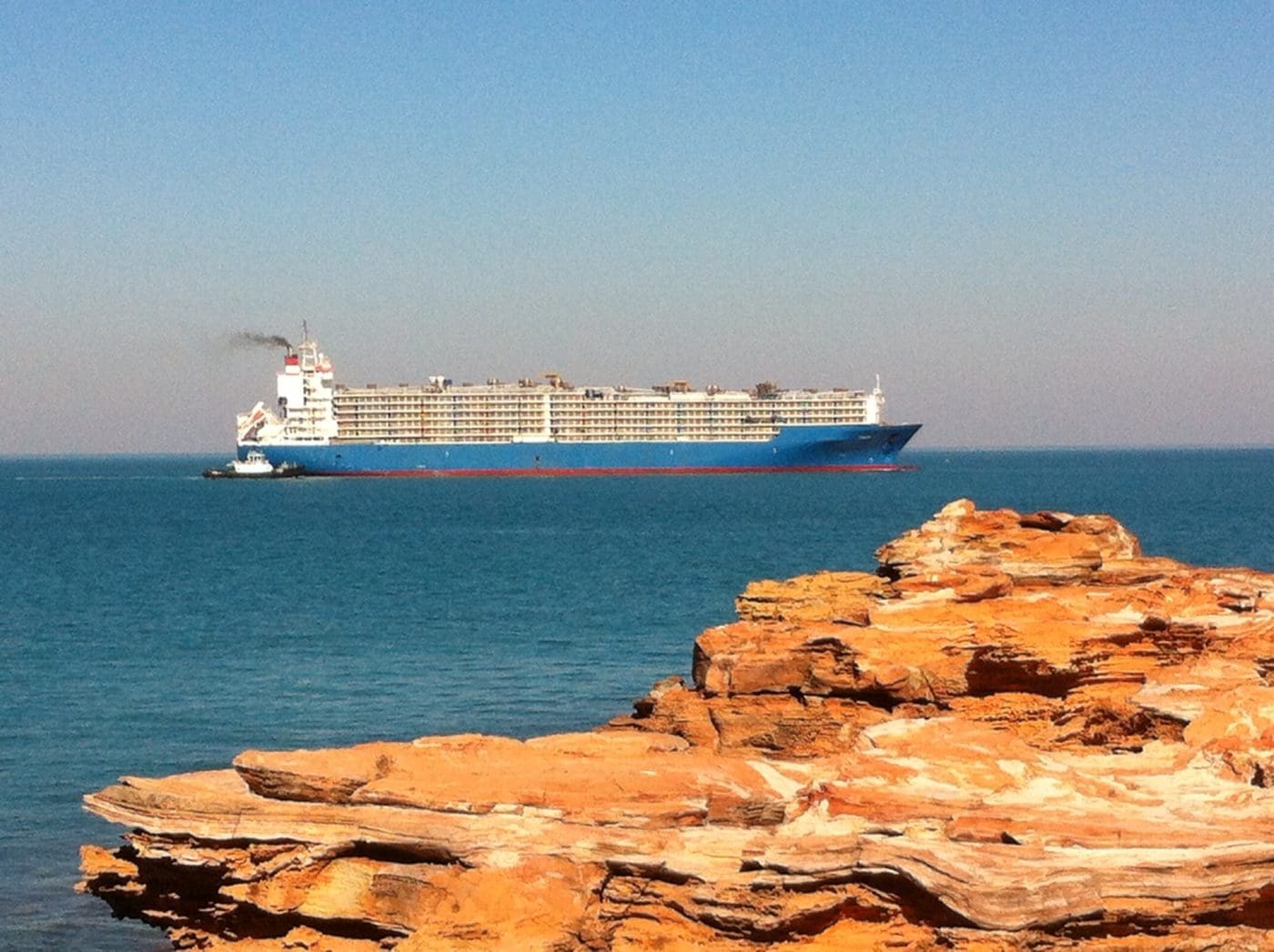 About 66 percent of global shipping capacity is absorbed on routes from South America – including Brazil, Uruguay and Colombia – to destinations across the Mediterranean, Europe, North Africa and the Middle East. Turkey, in particular, has become a major customer of South American cattle in recent years.
A further 15 percent of global livestock shipping flows from the Mediterranean and Black Sea regions – including Spain and Romania – to customer countries in the Middle East and Red Sea.
Northern Africa has also emerged as a growing source of export livestock, with Saudi Arabia – once one of Australia’s largest export customers – expected to import about 10 million sheep this year from several African nations, including Somalia, Sudan and Ethiopia.
Australia’s cattle trade to South-East Asia – which transported just over 700,000 cattle in 2025 – represents about 13 percent of all global livestock shipping traffic.
To operate from Australia, ships must comply with the strict regulatory framework of the Australian Maritime Safety Authority (AMSA), which means they operate at world-leading standards, but also at greater cost compared to ships operating elsewhere.
Of the approximately 120 livestock vessels operating globally, only 21 currently hold AMSA accreditation to operate to and from Australia.
Industry veteran Steve Meerwald, who has conducted his own independent analysis, told Beef Central that as many as 37 livestock vessels were accredited with AMSA to operate in Australia in 2019.
That suggests a decline of about 43 percent in shipping capacity for the Australian livestock export trade in just seven years.
Political and permit uncertainty at play
The rundown has been attributed to several factors.
Beyond the higher costs associated with maintaining AMSA accreditation, strong demand for vessels in other global markets, combined with political uncertainty surrounding the future of Australia’s live export industry fuelled by the Federal Government’s decision to ban live sheep exports, are also blamed.
Uncertainty surrounding the size and release of Indonesian import permits, particularly at the start of each year, is another factor that can make other routes more attractive to ship owners.
“Without greater certainty around permits, exporters are typically reluctant to commit to charters in January,” one trade source explained to Beef Central. “In the absence of certainty and contractual commitments in the Australian market, it makes commercial sense to consider longer-term contracts offered in other trading regions.”
The ageing global livestock shipping fleet is another factor weighing on future livestock shipping supply.
However, the 21 vessels currently accredited by AMSA have an average age of 19.7 years (and the 11 Livestock Express vessels servicing Australia average just 14.6 years), less than half the average age of the non-AMSA global livestock fleet, which is estimated at around 42 years.
Few new ships in the pipeline
While the number of AMSA-accredited ships has been declining, another major issue is the lack of new vessels coming through to fill the gap.
Beef Central is currently aware of three new livestock carriers currently being built around the world. One is believed to be under construction by a Western Australian based exporter and possibly due for delivery in 2026. Maritime media has also reported on the construction of a further two ships in a Chinese shipyard for an unnamed New Zealand company.
Beyond these examples, however, a lack of new purpose-built livestock vessels on the horizon to help replace older vessels being retired is seen as a problem for future industry capacity.
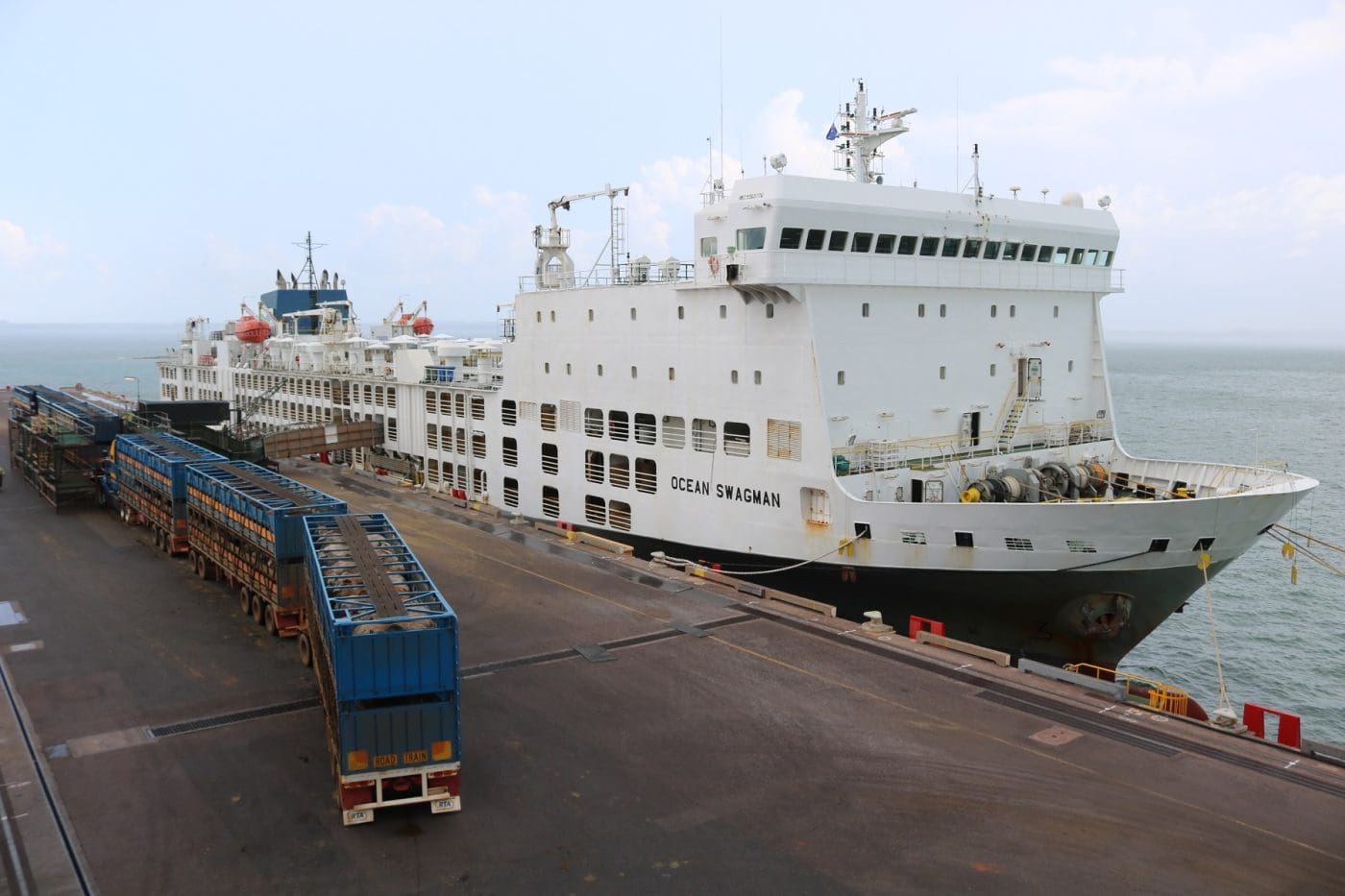
The Ocean Swagman
Speaking at the LiveXchange conference, Heytesbury Pastoral chief executive Paul Holmes à Court – who is also the owner of a livestock vessel, the former Wellard-owned Ocean Swagman – said the high cost of vessel construction meant new ships were unlikely to be commissioned without greater certainty around the future of the trade and a more stable regulatory environment.
Government and Indonesia signal support for trade
Despite the Albanese Government’s decision to end Australia’s live sheep export trade, and ongoing lobbying by Greens and some Teal politicians to shut down all live exports, both the Prime Minister and the Agriculture Minister have repeatedly stated that the live cattle export industry is secure.
In a letter sent to the head of the Indonesian Cattle Importers Association in June 2025, sighted by Beef Central, Prime Minister Anthony Albanese said the Australian Government “strongly supports the live cattle export industry”.
“I am aware of the important role the cattle industry plays in our economies and in food security. Deepening our economic relationship with Indonesia remains an ongoing priority for the Government,” the Prime Minister wrote.
“I look forward to supporting the live cattle industry, and the live cattle supply chain between Australia and Indonesia, to grow and prosper.”

Indonesian President Prabowo Subianto addresing crowds during the 2024 Presidential election campaign. Image: Shutterstock
Indonesian President Prabowo Subianto (left) has also publicly expressed his Government’s support for feeder and dairy cattle imports from Australia as part of Indonesia’s broader food-security and livestock strategy.
Since taking office, his administration has eased restrictions on live cattle imports and encouraged investment in cattle supply to meet domestic demand – particularly under the Free Nutritious Meals program aimed at boosting protein availability for Indonesian school children and pregnant women.
Australia, with its close proximity and large northern, tropically adapted beef herd, remains a critically important supplier of cattle to Indonesian feedlots, and in turn a key source of fresh beef for Indonesia’s 260-million-strong, predominantly Muslim population.
Indonesia’s growth trajectory also underlines the likely long-term importance of the trade to both countries. Jakarta has recently overtaken Tokyo as the world’s largest city, and many economists forecast Indonesia will become the world’s fourth-largest economy by 2050.
Whether strong political backing and favourable economic fundamentals will be enough to trigger renewed investment in livestock shipping remains to be seen.
How will shipping availabililty impact trade?
In the meantime, industry views on the current state of shipping availability are mixed.
Some stakeholders warn it represents a major threat and a looming choke point – one that could become critically serious during the next widespread drought across northern and pastoral regions. The ability to ship large numbers of lightweight cattle unsuitable for processing away from droughted paddocks to feedlots offshore has historically acted as an important pressure-release valve. But unlike taxis, livestock vessels which are in strong demand elsewhere in the world cannot be simply whistled up at short notice.
Others told Beef Central the shrinking pool of ships is a genuine headache for the industry, but argue the current ratio of vessels to export volumes is fairly well balanced at present.
Push for greater global standards
As a major ship operator, Livestock Express’ Lennart Ephraim, who is based in Singapore, acknowledged that maintaining AMSA accreditation meant increased shipping costs, but he said Livestock Express strongly supported the regulatory framework and would continue to advocate for stricter standards to be applied globally.

Lennart Ephraim addressing the 2025 LiveXchange conference in Perth.
“Any incident on a livestock vessel – whether it is in Australia or whether it is in Europe – impacts first and foremost animal welfare but also public opinion and ultimately affects us here in Australia,” he said.
“We firmly believe this is the direction the world is going, and I believe there will be stricter regulations in places like Europe, the population is getting more worried about these things, and also I believe it will create an even playing field.”
Mr Ephraim said Australia’s regulatory framework delivered strong outcomes not only because of the high standards it applied to ships, but also because of the control applied to the type and condition and stock loaded.
“This is I think the big difference with other jurisdictions where there is not so much control of what goes to the ship,” he said.
“You can have a great ship but if you get cattle that are not suitable or not well prepared, not adjusted to the feed, vaccinations given too late, it doesn’t matter how good your ship is, you’re going to have a bad outcome.
“And I think that is something we hope in the future will improve.”
Earlier article: The other livestock capacity issue no-one is talking about 12 Feb 2025