
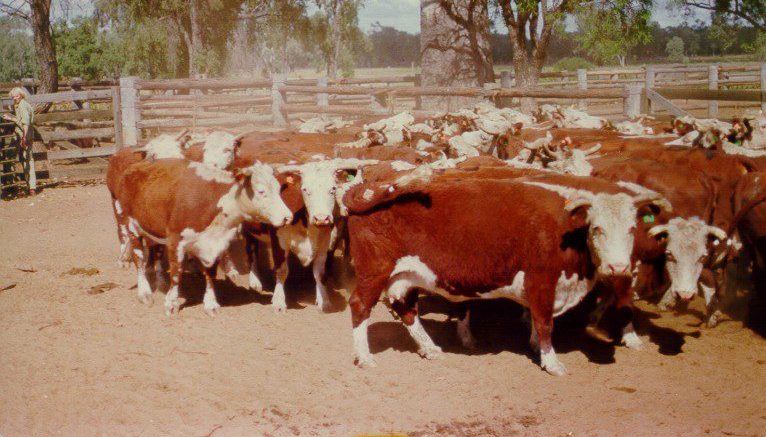
Testing cattle for brucellosis in 1978.
COUNTRIES around the world are still looking to Australia and its experts from the Brucellosis and Tuberculosis Eradication Campaign (BTEC) to advise on getting rid of the diseases, despite it being more than 50 years since the program first started.
BTEC has been recognised as a world-leading achievement in animal health, as Australia is one of very few countries to have successfully eradicated bovine tuberculosis (TB), at scale.
The BTEC program was launched in 1970, after the United States and Germany threatened trade restrictions on Australian beef exports, despite both countries having TB themselves.
 Older readers will remember the program required every cattle herd to be assessed and in many cases every animal tested. Adding to the challenge, the test was somewhat unreliable, and took time for results to be made available. And the lack of boundary fences on many properties in extensive northern Australia only added to the challenge.
If a positive infection was found a protracted eradication program was required and, in some cases, entire herds had to be sent to the meatworks with the Government compensating producers for their stock. To the best of one retired stock inspector’s memory, the original compensation was $120 a head.
BTEC presentations still happening around the world

Dr Ron Glanville
Dr Ron Glanville started his career as a Queensland Government veterinarian at Roma in 1978 where his focus was on brucellosis, moving later to Mount Isa to oversee the TB eradication program in the northwest of the state. Dr Glanville later went on to become the Chief Biosecurity Officer and Chief Veterinary Officer for Queensland and is now a biosecurity consultant.
He recently presented to a World Organisation for Animal Health event in Beijing, China on brucellosis eradication.
“It was an incredible achievement eradicating both bovine brucellosis and TB and not many countries have been able to do it – especially Tuberculosis,” said Dr Glanville.
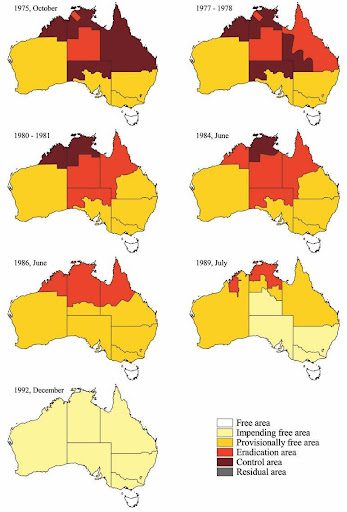
TB maps. Click on image for a larger view.
“It was a $1.2 billion program over nearly 30 years and required industry and government to work together.”
Industry funded 50 percent through levies, the Federal Government funded 20pc and the state governments contributed the remaining 30pc.
Strict controls are missing from other countries eradication programs
TB is still a major issue in Europe and the US now, despite attempts to control or eradicate the disease.
“Australia was successful because we got tough,” Dr Glanville said.
“I think one of the most important things was it was a government-industry partnership, which is how we handle disease eradication or control programs now and that all started with BTEC where we formed a formal partnership between industry and government and they shared the cost.
“Industry paid for half of the program, so they had a strong say in the management and decision making so industry was right behind the program.
“We had agreed technical standards across Australia, all states had good legal backing to do what needed to be done, we had good surveillance through the abattoirs so that we could know what properties actually had either of the two diseases and that is where we developed our tracing system, NLIS is based on what we established in the BTEC days where we registered all cattle properties and tail tag all animals when they were sold.
“We also had very strict controls in terms of testing animals, movement controls, destroying infected animals and that is what a lot of other countries have lacked.”
Dr Glanville had also presented a tuberculosis eradication presentation to an international TB conference in Ireland in 2022 and said Australia’s movement controls was one of the aspects of most interest to the audience.
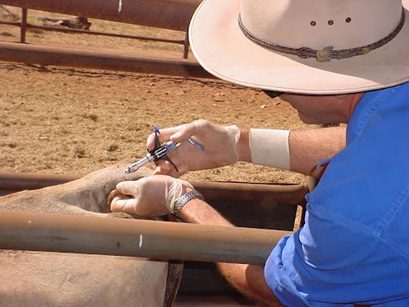 “Having to test animals and prove you were free of the disease before you could move animals to another property, that was a huge incentive for producers to get in and do the right thing to get the job done,” he said.
Compensation was contentious
The producer compensation was one of the more contentious parts of BTEC. As more and more cattle were destroyed the price of breeders rose, meaning the compensation was well below market value.
Townsville in North Queensland at the time hosted three large export and domestic abattoirs: Stuart, FJ Walker and Bohle. At times, their daily kills were made up entirely of BTEC destock cattle.
The cost to replace breeders rose so much higher that what the government compensation offered, that some producers were forced out of the industry.
As the program progressed the compensation was bought more in line with market value and from the mid 1980s other assistance measures such as mustering and freight subsidies were also available.
It took over 20 years but Australia achieved freedom
“A lot of people said it couldn’t be done,” Dr Glanville said.
However, in 1989 Australia was declared free of bovine brucellosis and free of TB on 31 December 1997 after 27 years of BTEC.
However, some final isolated clean-up operations were required after those dates, with the last confirmed cases detected in 1990 for brucellosis and 2000 for TB.
“Stock inspectors were the heart of the program, they made things happen, they were out on properties every day, working with property owners and I am forever grateful for the job the stock inspectors did, we wouldn’t have achieved freedom without them,” Dr Glanville said.
“Private vets and lab staff were also vital in getting the testing done and we should also recognise that many producers made huge sacrifices to get the job done.”
Could BTEC work today?
Dr Glanville said he is often asked if BTEC or a similar disease eradication program could be implemented and successful today.
“I am not sure – in today’s money, BTEC would cost more than $3 billion dollars and that is a huge investment,” Dr Glanville said.
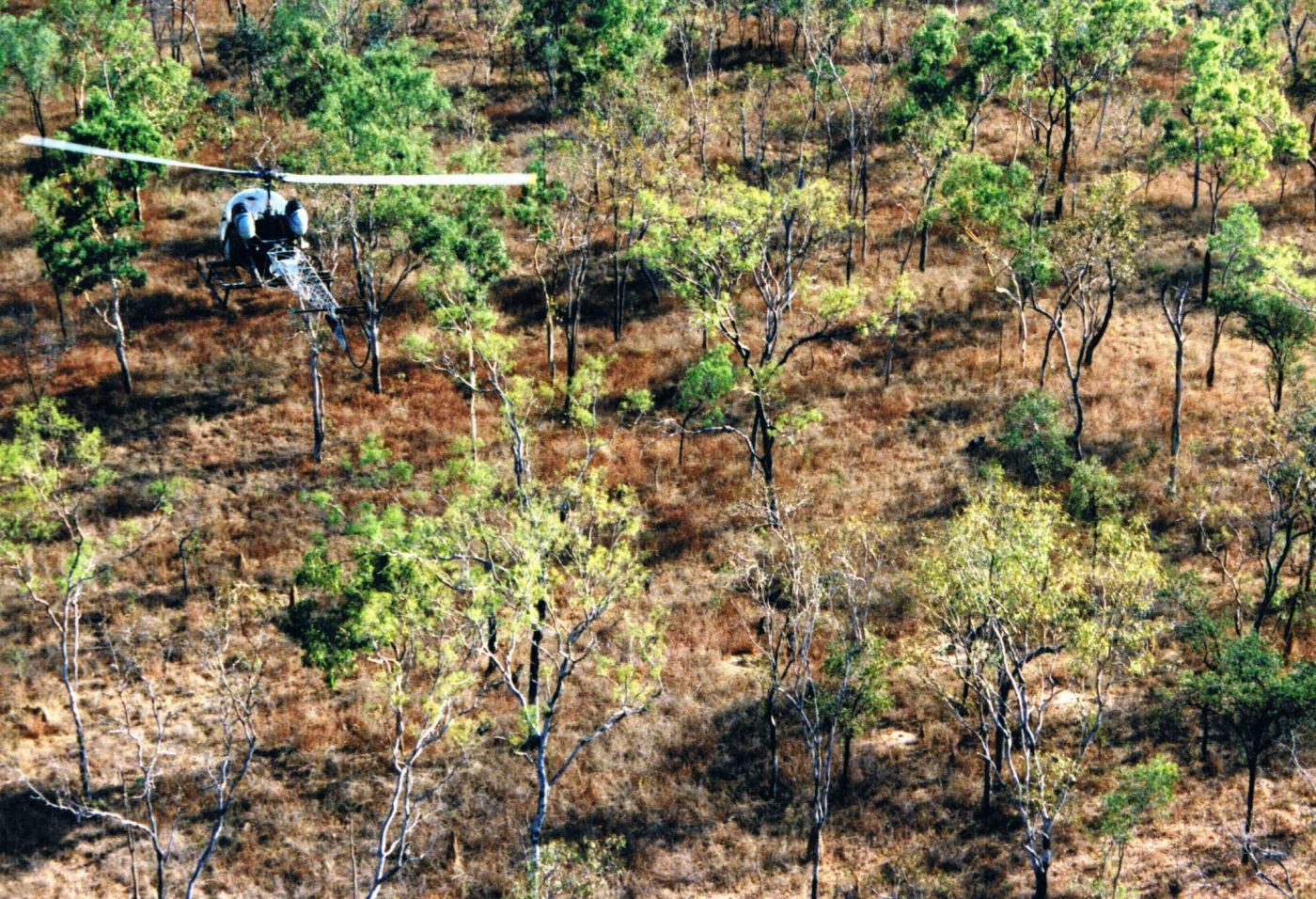
“We had to depopulate a lot of herds back then, we were shooting animals from helicopters at times – I am not sure we would have the social licence. It would be more difficult now than it was then.”