
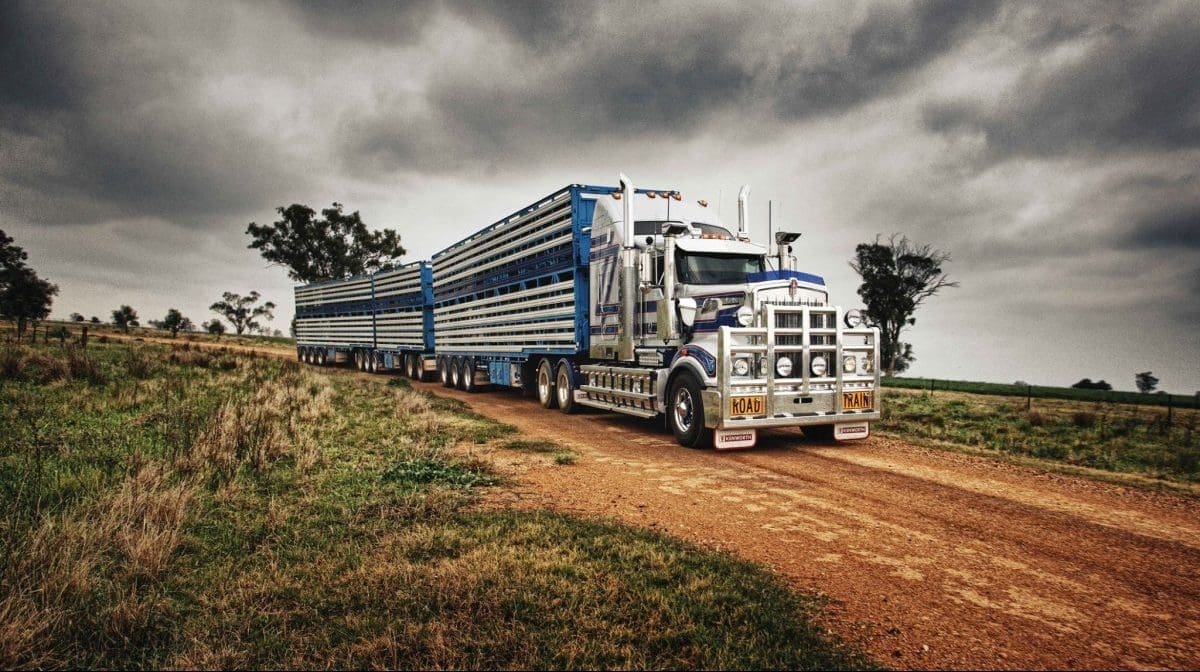
Cattle producers have been given a sobering reminder that their legal responsibilities under Chain of Responsibility (CoR) laws do not end once cattle trucks leave their boundary fence.
Talking at a Meat & Livestock Australia and AgForce Qld field day in North Queensland earlier this week, National Heavy Vehicle Regulator representative Andrew Gill provided several real-life examples to demonstrate how a grazier’s potential liability can extend far beyond their own properties under heavy vehicle laws.
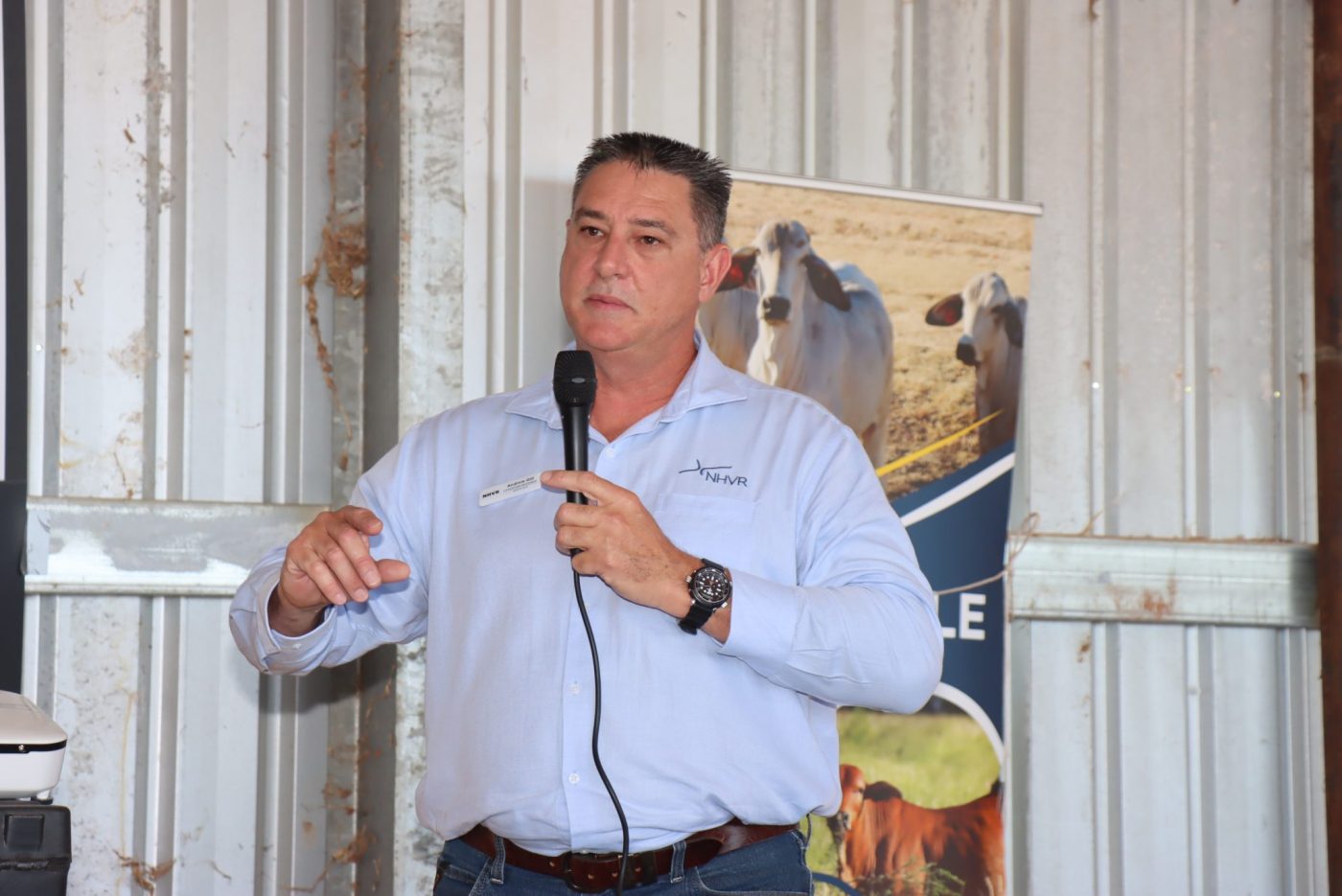 Mr Gill said under Chain of Responsibility laws graziers carry a primary duty of care and are responsible for everything that goes on with that vehicle right up until cattle are unloaded at their final destination.
“If a Grazier thinks once they’ve loaded the cattle onto that truck and it leaves their boundary fence and it’s on the road, that’s the end of it for them, they’re sadly mistaken,” he said.
“So it’s very important that you understand what your primary duties are with that transportation of your cattle.”
He pointed to a number of real-life case studies to demonstrate how the original consignor of freight retained a primary duty of care for the duration of the journey.
In one example a business consigned heavy vehicles to transport shipping containers. The load inside the imported 40-foot shipping container was not restrained properly, and the vehicle rolled.
Fortunately, there were no deaths or injuries. NHVR’s investigation revealed that the consignor had failed to comply with its own Chain of Responsibility policy. The company pleaded guilty and was fined $75,000.
Jail sentence underscores repsonsibilities of primary duty holders
Another recent case in northern New South Wales involved a heavy roll of wire fencing falling from a truck into the path of an oncoming car, which resulted in the death of the driver, a young father of two children.
The vehicle had been loaded by two owners of the fencing company. The next day the loaded truck was driven by a driver who did not check the load before leaving. The prime mover broke down on the journey. Another driver brought a replacement prime mover which was hooked up to the load, and then continued on in the passenger seat with the driver.
A few kilometres further down the road a mesh fencing roll fell off and went through the windscreen of a vehicle carrying the man and his two young daughters.
 In a court decision handed down in July, the passenger – the driver who had bought out the spare prime mover and continued with the load as a passenger – pleaded guilty to a 26F Category One offense.
Despite not being the driver, or the person who loaded the truck, he was deemed to have had a primary duty when he arrived with the replacement prime mover to make sure the load was safe.
He received a three-year jail sentence.
The driver and two executives who loaded the truck will go before the courts next year.
“That is an example of how the Chain of Responsibility works,” Mr Gill said.
“If you have a primary duty with that truck, it doesn’t stop just because your role in that has ceased.
“So in a nutshell, if a truck was leaving here with cattle, everything that makes that vehicle safe to enter the roadway, safe for the driver and all other road users, must be in place.”
‘No one can delegate their primary duty to someone else’
He also emphasised that “no one can delegate their primary duty to someone else”.
“So the operations manager can’t say, ‘well, I didn’t load it’.
“The loaders can’t say, ‘Well, I didn’t drive it’.
“Everyone is responsible for that journey from when it starts to when it finishes.
“For graziers, you don’t really work in the heavy vehicle industry, but you’re covered by the heavy vehicle laws, and if you don’t know, you’ll fall foul very quickly.”
Giving inadequate notice to truck drivers can put graziers in breach
Organising a truck at short notice without allowing the driver enough time to travel safely is another compliance risk for livestock producers, Mr Gill said.
“You cannot consign freight or cattle or whatever the case may be, where there’s not enough time for the driver to get there safely or within the confines of the law.”
In another recent case a business that scheduled the journeys of heavy vehicles was prosecuted for numerous fatigue management offences following an anonymous tip off to the heavy vehicle confidential reporting line.
The business was charged with a Category Three offense because it had failed to schedule trips in a way that enabled drivers to avoid fatigue.
“So a Grazier who calls up a transporter could very easily find themselves in that Chain of Responsibility for that type of offence,” Mr Gill said.
“Especially if the driver of that vehicle or the company wasn’t given the adequate time to rest or comply with the Heavy Vehicle National Law (HVNL).”
Using ‘rogue operators’ can also expose graziers to liability
Another message that may come as a surprise to producers not familiar with CoR law is that if they hire transporters that ignore fatigue laws or fail to maintain their vehicles and equipment adequately, they risk prosecution themselves.
“If a Grazier was to repeatedly use a transporter that was a bit rogue, who didn’t worry about fatigue laws, didn’t worry about maintenance requirements on their vehicles, you’re actually breaching the chain responsibility by using that that transporter.
“You must be utilising people who are reputable, responsible and adhering to all laws.
“If you are using someone who’s a little bit dodgy because he’s cheaper, you might find yourself before the courts if something goes wrong”.
Mr Gill added that something did not necessarily have to go wrong with that vehicle for ramifications to be incurred.
“If that vehicle’s pulled over and found that there’s maintenance issues or the driver is not doing his logbook, we can come and knock on your door, and depending on the circumstances you can find yourself before the Magistrate. So it’s a lot to think about.
“… if you as a grazier was to use someone like this, you’re liable for the same offenses that that company is committing, because you should be using someone reputable and someone who’s within the operating within confines of the HVNL.”
How can a grazier know?
So, how can a grazier possibly tell if the livestock transporter he or she is consigning is operating within the confines of the HVNL?
In response to that question Mr Gill conceded this can be “a grey area”, acknowledging that the NHVR and Transport Department do not issue memos stating how many offences individual transport companies may have had.
He suggested the best option for producers to mitigate those risks with the use of contracts.
“You ensure that your policy and procedures and your contracts and the way they are written up are that the hauler must comply to that.
“It is about mitigating the risk. We can’t always remove the risk. We know we can mitigate against it.
“So to mitigate against that, you would make sure that you’ve written good contracts with those operators.
“You make sure you give them training on what policy and procedures that you have when they come onto your property, and how they transport for you, and you must give them training for that.
“Good contracts and policies are the best way to mitigate risk.”
Penalties are severe and can include jail
Fines for breaching CoR laws range from tens of thousands to millions of dollars, with Category One offences carrying potential jail terms, Mr Gill said.
“If an individual commits an offense under Category One, $398,776 or five years imprisonment or both. Or if a corporation commits the offense, $3,987,760.”
“We want the industry to be safe”
Mr Gill said the NHVR did not want anyone to get to the stage where they have to go to court.
“We want the industry to be safe and we want it to be productive.
“We have one of the best industries in the world, I sincerely believe that.
“Everyone should come home from work safely and not at the cost of someone losing their life.
“Be very mindful that where you sit on that Chain of Responsibility, and that if the cattle have left the property, that’s not the end of it for the grazier.
“All I can say is identify the risks and what risks exist and mitigate against it.”