
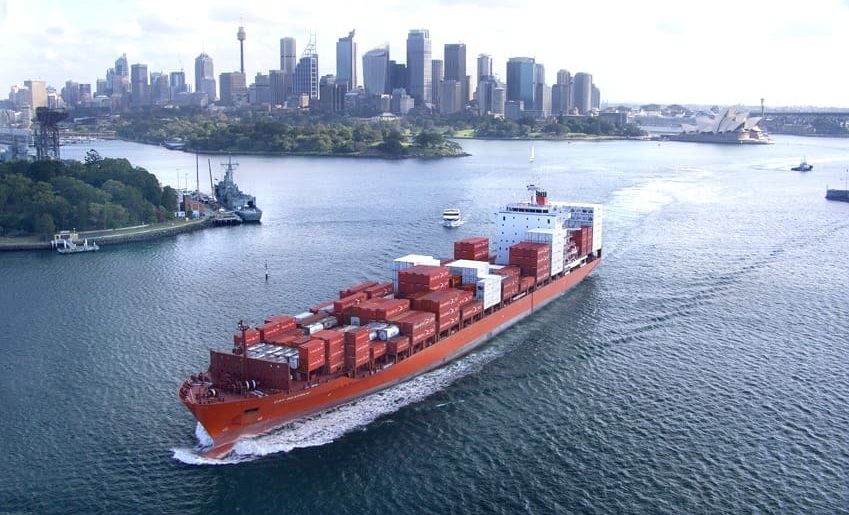
AUSTRALIA’S booming beef exports have hit another all-time monthly record, reaching 150,435 tonnes during July.
Last month’s export figure released by DAFF earlier this afternoon easily surpassed the previous record set a month earlier, when June volume hit 134,593t. The past month has added another 15,800t or 11.7 percent to the previous record.
To put July’s export activity into context, Australian beef exports had never previously exceeded 130,000t before October last year, but have continued to surge since then. Last month’s record tonnage was 16pc higher than July last year – which itself was an all-time record at the time, of just short of 130,000t.
 For the calendar year ended July 31, Australian beef exports to all markets have now reached 852,653t, up an incredible 121,000t or almost 16pc on the same seven months last year. That number is all the more noteworthy, because of the flooding and cyclone-related delays in production and logistics that occurred earlier this year.
The calendar year record of 1.34 million tonnes set last year now looks well within reach. At current rates of production, it’s looking extremely likely that the 2025 calendar year will set a new record, somewhere above 1.4mt.
Grainfed exports have also set another monthly record, reaching 42,985t after hitting almost 40,000t back in June.
Year to date, Australian grainfed exports are now at 246,249t, almost 35,000t or 16pc higher than last year’s previous record.
What has set the July record numbers apart is that up until last month, the growth in grainfed exports was largely responsible for recent record-setting volume. July was different, with both grainfed and non-grainfed setting new records. Non-grainfed last month reached 107,451t, easily beating the previous record of around 101,000t set back in 2014, when female slaughter was record high due to drought.
The recent boom in export tonnage is being driven by a perfect storm:
- 70-year low cattle numbers in the United States, which is powering demand for Australian beef not only in the US itself, but also into third countries in which product from Australia and the US traditionally competes
- Impacts from Trump tariffs on export suppliers like Brazil, with Brazilian beef now all but considered unviable in the US market under an additional 50pc tariff burden, on top of the existing rate of 24pc.
- Trade access issues into China for some export suppliers, especially the US
- Strong continued underlying demand for beef in general.
Australia is in the box-seat to capitalise on the current market dynamics, with current high levels of production, albeit blighted by the impact of drought in parts of Victoria and South Australia.
A key feature about the above record-setting pace is that it is being done with far fewer cattle than it was last time records were set (2014-15) when the processing industry was at full pace due to drought liquidation. Clearly heavier carcase weights and more grain feeding are more than offsetting larger slaughter numbers (head-count) seen a decade ago.
All key markets trend higher
A key feature about the current record export trend is that it is not dependent on any one particular customer, but rather, substantial growth in all four largest customers (US, Japan, Korea, China) as well as progress in smaller customers like Indonesia and Canada.
Exports to the United States last month reached 43,056t, up another 7700t or 22pc on the previous month, as US domestic beef production continues to dwindle. That’s happened despite the fact that the highest demand mid-summer grilling season in North America has now passed. Last month’s volume into the US is not quite a record, however, as October exports last year shot to an incredible 47,000t.
Enhancing Australia’s trade opportunities into the US has been the big decline in Brazilian beef exports into the US over the past two months, driven by Trump tariff measures. From Thursday last week, Brazil now faces total beef tariffs into the US of 74.6pc. Some meat traders suggest that will now see even greater Brazilian exports diverted into markets like China, and potentially, Indonesia, where Australia has made significant boxed meat trade headway in the past 12 months.
For the calendar year to the end of July, our exports to the US have now reached just over 246,000t, up 52,000t or 27pc on the same time last year, again reflecting current low US production – especially for manufacturing beef, but increasingly, fed cattle as well.
The low current rate of cow slaughter being experienced in New Zealand was another factor in Australia’s surge in exports to the US last month, and throughout the first half of 2025. Click here to view earlier comments on this topic.
China has also surged this year as an Australian export customer, partly in the face of tariff and plant license issues with the United States, where some 300 US beef processors that previously held China access have been awaiting license renewal since February.
Australia’s exports to China in July reached 30,925t, their highest volume in three years and almost 3900t or 14pc higher than June exports, and a spectacular 14,700t or 90pc higher than this time last year. For the calendar year seven months to the end of July, volume reached 160,183t, up 31,600t or 25pc on the same period last year.
Japan’s imports of Australian beef also lifted last month, reaching 23,056t, up 1100t or 5pc on the previous month, but still 12pc behind July last year. Seven-month trade this year is now at 140,819t, still about 20,000t behind last year.
South Korea followed a similar trend, with July exports at 20,869t, up 8pc on the previous month, but only marginally better than July last year. Lower US grainfed production is now being seen in larger shipment volumes from Australia into Korea, especially in prized cuts like bone-in shortrib.
Calendar year to date, trade into Korea is now at 122,396t, up 11pc on the same period last year.
Emerging markets
Emerging and developing export markets have followed a similar trend to the big-hitters noted above.
Indonesia remains a strong second-tier market, especially for frozen product, accounting for 6516t, up another 1pc on June, but marginally behind exports made in July last year. Year to date volume has reached 35,838t, down about 4000t on last year.
Following a trend that’s emerged over the past 12 months, Canada remains a vigorous customer for Australian beef, taking another 4674t last month – up 10pc on June shipments and 111pc higher than July last year. Year to date volume has gone past 24,380t, 55pc higher than the previous year.
The United Kingdom (see recent market summary), is now showing signs of growth, albeit off a very low base, some two years after the Free Trade Agreement was struck. July exports reached 2247t, up another 430t or 23pc on June volume. Full the first seven months of 2025, volume has reached 8699t, some 125pc higher than a year earlier.
Total exports to the Middle East region last month were 3425t, while the calendar year to date tally has reached 21,258t.