
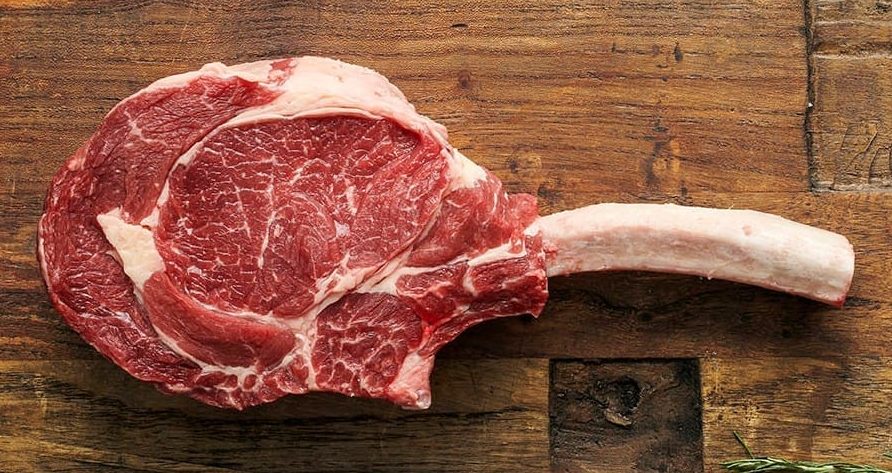
IF commercial reality has anything to do with it, there will be zero beef trade out of the United States into Australia any time soon, following the Australian Federal Government’s recent approval for US beef imports – including that produced from cattle bred in Mexico or Canada.
Using readily available data from sources like the Expana Benchmark price report (formerly known as Urner Barry Yellow Sheet) published on Friday, we’ve done some back-of-the-envelope sums on what US beef looks like, landed in the Australian market. And the numbers don’t look pretty.
Given the blistering prices being recorded for cattle and wholesale beef in the United States at present, any US exporter consigning shipments to Australia would ‘need their head read’ (to quote a trade source), this like-for-like price comparison has shown.
USDA Prime likely candidate
Following the Federal Government’s announcement last week that US beef trade into Australia can resume, after a 22-year absence due to the detection of BSE in the US herd, there’s been industry speculation about what type of product might be involved in early trade, and into which segment in Australia it might flow.
All trade sources we’ve spoke to think that high-end USDA Prime grade steak cuts would be the likely target.
End-users would likely be higher-end Australian steak restaurants and hotels, looking for some ‘novelty factor’ in being able to feature an ‘Omaha rib-eye’ on their menus for the first time in two decades. National supermarket chains Woolworths and Coles both carry clear ‘Australian product only’ messaging in their beef offerings, ruling them out. But warehouse retail chain Costco has been suggested as a possible user, given the company’s US origins.
But how would a US product like this stack-up, price wise in Australia?
 For the purposes of this comparison we are using two examples, each based on four grilling cuts: striploin, cube roll (lip on), tenderloin (strap/on) and rump. Worth noting, the comparisons for rump contrast a little with the other cuts, because unlike the US market, Australians enjoy rump as a grilling cut, and thus are prepared to pay relatively more for it. Nor do US consumers value tenderloin in the same way that Australians do.
US prices are based on Expana Benchmark data, while Australian prices come from wholesale trade sources this week.
Yellow Sheet prices are FOB – but in this case that does not mean Free-On-Board an export shipping vessel, but FOB a refrigerated truck, somewhere in middle-America beef heartland.
US product costings are based on shipping Nebraska/Kansas to the US West coast ports (A10c/kg); containerised sea freight to eastern Australian ports (A50c/kg); plus AQIS inspection charges and clearing costs in Australia into a domestic coldstore ready for sale and distribution (10c/kg – total A70c/kg). Note that we have adjusted the figures to reflect the fact that tenderloins in the Australian domestic market are mostly sold strap-off – not strap-on like those in the US.
Example 1: USDA Certified Angus Vs Australian Grainfed Angus

The costings clearly show that in the closest possible ‘like-for-like’ comparisons, US Certified Angus beef would be anywhere from 29pc (cube roll) higher than Australian, to 71pc higher (rump). The price advantage to Australian product in $/kg terms would include A$10/kg (rump); $16.44/kg (tenderloin); $12/kg (striploin); and $9/kg on cube roll.
Example 2: USDA Prime Vs Marbling score 4+ Australian grainfed

The costings show that USDA Prime beef Vs Australian grainfed would be anywhere from 27pc worse off (cube roll), to 65pc (rump). The price advantage in $/kg terms to Australian product would be almost A$11/kg (rump); $15.30/kg (striploin); $10/kg (cube roll); and $12.60/kg on tenderloin.
The comparison does not include shelf-life performance, for example, where independent international analysis shows that Australian chilled product has much greater shelf-life than equivalent US beef. That comparison is only made worse when US has to spend three weeks on the water to get here.
US marbled beef no longer a novelty
An export trade source said prior to Australia’s ban on US beef in 2003, very small quantities of US grainfed grilling cuts were occasionally seen in the Australian markets – much of it driven by the ‘novelty factor.’
“It’s similar to the interest the upper-end of the Australian food service trade has shown in Japanese-produced Fullblood Wagyu beef, where the demand is extremely limited due to price,” he said.
“But its important to recognise that when US beef like this was last coming into Australia back in the 2000s, the Australian industry was not producing large amounts of Wagyu or longfed Angus marbled beef. But that’s all changed, and USDA Prime product like this would no longer stand out, like it once did,” he said.
“And the equivalent Australian Wagyu and MB4+ Angus product – from supply chains like Rangers Valley or Jacks Creek, for example – is now readily available, and at much lower prices than current US price levels.”
“Any US product arriving on these shores in coming months would absolutely struggle to compete, under any realistic commercial comparison,” the trader said.
Forecasts made in this earlier Beef Central article last week suggested that if it arrives at all, the first US product shipped to Australia is unlikely to clear customs before around mid-October. The only exception to that would be an attempt at air-freight shipment, made to steal the limelight for ‘symbolic’ reasons.
Stand by for the breathless articles in the metropolitan media if/when that happens.