
MEAT & Livestock Australia will continue to assist the red meat sector move toward a net zero carbon emission position, despite the industry recently dropping the goal from its Red Meat 2030 plan.
At the Intercollegiate Meat Judging Competition’s 2025 conference at Charles Sturt University in Wagga Wagga last week, MLA managing director Michael Crowley said the big ticket items for MLA are continuing to drive its investments and impact around sustainability.
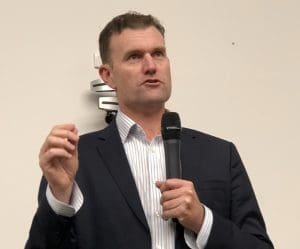
MLA managing director Mike Crowley at the ICMJ conference.
“We’ve aligned ourselves with the national net zero ambition and those targets at a national level didn’t exist ten years ago.
“So we’re shifting very quickly to drive, to move from R&D to adoption and commercialization around things like feed supplements, methane as a trait in genetic evaluation in beef and sheep … looking at feedbase pasture varieties that not only increase productivity but help sequester more carbon in soil.”
He said MLA is also investing in technology that reduces the cost of measuring soil carbon.
“And I do believe we can still continue to get to a net zero position.”
Mr Crowley said although the industry policy changed in the recent mid-point review of the Red Meat 2030 plan, “our innovation agenda will continue to go full pelt.”
When asked why MLA is continuing its emphasis on reducing industry carbon emission when Australia was already an efficient producer, and how net zero and reducing emissions would benefit producers, Mr Crowley said it was about being “on the front foot.”
Mr Crowley said he was involved in the development of CN 2030 in 2017.
“This was a major mega-trend that was coming our way that consumers and customers globally … investors, supermarkets and major customers around the world were demanding all industries reduce emissions.
“We have to play our role in undeniable climate change,” he said.
Mr Crowley said methane has a very high warming potential.
“It’s a short-lived gas in the atmosphere but that is our main greenhouse gas that we emit in the sector.
“So this is about being on the front foot, it’s about being proactive and recognizing we can also make progress,” he said.
“So not only make progress, but be a significant part of the solution.”
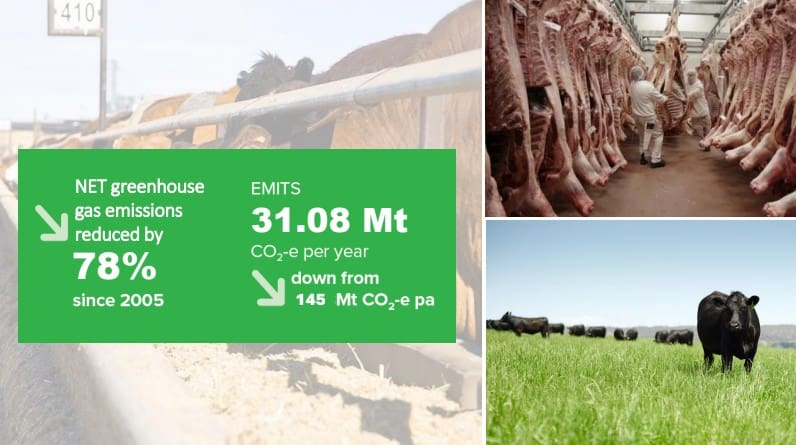
Mr Crowley said the industry adopted the net zero emission goal in the development of Red Meat 2030 “and we’ve made significant progress.”
He said much of the progress has been off vegetation management and reafforestation, but the industry needed the data and evidence to support its net position as part of the national greenhouse gas inventory and play its role globally.
Mr Crowley said despite the industry’s efficiency, it is “still on the hook” for its net carbon position, while still driving productivity and delivering a positive environmental outcome.
“So our net carbon position is still vitally important.”
“We are one of the few industries that can sequester carbon from the atmosphere, store carbon in the soil and in vegetation, and we can do both,” he said.
“And then if we can turn the adoption of feed supplements and the adoption of best management practice into carbon credits then there is additional revenue opportunity.
“And that’s what we have to deliver over the next few years.”