
It has now been almost 12 months since the Australian red meat industry confirmed it was walking away from its target of achieving carbon neutrality by 2030, first announced at a Meat & Livestock Australia AGM in 2017.

Senator Susan McDonald
Beef Central broke the news of the CN30 target abandonment in this article last year.
In the latest round of Senate Estimates hearings, Meat & Livestock Australia chief executive Michael Crowley and chairman John Lloyd were questioned at length by Nationals senators about why the decision was made, how much was spent on the program and whether the research funded over those years was being adopted by producers.
Without producer uptake of MLA-funded emissions interventions, “you are taking levy dollars and burning them”, Nationals Senator Susan McDonald said during a marathon 90-minute session with the MLA executives.
Mr Crowley told senators much of the emissions research funded over the past decade was only now approaching the adoption phase, citing the expected introduction of methane efficiency Estimated Breeding Values into routine genetic evaluations within the next 12 months.
He said the industry’s focus had also shifted from absolute emissions reduction to lowering emissions intensity per kilogram of production, arguing that future gains would depend on successfully commercialising research outcomes and creating incentives for producer adoption through carbon markets and other mechanisms.
$140 million invested in sustainability
Early in proceedings, Queensland Labor Senator Corinne Mulholland questioned MLA on its current position on livestock emissions, industry responsibility and how much it had spent on sustainability research, development and adoption.
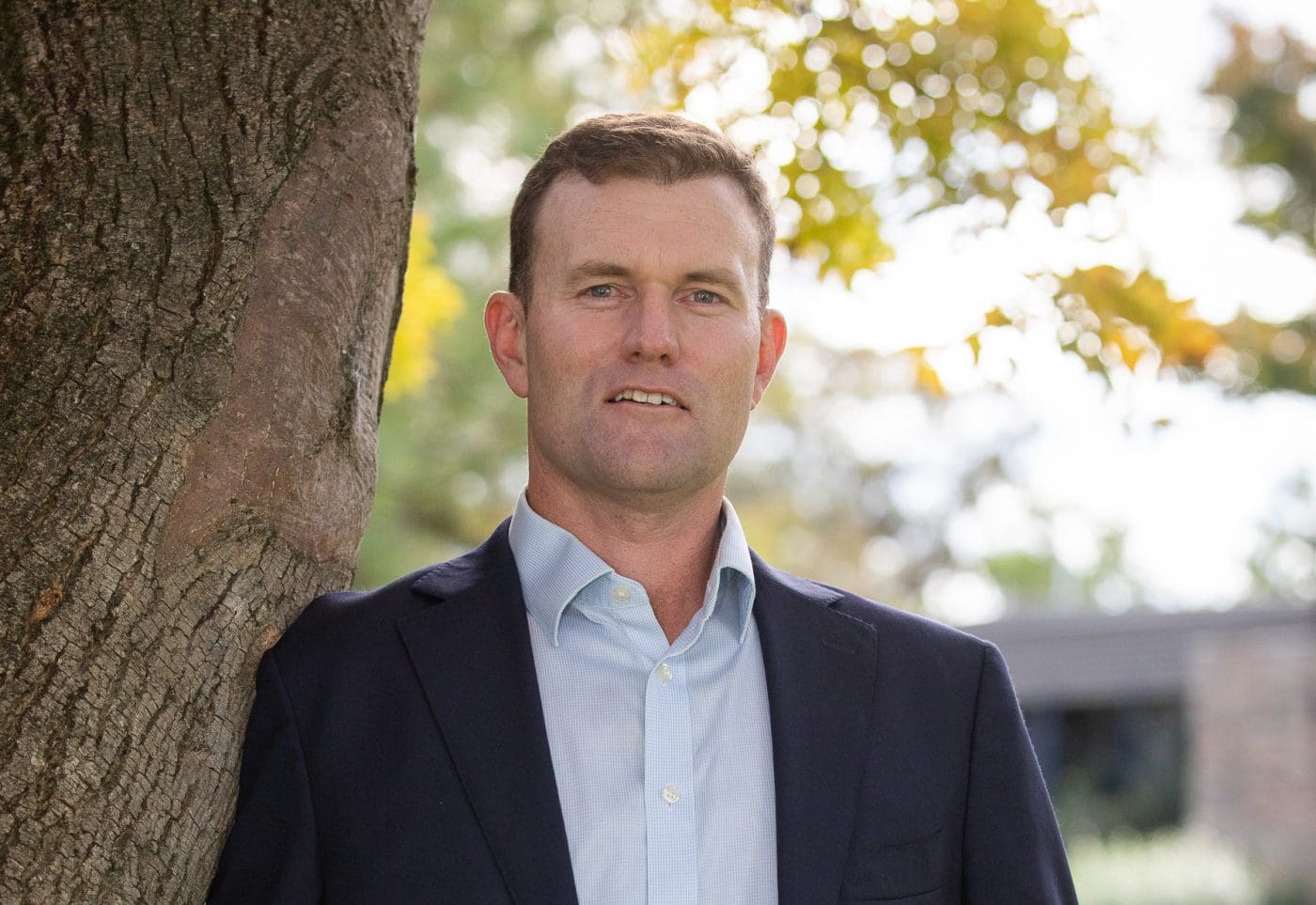
Michael Crowley
Mr Crowley said MLA was continuing to contribute to Australia’s net-zero ambitions through ongoing R&D investments focused on reducing livestock emissions through genetics, management and feed supplements, lowering soil carbon measurement costs and improving carbon sequestration.
In response to questions about spending, Mr Crowley said MLA had invested $140 million in environmental sustainability initiatives since 2020, including $119 million on-farm and $28 million post-farmgate.
About 30 percent of on-farm investment had been directed towards livestock genetics research aimed at reducing methane emissions in sheep and cattle.
EBV for methane efficient animals within 12 months
An Estimated Breeding Value for methane-efficient animals is also close to becoming available, he said.
 “We’re very close now to having methane as a breeding value in our genetic evaluations. We have research breeding values today, in about 12 months we expect they will become part of the routine analysis. That will allow us to drive genetic progress on methane by about one percent per year.
“That is cumulative and permanent progress that we can make starting with lower emitting animals and balancing selection for methane amongst all the other production traits, which is a really important step forward.”
New focus on emissions intensity
Mr Crowley also confirmed the industry’s focus has shifted towards reducing net emissions per kilogram of production, rather than pursuing absolute emissions reductions.
“That is a new KPI in our strategic plan, it is a great pick-up,” he said.
“We are focused on reducing emissions intensity per kilo of production, which is a great measure for driving productivity as well as delivering a positive environmental outcome.”
Responding to questions about who made the decision to abandon CN30, Mr Crowley said it was taken jointly by the red meat industry councils and MLA during a midpoint review of the five-year Red Meat Strategic Plan.
Formal move away from CN30
Asked by Senator McDonald whether MLA still supported Carbon Neutral 2030, Mr Crowley confirmed the organisation had formally moved away from the target through its latest five-year strategic planning process.
He said CN30 had been “a fantastic initiative that really drove investment in innovation”, but a midpoint review found the industry was not on track to achieve carbon neutrality by 2030.
“That was a function that needed more time and more investment. It was an incredibly complex area. It also existed before there were national targets.
“So we’ve aligned now to the point where the language we are using is contributing to Australia’s net zero ambitions. So we’re not taking the foot off the pedal on the innovation side. We are committed to continuing to make progress.”
Mr Crowley said investment was also increasing in research into biogenic methane and the full methane cycle in grazing systems.
“The theory we are testing is that we sequester carbon from the atmosphere as fast as we emit it. There’s a whole lot of work around greenhouse gas accounting as well.”
Replacement beef herd carbon methodology still likely to be two years away
Questioning then turned to carbon credits following the Albanese Government’s decision to allow the Beef Cattle Herd Management methodology to expire on September 30 last year.
The Government argued the methodology no longer met integrity standards relating to measurable, verifiable and conservative abatement, had low uptake and high administration costs, and had been overtaken by advances in methane science.
It has since been working with MLA on a replacement livestock methodology covering sheep, dairy cattle, feedlot cattle and pasture-based beef systems.
Mr Crowley told senators it may take another 18 to 24 months before the replacement methodology is available.
“Through the red meat and livestock method development, we’re going to look at all of the tools and technology production management practices, how we build in genetics, soil carbon vegetation management, take a holistic approach and create a range of options that producers can implement to drive progress in terms of reducing emissions and increase abatement whilst also driving productivity,” he said.
“Ideally, creating carbon credits is an additional revenue stream. There’s quite a lot of work to happen to develop that. But we’re really leaning in and working with our peers across RDCs and using the CRC to develop that method.”
He said the new methodology was critical to creating more opportunities for livestock producers of all scales to generate carbon credits.
Senator criticises lack of pathways
Senator McDonald was highly critical of the Government’s handling of carbon credit opportunities for livestock producers.
“So at the same time as the Government is waving the big stick about emissions reduction in agriculture, talking about taking out arable farming land, we’re at least 18 months, if not two years, away from a methodology being documented before anybody signs up or before anybody spends the tens or hundreds of thousands of dollars to get involved.”
She also questioned how producers could be expected to invest in emissions reductions without a recognised pathway to receive credit for those actions.
Mr Crowley responded that recognition of sequestration rates and net methane emissions within greenhouse gas accounting frameworks would also be important.
Is there a commercial reward?
Senator McDonald argued there was currently no premium for lower-emissions beef and questioned whether some emissions-reduction efforts had come at the expense of productivity.
“I’m really concerned about this government’s agenda that has driven compliance with important industries such as food production, yet there is no return for the producer and potentially only penalties for not meeting targets,” she said.
Mr Crowley agreed incentives would be critical.
“Without the right incentive in place, we wouldn’t see the adoption of the technology or the management practices.”
He suggested future opportunities may come through brand specifications, environmental credentials and customer requirements rather than direct consumer premiums.
“At the moment, whilst consumers will say they are willing to pay more, actually paying is still a gap.”
Adoption now the key challenge
Mr Crowley was later asked what proportion of the industry’s reported 70.2pc reduction in emissions between 2005 and 2025 could be directly attributed to MLA-funded interventions.
“That’s a great question, Senator. The honest answer is not very much.
“We are yet to move into the real adoption and commercialisation phase of our R&D.”
He said much of MLA’s investment had been directed towards long-term research programs, including methane genetics, that were only now reaching commercial application.
“If we hadn’t started when we did in 2017, we wouldn’t be able to bridge the gap for that last 30 percent.”
Mr Crowley said the Zero Net Emissions Agriculture CRC would help accelerate applied research, adoption and commercialisation.
‘You are taking levy dollars and burning them’
The hearing concluded with a discussion about whether continued investment in emissions-related R&D could be justified without greater producer adoption.
Senator McDonald questioned whether producers were seeing sufficient returns from five years of spending on emissions reduction initiatives.
“We are not seeing a return for producers. We are not seeing significant adoption. We’re not seeing the government invest with methodologies and ACCUs. I’m very concerned that the board needs to take some accountability of whether it is still a good investment.”
Mr Crowley said demonstrating value from levy-funded investments was ultimately MLA’s responsibility.
“That’s where certainly my accountability sits on the impact that we can deliver from the investments that we make.
“On all the investments we make, we need to demonstrate value for those investments.”
Without uptake, “you are taking levy dollars and burning them”, Senator McDonald replied.
“This spend on emissions reductions has now been running for five and a bit years.
“We are not seeing a return for producers. We are not seeing significant adoption.”
“Noted,” MLA chairman John Lloyd replied.
HAVE YOUR SAY